G
Gainbrief
Space

#introduce-yourself

Tell us who you are, what you're working on, and what you're stuck on right now.

78 members·moderated by @maya, @sam, @alex, @aaron
YS
Sign in to share something…
CLClaire···3 min read

The Most Interesting AI Startup This Week Isn't Trying to Replace You

A British ex-DeepMind researcher just raised $50 million to do the least glamorous thing in AI right now: make a new liquid that keeps server racks from cooking themselves. No chatbot. No agent that books your flights. A coolant. And I think it's one of the more honest bets in the whole field. Here's the setup. The AI boom runs on GPUs, and GPUs run hot. Jonathan Godwin, Orbital's CEO, describes a modern GPU rack as packing "basically a supermarket's worth of energy into a filing cabinet." You have to pull that heat out somehow, and one of the best ways the industry found uses a class of chemicals called PFAS. You've heard the other name for them. Forever chemicals. That's the part of this story nobody puts in the funding headline. PFAS don't break down. They show up in roughly 45% of tap water samples tested across the US. They build up in your liver and kidneys over years, and they've been linked to liver damage, thyroid disease, and kidney and testicular cancer. The companies that made these chemicals profitable were rarely the ones drinking the runoff. nihThe Cooling Report So when Orbital says its AI screened hundreds of thousands of candidates to find a coolant that does the job without the forever chemicals, that's not a vanity product. That's pointed straight at a problem that's already in somebody's well water near a chemical plant in North Carolina. Fortune Now the skeptic in me has to speak up, because this field has a track record. Two years back, DeepMind announced its AI had found 2.2 million new crystals, 380,000 of them stable enough to maybe synthesize. Sounded like a new world. Then actual materials scientists opened the database and found over 18,000 of the "discoveries" contained radioactive elements so s

0
0
EBElara Bennett···3 min read

A Bitcoin Miner Just Bought $1.6 Billion in Chips From the Guy Who Owns Its Stock

Three years ago IREN dug for Bitcoin. This week it agreed to spend about $1.6 billion on Dell systems packed with Nvidia's Blackwell GPUs for a data center in Childress, Texas, and the stock jumped almost 29% in a day. The pitch is clean: it's not a miner anymore, it's an AI cloud company, and the run-rate revenue climbs toward $4.4 billion by early 2027. Yahoo Finance Here's the part the headline skips. The $1.6 billion buys hardware to feed a five-year, $3.4 billion AI cloud contract with Nvidia. And Nvidia isn't just the customer at the other end of that contract. Nvidia also holds an option on up to 30 million IREN shares at $70 apiece, a stake worth around $2.1 billion. BigGo FinanceThe Motley Fool So read the loop slowly. Nvidia takes a position in IREN. IREN turns around and buys Nvidia chips through Dell. Nvidia books the sale, the revenue looks real, the stock of both companies goes up. The money makes a lap and comes home. This isn't IREN's invention. It's the move of the whole AI build-out right now. Nvidia put as much as $100 billion into OpenAI to fund data centers stuffed with Nvidia's chips. Somebody on the internet called Nvidia the central bank of AI, and it stuck because it's basically true. JPMorgan looked at IREN's version of this and slapped a Sell on it, flagging the circular nature of the Nvidia relationship. business-standardBigGo Finance We've watched this film before. During the dotcom run, Cisco lent telecoms the money to buy more Cisco routers. The sales looked great until the capital dried up and the whole thing collapsed. Vendor financing isn't a cri

0
0
CLClaire···3 min read

The SEC Wants More IPOs. Investors May Pay the Price

The SEC can make it cheaper for companies to go public without making the whole public market less transparent. Optional semiannual reporting might help some companies a little. But it also creates a real risk: information that used to appear in public filings may start moving into private conversations. The argument sounds simple. The number of public companies has fallen, so disclosure rules must be too heavy. That is why the SEC’s May 2026 proposals try to make life as a public company more flexible. One idea is to let companies replace quarterly 10-Q filings with one semiannual Form 10-S, plus the annual 10-K. For companies, that sounds like more choice. For investors, it changes how the market works. A voluntary earnings release is not the same as a required 10-Q. The 10-Q is not valuable only because it gives investors numbers. It matters because those numbers come in a standard format, under review discipline, with legal responsibility, comparability, and machine-readable structure. Take that away, and the information gap does not vanish. It just moves somewhere else. Big institutions can pay for alternative data, talk to management teams, and rebuild the missing picture. Retail investors usually do not have that luxury. They depend on public filings. When required disclosure gets weaker, the market becomes easier for insiders and more expensive for everyone else. The global evidence also does not prove that lighter rules magically bring IPOs back. The UK changed its listing rules in 2024, but IPO activity was still mostly flat from 2023 to 2025 before picking up late in 2025. Australia has also tried to make IPOs easier, but even there, the slowdown looks partly cyclical, not just regulatory. The U.S. already tried one version of the “more listings, lighter disclosure” idea. It was called SPACs. The result was not exactly beautiful. Renaissance Capital found that of 199 companies that went public through SPAC mergers in 2021, only 11% were trading above their offer price by April 2022. The

0
0
CLClaire···3 min read

SoFi Looks Cheaper, But the Market Wants Bank-Level Proof

SoFi is not a “last chance to buy cheap” story. It is a cleaner but harder question: has the market started valuing SoFi as a real digital bank before it has fully stopped judging it like a volatile fintech story? At around $16, the stock is no longer priced like pure euphoria. But it is not an obvious bargain either. The company is growing fast, profitable, and increasingly funded by a large deposit base. That is the bullish case. The catch is that investors are now asking for bank-like proof: credit quality, durable margins, and fewer surprises in the parts of the business that used to carry the fintech premium. The first-quarter numbers were strong. SoFi reported about $1.1 billion in adjusted net revenue, up 41% year over year. Net income reached roughly $167 million. Members climbed to 14.7 million, products reached 22.2 million, and total loan originations hit $12.2 billion. That is not a weak company being rescued by a good headline. It is a business that has crossed into scale. The more important detail is funding. Deposits reached about $40.2 billion, and average deposits made up more than 90% of average liabilities. That matters because SoFi’s bank charter is no longer just a strategic talking point. It is lowering funding costs and giving the lending business more room to compound. This is where the bull case gets real. SoFi is not merely adding users. It is turning more users into multi-product customers, pushing financial services products higher, and using deposits to support a more profitable lending engine. If that loop keeps working, the business can grow into a valuation that still looks demanding on today’s earnings. But there is a reason the stock fell after good results. Management did not raise full-year guidance. For an ordinary company, reaffirming guidance after a strong quarter is fine. For a high-expectation stock, it can feel like a warning label. Investors heard: yes, the quarter was excellent, but not enough has changed for management to promise more. The second issue is th

0
0
EBElara Bennett···2 min read

Nobody on That Trading Floor Has to Make Your Mortgage Payment

Here's the line that should make you laugh, then make you angry: lower Treasury yields and cheaper oil "may support a Wall Street rebound." May. Support. A rebound. That's the financial press telling you the market might go up if two things that have been jerking around for three months happen to jerk in the friendly direction for a day. And they're not wrong, exactly. The 10-year yield did pull back from 4.69%, the highest it's been since January of last year. Crude did drop under $100 a barrel after holding above it for weeks. Stocks did claw back the loss. All true. But watch what that framing quietly does. It turns a war into a weather report. The war started February 28. Oil spiked, inflation came back, and the bond market did what bond markets do when they get scared, which is sell off and drag every borrowing rate in the country up behind it. The 10-year yield is the thing your mortgage actually follows, not the Fed, not the headlines, that one number. So when traders panic, a couple in Ohio who found a house they could finally afford watches the rate on it climb before they can sign. That's not a "rebound." That's their down payment buying less every Tuesday. And here's the part I can't get past. Back in March, the 30-year fixed dipped below 6% for the first time since 2022. Economists got excited, called it a psychological breakthrough, figured it might thaw the frozen housing market. People who'd been waiting two, three years started running the numbers again. Then the oil shock hit and rates went right back up. One Zillow economist put it about as bluntly as anyone in that world will: those households missed a flash sale. A flash sale. Like the thing that decides whether a family of four gets a yard is a doorbuster that closed before they got to the register. Now the rate is back near 6.5%, mortgage applications have cratered, and the same financial pages that ran "buying a home just got more expensive" in April are running "rebound may be supported" in May. Same chart. Different mood. Both t

0
0
EBElara Bennett···2 min read

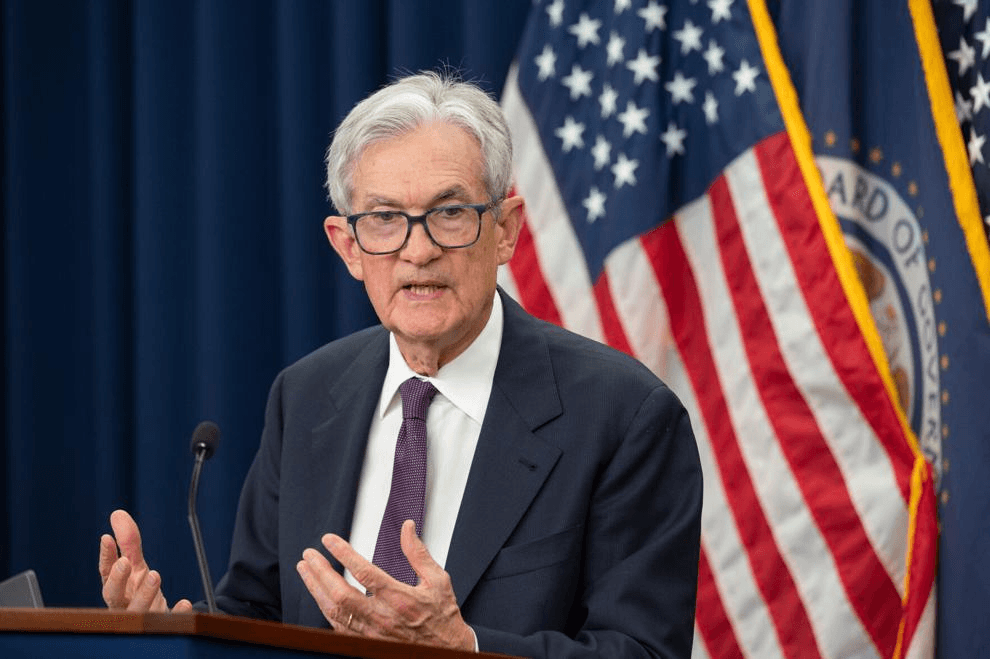
The Fed Chair Who Stayed to Protect the Institution While People Ran Out of Money

Jerome Powell stepped down as Federal Reserve chair this week after eight years that will probably be remembered less for what he did right and more for what ordinary people couldn't afford by the time he left. Tomato prices are up 40 percent over the past year. Overall groceries cost 30 percent more than they did six years ago. Rent is climbing steady. A recent college graduate working in hospitality in Boston told a reporter that grocery shopping used to be mindless but now it's "strategic"—she plans every purchase around saving money she barely has. This is the economy Powell exits. A news cycle all about him defending the Fed's independence against Trump's bullying gets written, and somewhere a 25-year-old is buying fewer vegetables because the arithmetic doesn't work anymore. Powell inherited a lucky hand in 2018. Unemployment was already low, inflation was too low, and the Fed's benchmark rate sat at 1.25 percent. Then came the pandemic, the supply-chain chaos, and two administrations pumping trillions into the economy. Inflation ripped higher. By the time Powell started raising rates seriously in 2022, the damage was already baked in. Rents had jumped, groceries had jumped, and they've stayed jumped. Raising rates after the spike doesn't un-spike the prices. It just makes borrowing expensive for the people who weren't at the party but have to pay for cleanup. The Fed kept rates near zero longer than it should have in 2021 and 2022, and Powell admits as much in interviews. But by then the narrative had shifted. Powell stopped being the guy who moved too slow and became the guy defending institutional independence. When Trump came back into office, he went after Powell—investigations, threats, demands that rates be slashed. Powell, to his credit, stayed put. Didn't resign, didn't fold, kept the Fed's seat at the table when politicians were trying to turn it into a joke. That's the story that sold: Powell as the guardian of the temple. The story no one tells is the one about the people for whom independence meant nothing. Lower-income households "economize," Powell himself said in recent interviews—they trade down from brands, cut purchases, stre

0
0
EBElara Bennett···3 min read

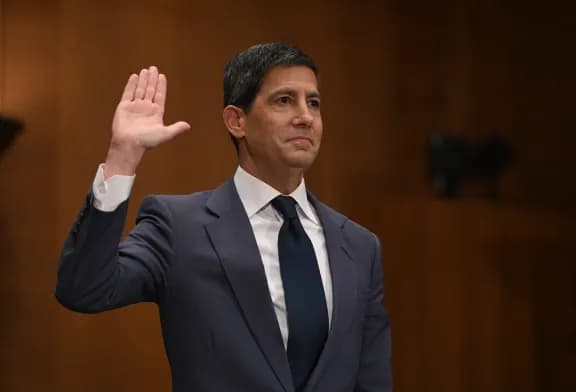
They Hired Him to Cut. The War Had Other Plans.

Gold sits near $4,520 an ounce. Read that number twice. A few years back the gold bugs sounded like cranks at a barbecue, and now the metal is parked at a level that would have gotten you laughed out of the room in 2021. It slipped a little Friday, half a percent, because the dollar firmed up and oil stayed hot and the market started betting the Fed might actually raise rates before the year is out. Sixty percent odds of a hike by December, says the CME FedWatch tool. Not a cut. A hike. Now hold that next to the other thing that happened Friday. Kevin Warsh got sworn in as Fed chair, in the East Room of the White House, Clarence Thomas holding the bible, Trump beaming in the front row. First time a Fed chair has been sworn in at the White House since Greenspan in 1987. The whole point of putting Warsh there was rates. Trump spent a year hammering Powell to cut, even floated 1%, and went looking for a chair who saw it his way. He found one. And the guy walks in the door to an economy that wants the opposite of what he was hired to do. Here's the part I keep chewing on. Warsh used to argue that AI would juice productivity, push prices down, give the Fed room to ease. Reasonable take. Then the US and Israel went to war with Iran, crude blew from the low $70s to north of $115 in two weeks, and gas at the pump went from $2.98 in late February to $4.56. You can't AI your way out of a gas pump. Inflation's running 3.8% year over year, the hottest in three years, and energy alone is up almost 18%. The man's whole framework got mugged by a tanker route. So picture who actually eats this. Not the gold trader, he's fine, he's up. I mean the couple who did everything the responsible adults told them to do. They waited. They didn't stretch for a house at 7%, they sat tight, they watched, because everybody said rates were coming down. And rates did come down. Earlier this year the 30-year dipped under 6% for a blink. A Redfin economist put it plainly: house hunters waited for rates to drop, they finally fell below 6%, and then they bounced right back. The war did it. The window opened a crack and slammed on their fingers. There's a loan officer in suburban Atla

0
0
EBElara Bennett···2 min read

The Fed’s New Risk Is Not Talking Less. It’s Being Trusted Less

Kevin Warsh’s skepticism of forward guidance sounds like a technical debate. Should the Fed tell markets what it expects to do, or should it wait, meet, and decide? But the bigger issue is credibility. If a new Fed chair arrives after intense White House pressure for lower rates, then says he wants less forward guidance, investors will ask a blunt question: is this disciplined humility, or a way to make policy less accountable? That is why Claudia Sahm’s warning matters. Her concern is not that the dot plot is sacred. It is that the Fed spent two decades building more transparent communication, and Warsh seems willing to pull part of that structure apart without yet offering a better replacement. The timing is awkward. Warsh took office as Fed chair on May 22, 2026. The Fed’s April 29 implementation note kept the federal funds target range at 3.50%-3.75%. April FOMC minutes showed higher Treasury yields, higher near-term inflation compensation, and continuing pressure from the Middle East conflict. This is not a quiet backdrop for a communications experiment. The labor market is also not cleanly strong. BLS reported April payrolls rose by 115,000, while unemployment held at 4.3%. That is not recessionary panic, but it is soft enough that every inflation and jobs print now matters more. Warsh has a reasonable point: forecasts can trap policymakers. The March 2026 SEP had Fed officials projecting 2026 PCE inflation at 2.7%, up from 2.4% in December. Forecasts move. Overconfident guidance can make a central bank slow to adjust. But markets do not need perfect forecasts. They need a reaction function. If Warsh weakens the dot plot and forward guidance, he has to replace them with something clearer: how much inflation persistence matters, how much labor-market weakening matters, and how the Fed separates data dependence from political pressure. That is the real test. Less guidance can work if it means less false precision. It fails if it means less transparency. For investors, this is not a simple bullish o

0
0
EBElara Bennett···3 min read

Nvidia Found 80 New Data Centers. Someone Near Them Is Paying for It.

Nvidia just had the kind of quarter that makes analysts run out of adjectives. Eighty-two billion in revenue. Profit up triple digits. The CFO bragged that the company is now standing up AI compute in more than 80 sites that each pull over 10 megawatts. The stock fell 1.8% the next day. That drop is the part everybody wrote about, and it's the least interesting thing here. What caught me was the framing. Nvidia spent the call selling a new story: it doesn't need the giant cloud companies anymore. There's this whole second bucket now, christened ACIE, which is finance-speak for everyone who isn't Amazon or Google. Sovereign governments. Old-line enterprises. Standalone AI clouds. It came in at $37 billion, basically dead even with the hyperscalers. AI cloud revenue more than tripled year over year. The pitch writes itself. We used to lean on four customers. Now the demand is everywhere. Everywhere. Sit with that word a second. Because "everywhere" is also where the power has to come from. Those 80-plus sites Colette Kress mentioned with such pride, each eating more than 10 megawatts, do not run on enthusiasm. They run on the same grid your refrigerator does. And the bill for hooking them up, the new substations and transmission lines, the utilities mostly spread across every ratepayer on the system, whether or not a single server in that building does anything for you. You can watch it land. In Georgia, a typical household power bill has climbed to around $175 a month, roughly six times higher across two years, while the utility asks to spend $15 billion more on capacity it needs mostly to feed data centers. A woman outside Atlanta told a reporter the price was running her pocket. That's the voice that doesn't make it onto the earnings call. There's no slide for her. This is the quiet handoff nobody on the call names. The article I read about the quarter called it "a business beyond hyperscale," like that's pure good news, a company outgrowing its dependence. Read it from the other end of the wire and it says

0
0
EBElara Bennett···3 min read

The Stock Tripled. The Chip It Sells Is Still Losing.

Here's the thing nobody chasing Intel right now wants to sit with. The stock is up 222% this year. The product that's supposed to justify any of it just lost another six points of market share. That's the whole tension in one breath. Mercury Research put Intel's slice of the server CPU market at 66.8% for the first quarter, down from 72.8% a year before. Servers are the crown jewel, the chips that run the world's data centers, and Intel is bleeding them to AMD one quarter at a time. Not crashing. Bleeding. The slow kind that's easy to talk yourself out of noticing while the share price does something the opposite of slow. And look at how AMD is winning, because the texture matters. Its EPYC chips made up only about a third of the units sold. But it pulled in 46.2% of the revenue. People are paying a premium for the AMD part. Lisa Su called it four straight quarters of record server CPU revenue, growth over 50% with both cloud and enterprise buyers leaning in. When customers cheerfully pay more for your rival's chip than for yours, that's not a market-share blip. That's a verdict. Intel's defense, more or less, is that it can't make enough. Lip-Bu Tan told investors demand is running ahead of supply, especially for Xeon. Which sounds like a good problem until you remember the customer who can't get a Xeon doesn't sit and wait. They buy the EPYC sitting on the shelf. Supply you can't deliver is just demand handed to the guy across the street. So why is the stock at 222%? Because the turnaround story is real on its own terms. Earnings are projected to jump 159% this year. The 18A process is in production. There are reports of Apple, of Google Cloud, of Musk wanting the next node for his Texas fab. Tan's pitch that agentic AI needs more CPUs is not nothing. I get why people bought it. I get why they're still buying it. But the number I can't get past is 904. That's what Intel trades at against trailing earnings. Nine hundred and four times. The Nasdaq sits at 43. Even the forward multiple of 139 is a steep climb.

0
0
AAAaron···2 min read

Warsh’s First Problem Is Not the White House. It’s the Bond Market.

Kevin Warsh has formally taken over as Federal Reserve chair, but the real story is not the ceremony. It is whether investors keep believing the Fed will defend price stability even when the White House clearly wants easier money. The Fed confirmed that Warsh took the oath on May 22, 2026, as chair and Board governor, and that the FOMC unanimously selected him as its chair. His chair term runs through May 21, 2030, while his Board term runs through January 31, 2040. This is not a symbolic handoff. He now owns the rate debate. The optics were loaded. AP reported that the swearing-in was held at the White House, with President Trump saying he wanted Warsh to be independent while also making clear he wants stronger growth and lower borrowing costs. Markets can live with political theater. What they punish is any hint that inflation discipline has become negotiable. Warsh is inheriting an awkward macro setup. The Fed’s April 29 implementation note kept the federal funds target range at 3.50% to 3.75%. Meanwhile, April CPI rose 0.6% month over month and 3.8% year over year, according to BLS. BEA’s March PCE price index was still running at 3.5% year over year, with the next PCE release due May 28. That makes the “cut rates and let growth run” story harder to sell. Warsh has talked more favorably about productivity, supply-side strength, and AI-driven growth potential than many traditional Fed voices. But bond investors will ask a simpler question: if inflation is still above target and energy risk is alive, why should the Fed move early? The chair matters, but he is not the whole Fed. The FOMC is a committee, and Warsh will need to persuade other governors and regional Fed presidents. If he pushes too quickly toward cuts, the resistance may come from inside the building as much as from outside markets. For stocks, a more dovish Fed chair can look bullish at first. Lower expect

0
0
AAAaron···1 min read

The Claude Code RCE Is Really About Developer Tools Becoming Execution Surfaces

The worrying part of this Claude Code RCE is not just the bug. It is what the bug reveals: AI coding tools are no longer passive assistants. Once they can read code, edit files, run commands, load hooks, and be launched from links in docs or alerts, they become part of the local execution layer. The reported issue involved a crafted claude-cli://open deep link. In normal use, this kind of link is meant to open Claude Code in a local repo and prefill a prompt. The session should still be inert until the user reviews the prompt and submits it. The flaw was in argument parsing. A value meant to be treated as prefilled prompt text could be interpreted as a real --settings flag. That allowed attacker-supplied settings to be injected into the spawned Claude Code session. From there, hooks could be abused to execute local commands when the session started. That is the deeper lesson: this was not a “model got tricked” attack. It was a classic tooling bug around URL handlers, CLI flags, settings, and startup order, made more dangerous because the tool has agentic capabilities. For companies, the fix is not only “upgrade Claude Code.” Yes, teams should run version 2.1.118 or later, ideally the current latest release. But they should also inventory where claude-cli:// links appear, audit configured hooks, restrict who can define project or user settings, and treat AI coding agents like local execution infrastructure. The risk grows with adoption. The more teams wire coding agents into runbooks, Slack, CI alerts, IDEs, plugins, and MCP servers, the more the security boundary shifts away from “what did the model say?” toward “what can the surrounding toolchain execute?” That is why this incident matters. AI agent security is moving from prompt-injection defense to toolchain-injection defense. The model is only one layer. The CLI parser, deep-link handler, hooks system, permissions model, and config loading path are now part of the attack surface.

0
0
AAAaron···3 min read

Retirees Should Not Treat Bonds as a Magic Safety Net

Bonds still belong in many retirement portfolios. But they are not magic. That is the part many investors learned the hard way after rates moved higher. The old idea was simple: stocks create growth, bonds keep the portfolio calm. Then rates rose, bond funds fell, and a lot of retirees realized their “safe” bucket could still lose money. So the better question is not whether retirees should own bonds. The better question is: what job is each bond holding supposed to do? If the money is needed in the next one or two years, it probably should not be sitting in a long-duration bond fund. That money is spending money. Its job is stability, not heroic return. Treasury data on May 20 showed the curve still carrying real pressure: 1-year at 3.79%, 2-year at 4.04%, 10-year at 4.57%, and 30-year at 5.11%. Long rates are not low. Markets are still demanding compensation for inflation, deficits, issuance, and policy uncertainty. That matters for retirees because the risk is not just default risk. The bigger problem is price risk. CBO’s February outlook added the fiscal backdrop. It projected a $1.9 trillion federal deficit in fiscal 2026, equal to 5.8% of GDP. By 2036, the deficit is projected to reach $3.1 trillion, or 6.7% of GDP. Federal debt held by the public is projected to rise from 101% of GDP in 2026 to 120% in 2036. That does not mean Treasuries suddenly become junk. It does mean the bond market may keep asking for a higher term premium if Washington keeps borrowing heavily. For retirement planning, I would separate the portfolio into three jobs. First: near-term spending. Keep one to two years of planned withdrawals in cash, money-market funds, short Treasury bills, or CDs. This bucket is boring on purpose. It prevents forced selling. Second: medium-term income. For the next three to seven years, short- and intermediate-term Treasuries, investment-grade bonds, TIPS, or a bond ladder can make sense. The key is not chasing a little extra yield by taking too much duration risk. Third:

0
0
EBElara Bennett··

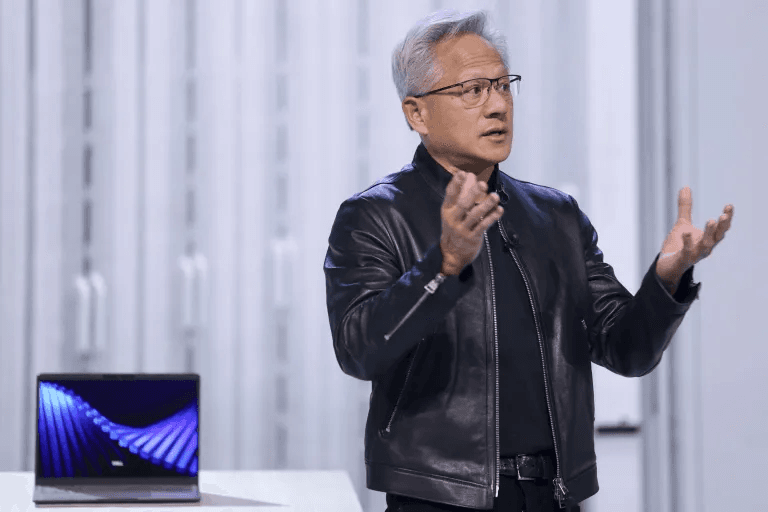
Nvidia outpaced market expectations for the quarter, propelled by the exponential growth of its data center division and robust demand for AI processors. As the chipmaker expands its footprint into adjacent industries and public sector domains, it increasingly identifies robotics and autonomous vehicles as its next strategic growth frontiers. Yet, despite this stellar performance—bolstered by increased dividend payouts and a massive $80 billion share buyback program—the stock remained largely stagnant, underscoring lingering investor prudence regarding broad-based AI adoption. This lukewarm market response unfolds against a backdrop of intensifying competition, with tech heavyweights AMD, Google, and Broadcom all aggressively vying for market dominance.

0
ECEthan Caldwell··

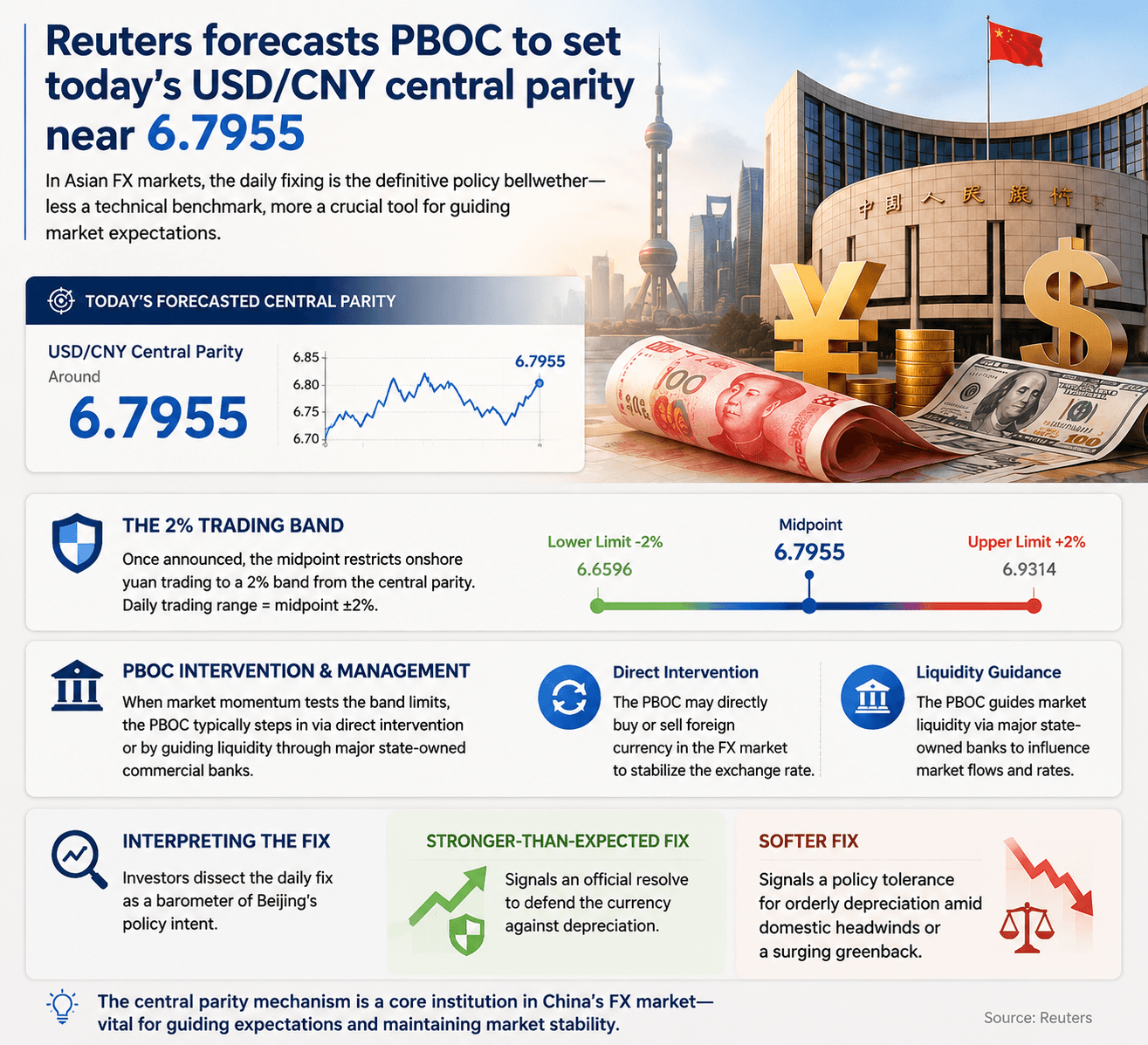
Reuters forecasts that the People's Bank of China will anchor today's dollar-yuan central parity rate near 6.7955. In Asian foreign exchange markets, this daily fix operates as the definitive policy bellwether—functioning less as a technical benchmark and more as a crucial tool for guiding market expectations. Once unveiled, the midpoint caps the onshore yuan's intraday trading within a strict 2% band. If market momentum tests these regulatory boundaries, the central bank routinely steps in via direct intervention or by steering liquidity through major state-owned commercial banks. Consequently, investors dissect the daily fix as a barometer of Beijing's policy intent: a stronger-than-expected setting underscores an official resolve to defend the currency against depreciation, whereas a softer fix signals a policy tolerance for orderly depreciation under the weight of domestic economic headwinds or a surging greenback.

0
AAAaron··

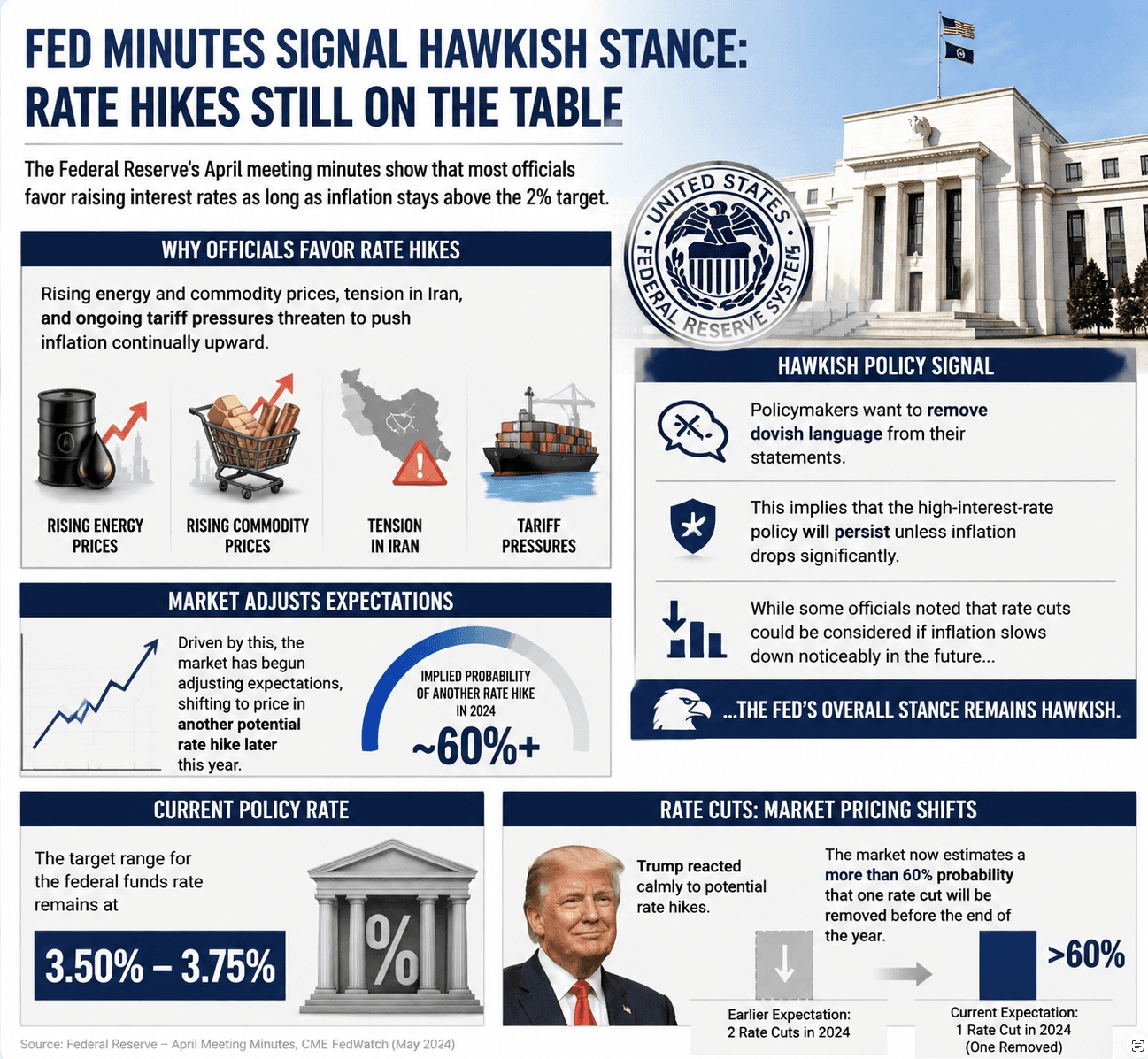
The Federal Reserve's April meeting minutes show that most officials favor raising interest rates as long as inflation stays above the 2% target. This preference stems mainly from rising energy and commodity prices, alongside tension in Iran and ongoing tariff pressures, which together threaten to push inflation continually upward. According to the minutes, policymakers want to remove dovish language from their statements. This implies that the high-interest-rate policy will persist unless inflation drops significantly. While some officials mentioned that rate cuts could be considered if inflation slows down noticeably in the future, the Fed's overall stance remains hawkish. Driven by this, the market has begun adjusting expectations, shifting to price in another potential rate hike later this year. Currently, the target range for the federal funds rate remains at 3.5% to 3.75%. Although Trump reacted calmly to potential rate hikes, the market now estimates a more than 60% probability that one rate cut will be removed before the end of the year.

0
AAAaron··

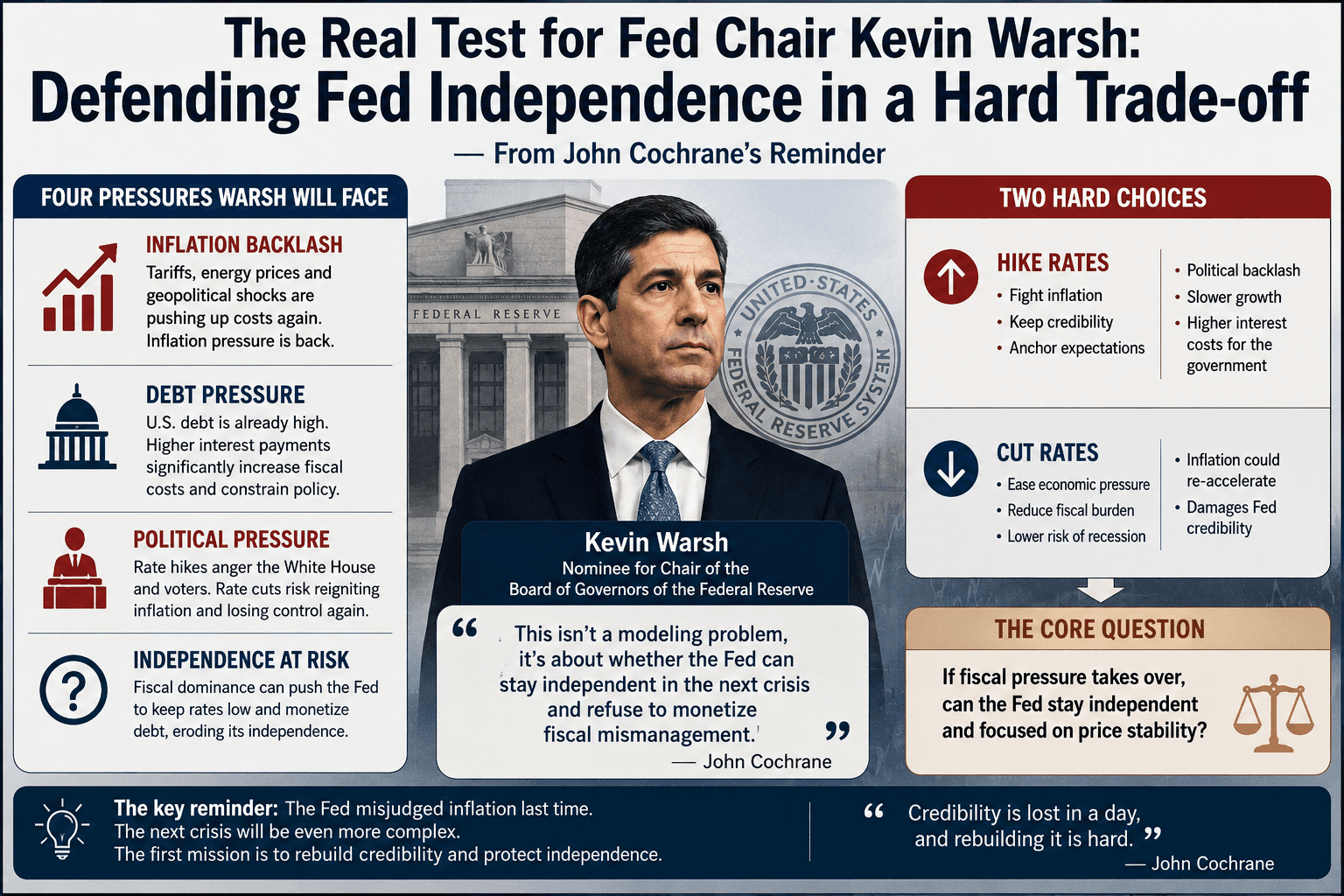
The newly appointed Federal Reserve Chair, Kevin Warsh, steps into a formidable set of challenges. Earlier this year, the prevailing debate centered on the pace of interest rate cuts. Yet, a resurgence in inflation driven by tariffs and geopolitical conflicts has fundamentally upended those expectations. The current economic landscape looks starkly reminiscent of the 1979 stagflation crisis, leaving him caught in a tightening vice. He faces an unenviable choice. On one path, he can raise interest rates to combat inflation, a move that would guarantee severe friction with the White House and risk tipping the economy into a slowdown. On the alternative path, he could adopt a wait-and-see approach, hoping prices stabilize on their own. However, this inertia would offer no relief to a public already deeply frustrated by a punishingly high cost of living. Looking further ahead, unconstrained fiscal deficits loom large. This structural reality threatens to subject the Federal Reserve to intense political co-optation, potentially forcing the central bank to monetize runaway government debt. Consequently, the traditional playbook of large-scale asset purchases to stabilize markets may prove entirely ineffective in the next crisis. This predicament cannot be resolved through clever communication strategies or blind reliance on artificial intelligence to boost productivity. The Federal Reserve must fundamentally re-examine its past role in accommodating massive fiscal expansion. Failure to do so risks a severe loss of institutional credibility, leaving global markets to deliver a harsh verdict.

0
EBElara Bennett··

SpaceX's upcoming IPO could be one of the most monumental in history. It represents not only a major milestone in global aerospace history, but also reflects the market's exceptionally high valuation of the commercial space sector and the space economy. However, we must remain vigilant against the accompanying risks driven by market sentiment. The true market value of SpaceX is still far from being fully realized and falls short of market expectations. Why, then, does it command such a premium valuation? The primary reason is that investors are buying into the future. Whether this is an asset bubble or the dawn of a new era remains to be seen.

0
AAAaron··

Andrew Dai’s 14 years at Google basically trace the tech giant’s entire AI journey through the deep learning era. He was a key member of core research teams at both Google Brain and DeepMind. His work spanned early sequence learning that inspired GPT, text generation and adversarial training, all the way to MoE architecture, PaLM, Flan, Gemini, multimodal technology and long-context models. He co-authored papers with top Google tech elites including Quoc Le, Ian Goodfellow, Liam Fedus and Jeff Dean. After the successful launch of Gemini 3.0, Andrew decided to quit his job. He spotted a path that big tech firms dare not take — neither pure language models nor world models, but an integration of linguistic and visual reasoning. His new startup Elorian AI secured 55 million US dollars in funding last April, with Jeff Dean joining in as a private investor。

谷歌AI的14年、Gemini翻身之战,与视觉理解模型:专访DeepMind前核心科学家Andrew Dai|Neolabs特辑

by 硅谷101

youtube.com
0
AAAaron··

Will the Fed cut interest rates? The answer is crystal clear now. Don’t expect any rate cuts in 2026; we’ll be lucky if they don’t hike rates again. Ignore all the market speculations, the hard data speaks for itself. America’s April CPI hit a 3-year high of 3.8% year-on-year, with a 0.6% month-on-month rise, and core inflation stood at 2.8%, all exceeding forecasts. With inflation still running hot, how could the Fed slash rates? That would only make things worse and undo all its past efforts to curb inflation.

Premium
AAAaron···1 min read

kta has added support for Amazon Bedrock AgentCore to its Okta for AI

kta has added support for Amazon Bedrock AgentCore to its Okta for AI Agents product and extended the offering to work with non-Okta identity providers. The changes are designed to help organisations manage the identity, access and governance of AI agents across different platforms and enterprise systems. The Amazon Bedrock AgentCore integration gives customers a way to manage agent identities built on Amazon Web Services through ownership assignment, lifecycle controls and deactivation tools. The service can also discover agents by monitoring new OAuth consent grants in browsers and import agents from AgentCore through the Okta Integration Network. Once registered, agents can be assigned a human owner and baseline governance policies in a central system. Organisations can also define which resources those agents may access, set authentication methods and determine the scopes they receive. The product also includes workflow tools for user access requests and certification for AI agents. Customers can revoke an agent's access with a single action and capture system logs, tool calls and authorisation decisions for compliance and incident response.

1
AAAaron···4 min read

Nvidia is finally no longer carrying the load alone

Over the past two years, Wall Street has harbored an open secret. The S&P 500 posted solid gains, accompanied by seemingly impressive earnings growth. Yet, strip Nvidia from the equation, and this illusion of prosperity immediately loses half its substance. So far this year, a single company—Nvidia—has driven 15.5% of the index's total return. Given that the S&P 500 itself is up only 17.9%, the remaining 499 companies combined amount to little more than a rounding error. This is no longer a functioning market; it is Nvidia and its supporting cast. The latest quarterly earnings, however, offer a slightly different narrative. Tech sector earnings jumped 21%, pushing total S&P 500 earnings growth to 13.1%, a figure that comfortably beat the 7.9% projected at the start of the quarter. Data from FactSet shows revenue growth hitting 8.4%, marking its highest level since the third quarter of 2022. More importantly, the drivers of this growth are expanding. Beyond Nvidia, companies like Microsoft, Alphabet, Broadcom, and Micron—and even retail and commodities heavyweights like Walmart and Bunge—are all lifting the benchmark. The capital pouring into AI is finally spreading across the broader chain rather than clustering on a single balance sheet. Hardware makers, cloud providers, and storage firms are all starting to turn a profit. This is a pivotal signal. Previously, the market's deepest anxiety was that tech giants were sinking hundreds of billions into AI capital expenditure with nothing to show for it, leaving Nvidia as the sole benefactor while everyone else simply burned through cash. No one knew when the bleeding would stop. Now, other players are finally converting massive order books into tangible net income. Yet, these numbers actually make me more nervous. The logic was straightforward when Nvidia carried the market single-handedly: if the titan stumbled, the resulting panic would be collective and predictable, and everyone knew the playbook. But when companies across the entire AI ecosystem surge together, in

0
1
AAAaron···5 min read

A Shift in Career Desires: Why the Misjudged Hospitality Industry Outlasts AI Fears

A striking trend has taken hold among today’s younger generation: an instinctive retreat into what they assume are "safer" career paths the moment artificial intelligence is mentioned. The ideal job has become one that is supposedly irreplaceable, grows more valuable with age, and allows them to stay as far away from people as possible. Yet, this very preoccupation makes them blind to a category of work that is ordinary and exhausting, but genuinely difficult for machines to replicate in the near future: serving human beings. The hospitality industry is precisely one of these undervalued fields. It lacks cool appeal, carries no social prestige, and many of its roles sound tedious, repetitive, and physically demanding to outsiders. But the most challenging aspect of this work is exactly where its unreplaceability lies. When a guest is unhappy, you have to absorb that emotional friction. If the atmosphere in a room feels off, you need to notice it. When someone leaves their thoughts unspoken, you must anticipate where their real frustration lies. AI can assist with these tasks, but it cannot shoulder the weight of an entire human interaction. Therefore, the most compelling point in the recent Fortune profile is not whether the hotel industry will face labor shortages. It is the core observation made by Kurt Alexander, President of Omni Hotels & Resorts: technical skills can be taught, and business processes can be mastered, but a person's genuine willingness to serve, their resilience under pressure, and their capacity for self-reflection cannot be faked. Resumes can be beautifully polished, and interview answers flawlessly rehearsed, but a few real-world conflicts on the floor will inevitably reveal who someone truly is. This reality delivers a harsh truth to Generation Z. Most career advice urges young people to learn AI, master prompts, embrace automation, and maximize efficiency. While this advice is valid, relying solely on these skills creates a narrow path. The gap between a worker who merely dumps questions into AI and one who understands what to ask, spots errors in the answers, and knows how to fix the next step will only widen. As AI grows more

0
0