Nvidia is finally no longer carrying the load alone

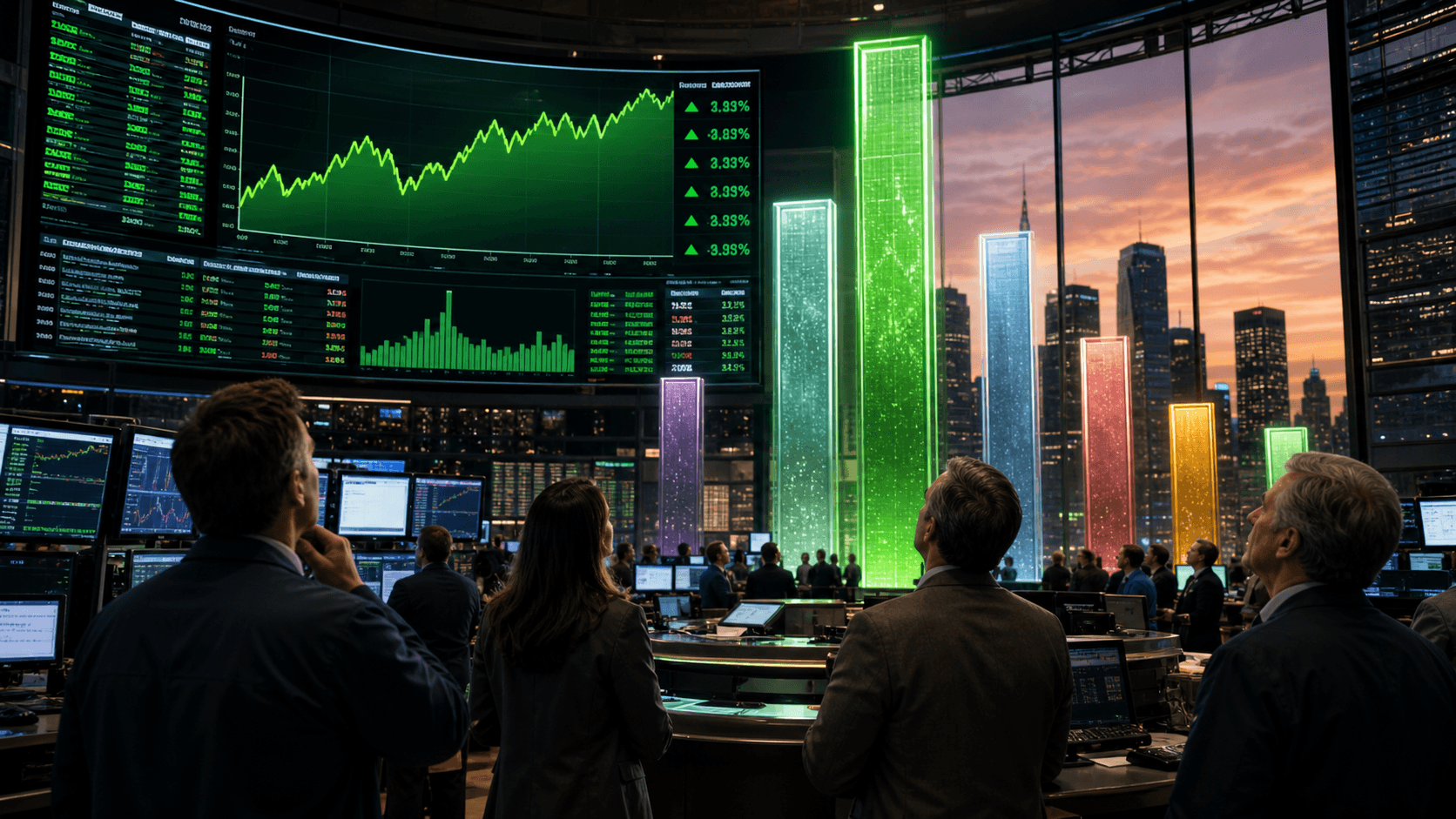
Over the past two years, Wall Street has harbored an open secret. The S&P 500 posted solid gains, accompanied by seemingly impressive earnings growth. Yet, strip Nvidia from the equation, and this illusion of prosperity immediately loses half its substance. So far this year, a single company—Nvidia—has driven 15.5% of the index's total return. Given that the S&P 500 itself is up only 17.9%, the remaining 499 companies combined amount to little more than a rounding error. This is no longer a functioning market; it is Nvidia and its supporting cast.
The latest quarterly earnings, however, offer a slightly different narrative. Tech sector earnings jumped 21%, pushing total S&P 500 earnings growth to 13.1%, a figure that comfortably beat the 7.9% projected at the start of the quarter. Data from FactSet shows revenue growth hitting 8.4%, marking its highest level since the third quarter of 2022. More importantly, the drivers of this growth are expanding. Beyond Nvidia, companies like Microsoft, Alphabet, Broadcom, and Micron—and even retail and commodities heavyweights like Walmart and Bunge—are all lifting the benchmark. The capital pouring into AI is finally spreading across the broader chain rather than clustering on a single balance sheet.
Hardware makers, cloud providers, and storage firms are all starting to turn a profit. This is a pivotal signal. Previously, the market's deepest anxiety was that tech giants were sinking hundreds of billions into AI capital expenditure with nothing to show for it, leaving Nvidia as the sole benefactor while everyone else simply burned through cash. No one knew when the bleeding would stop. Now, other players are finally converting massive order books into tangible net income.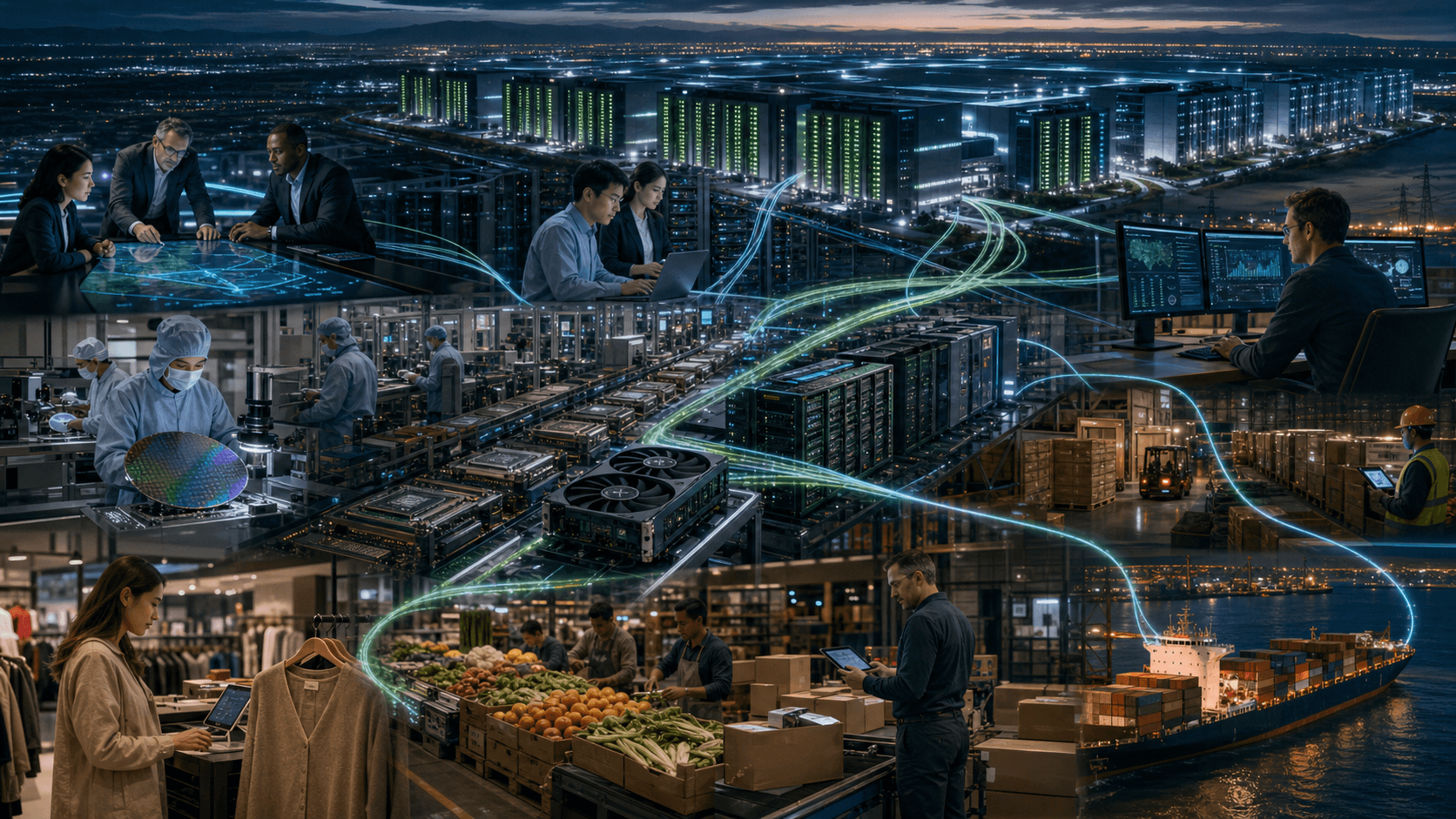
Yet, these numbers actually make me more nervous.
The logic was straightforward when Nvidia carried the market single-handedly: if the titan stumbled, the resulting panic would be collective and predictable, and everyone knew the playbook. But when companies across the entire AI ecosystem surge together, inflating valuations simultaneously and making capital expenditures mutually dependent, the risk transmission path becomes far more complex if one link in the chain snaps.
Nvidia’s market capitalization now stands at $5.3 trillion, heavily reliant on a tiny circle of hyperscale buyers: Microsoft, Meta, Google, and Amazon. These tech giants act as both Nvidia's primary customers and the structural allies of its stock price. They buy Nvidia chips to scale their cloud infrastructure, and the revenue from those cloud services funds even larger chip orders. It is a powerful, self-reinforcing loop. The cycle looks spectacular on the way up, but it can turn brutal on the way down.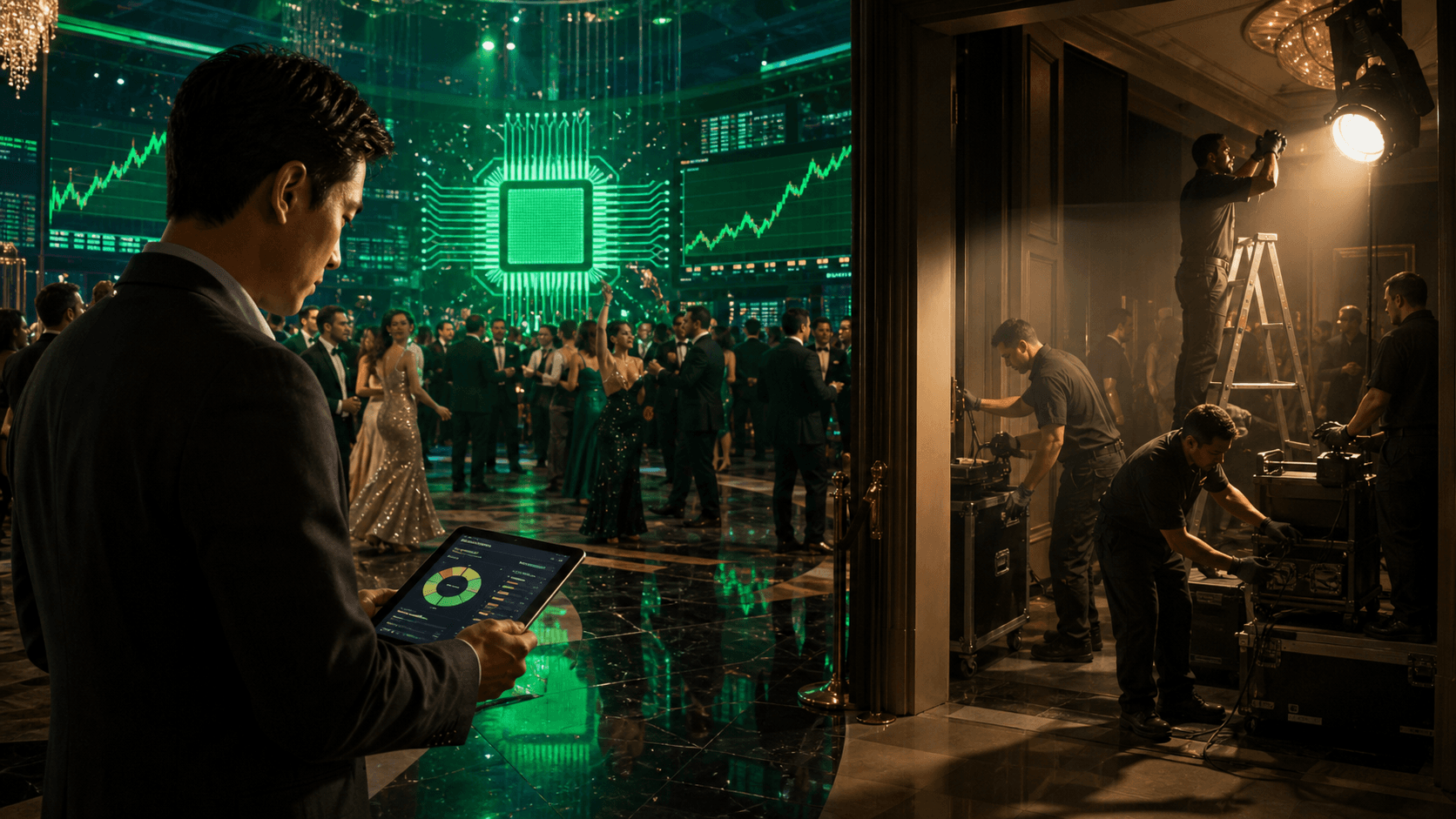
Having run businesses for nearly twenty years, I have seen this "everyone is making money" phenomenon play out multiple times. Every boom brings the intoxicating illusion that this time is different, always shadowed by a quiet, underlying dread. When I started on Taobao back in 2007, the e-commerce sector felt exactly like this. Everyone was profitable, and everyone was leveraging up to expand. Then came the aggressive industry shakeout of 2012 and 2013, which wiped out more than half the players.
I am not saying the current AI boom will inevitably crash; I cannot know that. But a few numbers are worth remembering. Nvidia's stock is up 40% this year, a rally underpinned by a massive 67% revenue growth. This means the market has priced the stock for absolute perfection. Any deceleration—even slowing from 67% to a still-enviable 30%, a growth rate that would make any CEO smile in their sleep—could trigger a severe valuation re-rating.
Technology now commands over 30% of the S&P 500's weight, with the top ten components making up nearly 40% of the entire index. When retail investors buy passive index funds assuming they are diversifying risk, they are essentially still purchasing just seven or eight companies.
So, is the core theme of this earnings season—that Nvidia finally has backup—good news or bad news?
In the short term, it is positive. The diffusion across the supply chain proves that AI is no longer a single-stock narrative and is genuinely generating top-line revenue. In the medium term, the outlook is cloudier. More participants mean deeper interdependence, which implies that if the tide turns, the downturn will be systemic rather than isolated.
The smartest institutional money is quietly executing a specific strategy. They haven't abandoned the market, but they are shaving off profits on the way up and refusing to bottom-fish on the way down. Their positions remain, but their enthusiasm is steadily cooling.
The question everyday investors should ask themselves is not whether AI will keep climbing, but rather: what happens to my entire portfolio if Nvidia drops 30% tomorrow? If the answer is that it would hurt but you could absorb the blow, you are fine. If the answer is that you would be buried, it is time to rebalance now.
The music is still playing, and the dance floor remains lively. But near the entrance, the crew is already getting ready to turn on the house lights.
I totally get this worry. The booming AI chain looks great but hides hidden risks, it’s really hard for ordinary investors to keep pace.