Tracks private markets, public equities, and capital allocation decisions across major industries.

AI Infrastructure Is Becoming Finance’s New Balance-Sheet Decision
TL;DR: Two headlines point to a shared market shift: AI value is increasingly about infrastructure durability, not only model performance. A reported partnership between Rebellions and KB Financial Group shows that enterprises are prioritizing dependable AI operations inside financial workflows, while the Navitas-onsemi framing shows investors comparing power-chain leadership at a more granular level. For business audiences, the implication is practical: treat AI as a chain-of-capability business, not a single-tech story, and evaluate firms by execution reliability, margin resilience, and the ability to sell recurring, mission-critical usage. Why AI infrastructure is now a direct finance story AI infrastructure used to sound like a pure engineering topic, but in capital markets it now behaves like credit quality: continuous operation, predictable costs, and contractual serviceability matter more than one-off narratives. In finance, where outages translate directly into reputational and legal risk, teams that can guarantee latency, uptime, and cost control are the ones quietly shaping AI unit economics. A finance-oriented reader should view this as a balance-sheet and operating-model issue, not a science fiction debate. If a firm relies on external infrastructure volatility, it imports risk into earnings quality. If it builds controlled AI rails, it can compress risk through process discipline, just as banks did with treasury or risk operations. Why the Rebellions-KB Financial Group signal is broader than one announcement A public headline says Rebellions has partnered with KB Financial Group on AI infrastructure. That specific pairing matters less for brand noise than for what it represents: institutional demand for managed AI stacks that are governance-ready and operationally integrated. From model experimentation to production workflow Most firms start with pilots and stop there. The next step is turning AI from a demo to an always-on service layer. In that phase, infrastructure is no longer abstra

How Markets Stay Elevated When Geopolitics Stalls: A Finance-First Lens for the Next Data Cycle
TL;DR: Markets can stay near record levels even while diplomacy stalls when investors trust liquidity and earnings momentum, and when uncertainty has a perceived time horizon. Headlines this week frame two competing narratives: one asks what economic data is arriving, and the other asks how much unresolved geopolitical tension can be tolerated in pricing. The practical lesson is to treat volatility risk as conditional, not binary: define your triggers first, size for what the calendar can prove, and wait for data that changes the base case rather than reacting to every headline. This is how disciplined investors extract optionality from noise. }) The market is comfortable, but not careless A common mistake is to read every elevated index as a triumph of certainty. In reality, record levels often reflect a temporary consensus that current conditions are survivable. The question is not whether unresolved headlines are dangerous, but whether they are likely to become price-moving before the next set of hard data points. As one headline puts it, investors are watching economic data closely for this week Kiplinger and another asks why equities remain strong without an Iran resolution JPMorgan. Why economic data season shifts the debate from fear to math The weekly data calendar changes the frame from opinion to scenario management. Before each release, narratives usually dominate; after each release, numbers either validate or

How Stocks Stay at Record Highs While Diplomacy Drags: The Data-Week Pattern Investors Should Trade By
TL;DR: Markets are not celebrating peace in Tehran; they are pricing probabilities. The current stock premium is better explained by three forces—stronger corporate cash-flow visibility, policy stabilization after inflation moderation, and liquid flows chasing index exposure—while weekly economic prints in the coming days become the real trigger for repricing. If data confirms disinflation and stable labor momentum, earnings multiples can remain elevated; if both miss, geopolitics turns from a side conversation into the headline risk everyone thought it was. Why record highs can survive unresolved headlines The immediate reaction to unresolved geopolitical stories is usually fear, then numbness, then a rerating of what can be measured against what cannot. The J.P. Morgan-themed market note framing, record pricing works when balance sheets are healthy, margins are resilient, and index-level liquidity remains sticky. 1) Geopolitics as a known-unknown For portfolio construction, unresolved diplomacy is a “known-unknown.” Investors do not pretend it does not matter; they assign it a probability and move on. That means markets can remain elevated so long as the perceived downside remains bounded by earnings, policy, and financing conditions. The issue is not whether tension exists, but whether the probability of a near-term shock becomes high enough to force de-risking. 2) The new default is process over conviction Institutional desks increasingly trade this environment through process: scenario weights, stop-loss discipline, and sector beta control. That is why one unresolved issue can coexist with a broad bid in large-caps if the process still points to steady revenue quality and supportive financing conditions. The headline looks dramatic; the order book does not always agree. 
Volatility Is Baked In, Not Out: Why Equities Can Stay Elevated Through Geopolitical Noise
TL;DR: US and global equities can stay near record highs even amid unresolved geopolitical headlines because the main pricing engine this session is liquidity, earnings resilience, and the narrow set of macro inputs that can alter discount rates. As the week unfolds, the biggest opportunity for investors is to separate narrative-safe confidence from fragile optimism: identify which data points can truly force repricing, and position for controlled upside while protecting against policy surprises and volatility spikes. The risk is less in one dramatic headline and more in delayed confirmation from data that shifts probability, valuation, and positioning at once. See JP Morgan’s take on stocks and the Iran backdrop and the weekly economic-data watchlist. Why record highs can coexist with unresolved headlines Markets rarely move in proportion to headlines alone. They move to expected cash flows, the discount rate path, and portfolio positioning. That is why a headline-heavy geopolitical gridlock can coexist with broad price resilience: investors are effectively discounting the geopolitical premium as either temporary or manageable. The headline is rarely the driver, the policy reaction is A geopolitical headline is often a risk trigger, not a valuation engine. The market reaction tends to depend on two things: (1) whether the event is expected to persist, and (2) whether it alters earnings, rates, or liquidity in a material way. Liquidity is still the silent amplifier When funding is abundant and refinancing remains orderly, many investors prefer to stay invested through noise. That does not mean recklessness; it mea

Beyond the Hype Curve: Why AI’s Hidden Costs Could Set This Week’s Market Tone
TL;DR: The Financial Times headline signals a clear message for investors: the U.S. AI boom may be richer in private value than public investors assume, yet the Kiplinger focus on next week’s macro calendar means price discovery can still reverse quickly. For finance and business leaders, the practical test is no longer "is AI good?" but "how fast are firms converting AI enthusiasm into margin, cash flow, and hiring productivity while avoiding energy and cost overruns." If macro prints improve liquidity and demand confidence, the AI story strengthens; if not, the boom can look much less durable in just days. The headline mismatch: sentiment versus execution The two prompts point to different levels of analysis. One is strategic and narrative: AI growth is larger than common investor models imply. The other is tactical and calendar-driven: the next few weeks of economic data can recalibrate everything. Together they imply a transition: markets are moving from story-led valuation to execution-led repricing. Even sophisticated teams often commit the same mistake—treating AI as a monolithic theme—while it is now a set of distinct operating bets across compute, workforce, and industrial deployment. If those buckets are tracked together, the headline can look correct while margins disappoint. If tracked separately, the same headline can turn into a source of alpha. The AI boom’s second-order effects on U.S. balance sheets ) 1) Capex becomes a financing decision, not a branding decision AI is no longer mostly R&D theater. The implication is that boards increasingly evaluate AI through a finance lens: deployment cost, utilization rate, and time to revenue impact. The headline suggests hidden value is still being discovered, which means investors may be undercounting this conversion process. That undercount can be right or wrong depending on utilization. If systems are embedded into front-line workflows, AI can lift operating leverage. If they are only pilots, capex may res

From Calendar Noise to Capital Signals: Why This Week Turns AI into a Balance-Sheet Debate
TL;DR: The coming June 15-19 window should be treated as a single risk-mapping exercise, not a hunt for one headline-grabbing number. The finance angle in this week’s data schedule becomes meaningful when every release is translated into a change in enterprise cash-flow resilience and AI capex funding cost. Pair that with a disciplined stress test for bubble-like AI revaluation risk, and you get a better decision framework than simply reacting to CPI or payrolls in isolation. The best move is conditional planning: what changes if demand stays strong, weak, or structurally re-priced? Two headlines, one combined market message The first headline points to economic releases, while the second asks what an AI bubble unwind would look like. These are not separate stories for serious investors; they are one pricing mechanism. The economic data changes the baseline discount rate and earnings confidence, while AI-sentiment shifts determine whether multiples can stay expanded when volatility rises. If you ignore either side, your read is incomplete. A resilient AI headline without macro support can still fail as financing dries up. A positive macro surprise without AI-quality demand can leave equity and credit participants overpaying for narrative durability. In practical terms, treat both headlines as a two-axis control panel: rate-path outlook and growth-quality outlook. Use this as a macro lens Read each data release as a capital-availability signal From surprise to implication For finance teams, the first transformation is technical but essential: convert each print into an implied change in balance-sheet friction. Are working-capital needs likely to rise? Will policy signals become more hawkish or more dovish? Does the print reduce or increase the perceived probability of a liquidity squ

AI as Household Balance Sheet Risk: What the SpaceX IPO Debate Changes for Finance and Strategy
TL;DR: The SpaceX IPO narrative and the AI-bubble stress question together point to one shift: finance and business can no longer treat AI as an optional side story. If AI becomes core to household and corporate outcomes, valuation should be priced by durable cash-flow conversion, not narrative velocity. The practical edge is risk-aware concentration management, scenario planning, and disciplined capital sequencing—especially if demand and funding conditions moderate after the headline excitement fades. In short, investors and operators should optimize for usefulness, margin quality, and execution durability before they optimize for headlines. (See also the Guardian framing) and the Big Substack AI-bubble lens. The headline is a wake-up call, not just a valuation story The core message in the current discussion is that AI is no longer a thematic add-on for selected technology funds. The framing that one high-profile IPO could reshape the financial future of a broad investor base is a reminder that exposure is increasingly concentrated in practice, even when portfolio narratives appear diversified. The challenge is not whether AI is transformational in the long term; that question is already mostly accepted. The challenge is whether the pace of commercialization, regulation, and competitive entry aligns with the market's current assumptions about persistence of growth and margin expansion. Markets are trying to price a social and commercial transition, while businesses still behave as if incremental AI pilots automatically translate into durable advantage. Why financial exposure is now a systems problem Why household impact feels personal For many investors and operators, AI exposure is no longer only through a few public stocks. It is

Beyond AI Hype: How a SpaceX IPO Debate and Bubble Anxiety Should Reshape Capital-Allocation Discipline
TL;DR: The current debate sparked by a potential SpaceX IPO and AI bubble headlines is less about whether AI is a winner and more about whether capital markets will continue to reward expectations faster than cash-flow resilience. For finance teams, investors, and households, the key shift is to evaluate AI opportunities with infrastructure discipline: unit economics, funding durability, and downside survival. In practical terms, the next AI alpha opportunity is not the boldest forecast, but the least fragile financing structure behind it. ) The two headlines as a stress test for market logic A headline is not strategy, but it can reveal where the market’s anxiety is concentrated. One framing says AI has become so intertwined with daily financial outcomes that even a mega-space story can influence household wealth narratives. The other asks the uncomfortable question: what happens if AI capital formation overheats and then contracts? That pair is useful because it exposes a persistent market bias. Investors often collapse “AI company” into a single thesis, then price everything through the same narrative channel. Yet the source of returns in finance is usually narrower and less glamorous: pricing power, cash conversion, and the financing ladder during policy shifts. For finance readers, the core signal is this: headlines about one company becoming public can trigger sector re-pricing across adjacent firms, while parallel “bubble” language changes risk perception and, eventually, the discount rate at which future earnings are valued. What an AI-linked IPO implies for valuation mechanics From narrative premium to financing scrutiny When a high-profile listing gets discussed, the valuation model tends to shift from “what this company can do” to “what this company can fund for the next 3–5 years.” In other words, the market asks whether the firm can keep spending aggressively without destabilizing its balance sheet. The headline effect can be immediate, but

Beyond the AI Bubble Narrative: Why Capital Discipline, Not Hype, Will Set the Next AI Price Cycle
TL;DR: AI’s next major valuation reset is less about a sudden rejection of the technology and more about investors demanding proof of monetization, not just enthusiasm. The headlines capture two sides of the same cycle: one asks what happens if sentiment-driven AI capital dries up, the other asks whether a major AI-linked public listing could lock ordinary investors deeper into this sector’s fortunes. The likely inflection point is not innovation itself but financial durability—how companies fund compute, secure talent, survive regulation, and sustain margins through a period when growth slows from hype levels to cash-flow reality. If institutions begin pricing that reality early, the market can stay expensive in one segment and brutally conservative in another. The AI bubble question: why “pop” is often a repricing, not a crash In popular conversation, a bubble implies everyone suddenly becomes irrational at once. Finance reality is subtler. A pop can simply mean the risk premium recalibrates when assumptions shift from heroics to prudence. The accounting shift from option value to operational cost The strongest signal is not whether AI adoption exists, but whether adoption translates into profitable workflows quickly enough. For now, many projections still carry startup-like runway assumptions: rapid expansion, high valuation support, delayed payoff. That model breaks once interest rates, power costs, and hiring cycles normalize. AI budgets are no longer just about model quality; they are about sustained capex, uptime economics, and customer retention. Why sentiment-driven growth can look healthy until it is not When capital is abundant, revenue deceleration is often interpreted as temporary. As that assumption weakens, valuation multiples contract first in the most aggressively leveraged parts of the theme: highly speculative AI-only plays and firms with expensive “land-grab” plans. This is why a bubble narrative can become true even if the technology keeps improving—because financial expectations outrun business evidence. The SpaceX IPO lens: AI’s capital structure is changing the conversation A major AI-adjacent public story around SpaceX

Ramp's $44 Billion Round Says Budget Control Is Becoming Infrastructure
TL;DR: Ramp's new Series F round values the company at $44 billion just months after it said it had reached a $32 billion valuation. The easy read is that venture investors are overpaying for another fintech darling. The more useful read is that CFO software is being repriced as operating infrastructure because finance teams now need one control layer for cards, invoices, reimbursements, procurement, and AI-era software sprawl. That sounds abstract until you picture the actual desk. A controller is not arguing about "embedded finance." She is staring at a queue of employee reimbursements, vendor bills, card charges, and new software subscriptions that keep multiplying across departments. If the system that sorts those flows also tells her where budget leakage is happening, it becomes harder to rip out than a normal payments tool. By the third paragraph, the implication is clear: Ramp's valuation is not really a bet on interchange revenue or startup hype. It is a bet that budget control is turning into workflow control, and workflow control is one of the few categories companies still fund even when they claim to be cutting software spend. The Round Is Large Because The Problem Is No Longer Small Ramp said the new financing was led by Founders Fund with participation from several existing investors, and that annualized purchase volume has now climbed to $80 billion. That is a big operating footprint for a company that many outsiders still mentally file under "corporate cards." The faster way to understand the round is to ignore the card first and look at the workload. Finance teams are now managing a messier spend stack than they did a few years ago. It is not just travel and meals. It is usage-based cloud bills, vendor invoices, procurement approvals, seat-based SaaS renewals, and a growing pile of AI subscriptions

FDIC's Q1 Banking Profile Turns Loan Growth Into A Balance-Sheet Test
TL;DR: The FDIC's first-quarter 2026 banking profile says U.S. banks are profitable, liquid, and still lending, but the more useful signal is constraint. Industry net income rose to $80.5 billion, loans grew fast, and deposits increased again, while unrealized securities losses climbed to $325.1 billion and certain loan portfolios stayed weak. The business implication is simple: banks have room to lend, but every new loan now competes with duration risk, funding mix, and credit review. #What The FDIC Data Actually Says About U.S. Banks The easy read on the FDIC's Q1 2026 banking profile is that banks are fine. That is not wrong. It is just incomplete. The industry reported $80.5 billion of quarterly net income, up $2.8 billion from the prior quarter, with return on assets at 1.26%. Domestic deposits rose for the seventh consecutive quarter. Total loans increased $215 billion, or 1.6%, and the annual loan-growth rate accelerated to 7.1%, the fastest since first-quarter 2023. Those numbers do not describe a banking system hiding under the desk. They describe a banking system that is still doing business while measuring every inch of balance-sheet space. #Why Profit Is Not The Main Constraint The overlooked line is not net income. It is the combination of lower net interest margin, higher unrealized securities losses, and selective credit weakness. The FDIC said the industry's net interest margin fell 8 basis points in the quarter because earning-asset yields declined more than funding costs. At the same time, unrealized losses on securities increased by $19 billion, or 6.2%, to $325.1 billion. That is the operating tension. When a bank owns securities that are still marked below book value, it does not automatically stop lending. But it becomes more careful about liquidity, funding duration, loan pricing, and whether a new asset deserves a slot on the balance sheet. The ALCO Me

Goldman's Humain Mandate Puts AI Data Centers In The Credit Committee
TL;DR: Goldman Sachs is reportedly advising Saudi AI company Humain on financing a large data-center buildout, and that is the more useful signal than another headline about AI chips. The AI infrastructure story is moving into credit committees, power contracts, leases, and construction-risk underwriting. Investors should watch who can finance usable capacity, not just who announces the biggest GPU ambition. #What Goldman Sachs Is Really Being Asked To Finance The latest AI-infrastructure headline sounds like a familiar race for compute. Humain, the Saudi AI company backed by the Public Investment Fund, is working with Goldman Sachs on a financing package that could be worth at least 20 billion riyals, according to Reuters reporting carried by Investing.com. That is not just a bank winning advisory work. It is a sign that AI capacity is becoming a project-finance problem. The financing is aimed at data centers and GPU chips for 2 gigawatts of capacity, roughly one-third of Humain's target through 2034, according to the same Reuters report. The commercial question is no longer whether governments, cloud companies, and chip suppliers want more capacity. They do. The harder question is who carries the balance sheet while that capacity is being built. #Why The Financing Desk Matters More Than The Press Release The casual version of the AI buildout is simple: buy Nvidia chips, build data centers, sell compute. The real version has more handoffs: A land site has to become a permitted facility. A utility connection has to become reliable power. A chip allocation has to arrive on schedule. A customer contract has to be firm enough for lenders. A sovereign or corporate sponsor has to decide how much risk stays on its own balance sheet. That is where Goldman matters. A bank mandate turns a growth story into a stack of term sheets. The hidden cost is timing risk A data center does not become financeable simply because demand for AI is loud. Lenders and infrastructure investors care about delays,

CFTC Perps Put Exchange Fee Pools On A 24/7 Clock
TL;DR: The CFTC's approval of Kalshi's bitcoin perpetual futures contract, plus related Coinbase access to Deribit products, is not just another crypto-market green light. It tells investors that CME Group, Cboe Global Markets, and Intercontinental Exchange may have to defend exchange economics against products built for constant trading, retail flow, and lower-friction risk-taking. The uncomfortable part is simple: regulated incumbents may win the compliance argument and still lose some of the fee-pool argument. #What The CFTC Actually Opened The Commodity Futures Trading Commission approved KalshiEX's BTCPERP contract on May 29, 2026, allowing a CFTC-designated contract market to list a perpetual contract referencing the spot price of bitcoin as a futures contract. That sounds technical because it is. But the market read it quickly. By Tuesday, June 2, Cboe, CME Group, and Intercontinental Exchange shares were down sharply after investors connected the regulatory approval to a bigger question: what happens when the most habit-forming crypto derivative gets a regulated U.S. wrapper? Perpetual futures are different from ordinary futures because they do not expire. A trader does not have to roll a contract every month or quarter. The position can stay open as long as margin, funding, and risk controls allow it. That turns a futures product from a calendar event into a standing balance. #Why This Is An Exchange Fee-Pool Story The easy headline is "crypto gets more regulated." The better headline is that product design can move volume before the old gatekeepers have finished arguing about the rulebook. Reuters reported that [Coinbase and Kalshi said they were bringing regulated perpetual crypto futures to U.S. investors](https://www.investing.com/news/stock-market-news/coinbase-kalshi-bring-regulated-perpetual-crypto-futures-to-us-

Ooma's AirDial Growth Turns Copper Retirement Into An SMB Compliance Budget
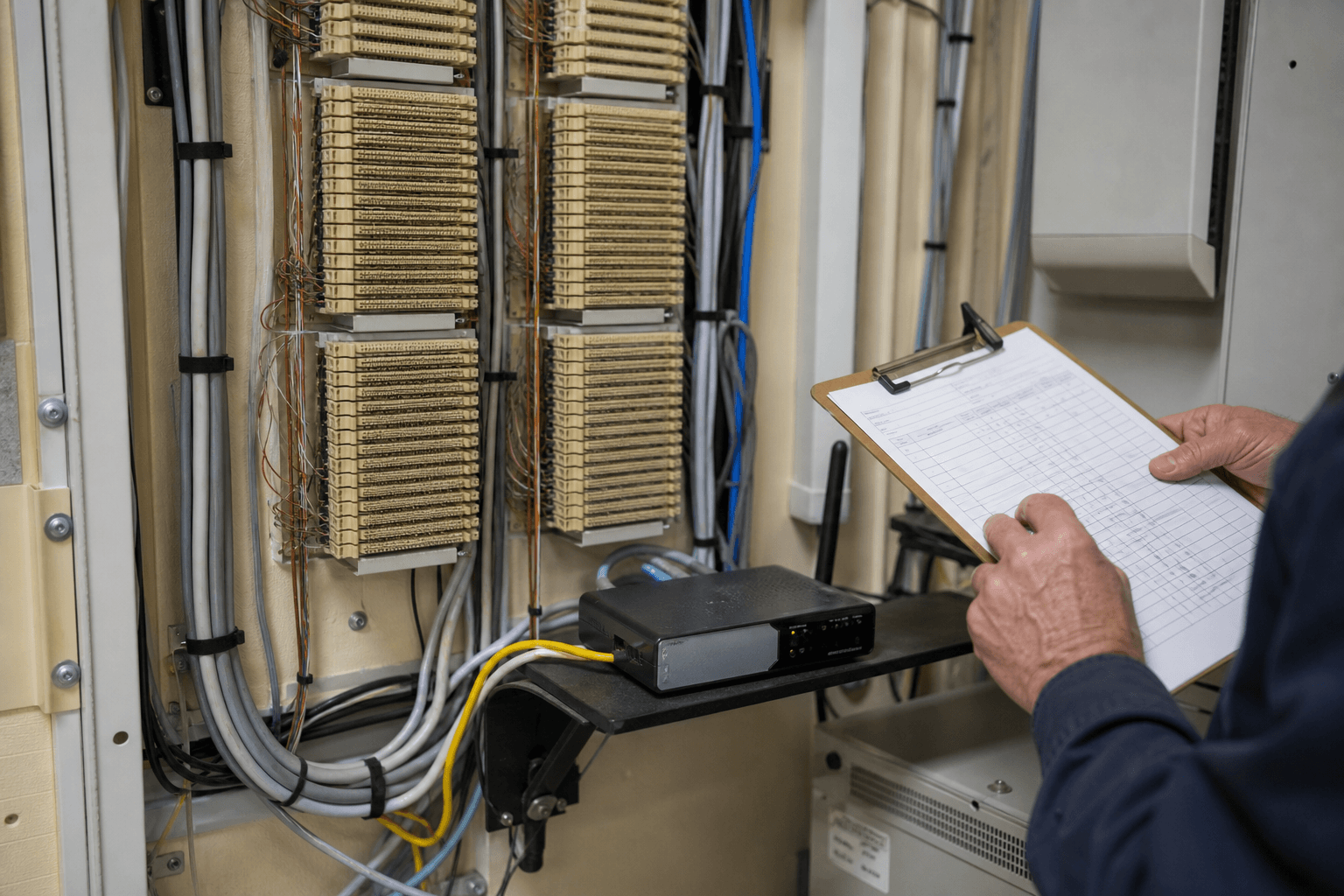
TL;DR: Ooma's latest quarter is not just a small-cap cloud communications story. The sharper read is that copper-line retirement is turning old elevator phones, alarm panels, and backup business lines into a recurring compliance budget. Ooma reported 25% year-over-year revenue growth to $81.1 million for the quarter ended April 30, 2026, but the business line worth watching is AirDial, because POTS replacement sells into building operations before it sells into IT fashion. #What Ooma's Quarter Says About Copper Retirement Ooma is easy to file under "small business phone software." That misses the more interesting budget line. In the fiscal first quarter of 2027, Ooma said subscription and services revenue reached $74.6 million, or 92% of total revenue, with growth helped by Ooma Business and the December 2025 acquisitions of FluentStream and Phone.com. Management also called out acceleration in AirDial sales and said it expects accelerating market demand for POTS replacement. The important phrase is not "cloud communications." It is "replacement." A company buying a better desk-phone system can delay the project. A building owner replacing old copper lines for elevators, fire alarms, security systems, fax machines, and emergency phones has a different kind of problem. The old line gets more expensive, harder to support, and eventually less available. #Why POTS Replacement Is A Facilities Budget, Not A Software Seat The hidden advantage in POTS replacement is that the buyer often starts with a risk register, not a feature wish list. Picture a facilities manager standing in a telecom closet with a clipboard, a carrier bill, and a row of copper punch-down blocks that nobody wants to own anymore. The question is not whether the new system has a prettier dashboard. The question is whether the elevator phone, fire panel, and alarm line still work when the old carrier service is retired or repriced. That turns a communications product into a compliance and continuity product. Why the buyer is not always the CIO The purchase can
Counterpoint's Smartphone Cut Shows Memory Now Allocates the Budget Phone Market
TL;DR: Counterpoint Research now expects 2026 global smartphone shipments to fall 13.9% to 1.08 billion units, with memory shortages doing the damage. The market implication is sharper than “phones get expensive.” Memory suppliers and large premium handset makers are quietly deciding which phones reach shelves at all, while budget Android brands lose the ability to protect both price and volume. #What Counterpoint's Smartphone Cut Really Says The new smartphone forecast looks like a consumer-electronics story. It is really an allocation story. Counterpoint Research's latest outlook says 2026 shipments are headed for the worst annual decline on record. A Reuters-syndicated report put the expected drop at 13.9% to 1.08 billion units, down from Counterpoint's prior 12.4% decline estimate. That is not just a demand chart moving down. It is a sign that the cheapest end of the phone market is being repriced by a component that shoppers rarely think about: memory. #Why Memory Now Has Shelf-Space Power Memory used to be the invisible part of the phone bill. More storage or RAM was a spec line, not the central business problem. That changes when AI data centers, servers, PCs, and smartphones all want more DRAM and NAND at the same time. The supplier does not have to treat a $120 handset and a high-margin enterprise customer as equals. The ordinary retail scene is easy to picture. A regional electronics buyer wants enough low-cost Android inventory for back-to-school or carrier prepaid demand. The supplier invoice comes back with higher component assumptions, fewer confirmed units, or a configuration that forces a worse tradeoff. The retailer can still fill the shelf. It just may not be the same shelf: fewer sub-$150 models more refurbished inventory longer promotion cycles for older devices stronger placement for premium brands with secured supply That

Costco Q3 Makes the Membership Card a Consumer Cash-Flow Signal
TL;DR: Costco's fiscal Q3 was not just another strong retail print. The useful signal is that U.S. shoppers are still willing to pay an upfront membership fee when the promise is lower unit costs later. In an economy where April spending rose while disposable income slipped, Costco's renewal machine looks less like a loyalty program and more like household cash-flow insurance. #What Costco's Q3 Actually Says About the U.S. Shopper Costco reported fiscal third-quarter net sales of $69.15 billion, up 11.6% from a year earlier. U.S. comparable sales rose 9.4%, or 6.8% after excluding gasoline and foreign exchange. Those numbers are strong, but they are not the most interesting part. The sharper read is in the fee line. Membership fees were $1.37 billion for the quarter, up from $1.24 billion a year earlier. That is a small line next to merchandise sales, but it is a clean line: members pay first, then spend. For most retailers, the customer has to be won again at every trip. Costco gets a different starting point. A paid member has already made a small capital-allocation decision at the household level. #Why The Membership Fee Matters More Than The Shopping Cart The lazy read is that Costco is simply benefiting from value-seeking consumers. That is true, but incomplete. Dollar stores, off-price chains, private-label grocers, and Walmart all sell value. Costco sells value plus commitment. Why upfront payment changes the retail math Once a household pays for a membership, each trip carries a quiet pressure to make the fee "worth it." That does not guarantee loyalty forever, but it changes the default behavior. A shopper who pays an annual fee is more likely to: batch purchases instead of buying one item at a time; compare unit prices instead of shelf prices; absorb a bigger checkout ticket if the per-unit math feels defensible; keep returning until the membership renewal date forces a new decision. That is why Costco's quarter belongs in the consumer balance-sheet conversation, not only the retail earnings calendar. #Where The Consumer Cash-Fl