G
Gainbrief
Tag

#payments

1 post in this community.

WCWalter Cooper···4 min read

Fed Payment Diary Shows Why The Card Toll Keeps Working

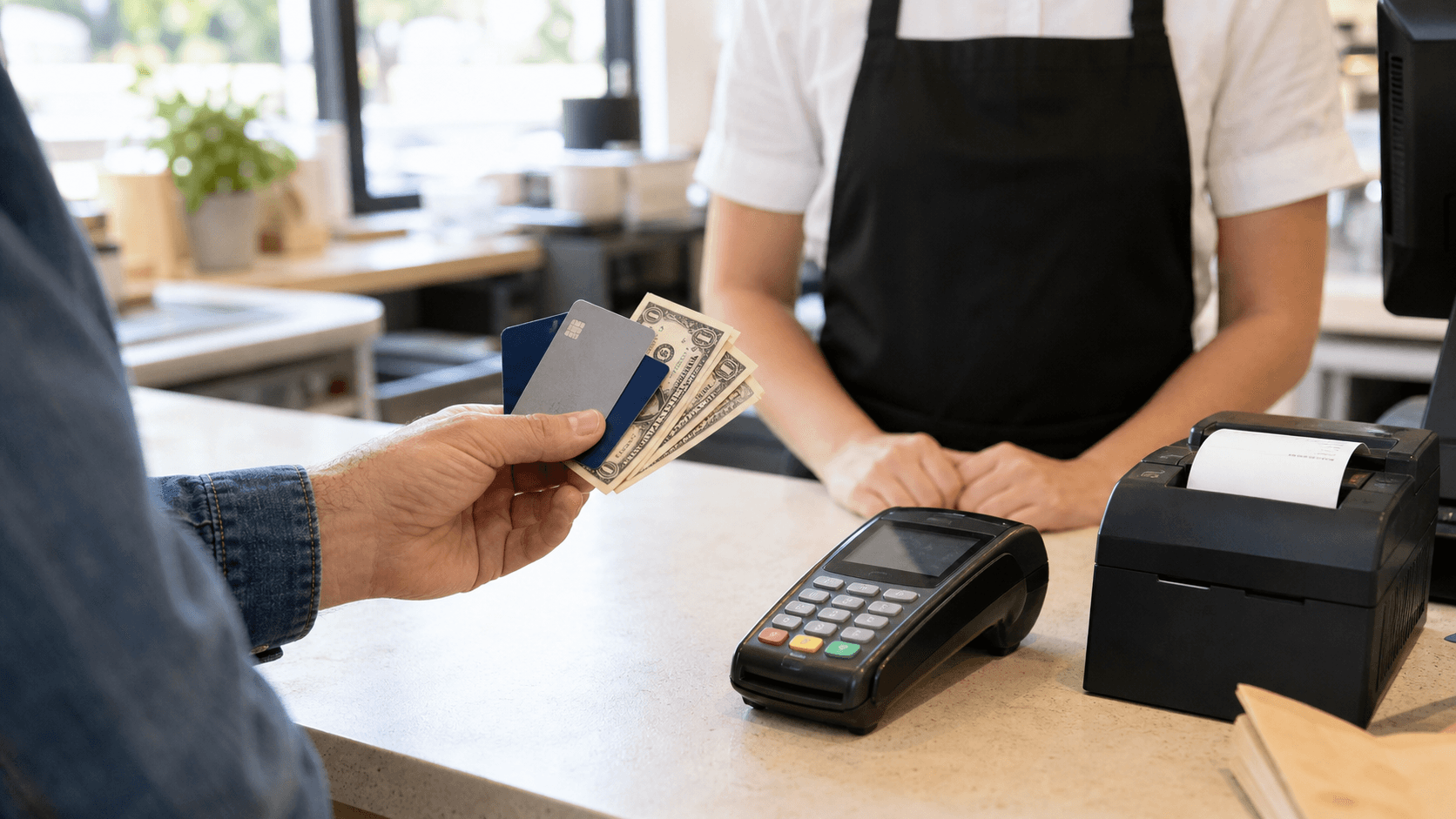
TL;DR: The Federal Reserve's 2026 Diary of Consumer Payment Choice shows a payments market that is changing more slowly than the fintech story suggests: U.S. consumers still made 47 monthly payments in 2025, with credit cards, debit cards, and cash doing most of the work. The business implication is blunt. Card networks, issuers, and payment processors keep pricing power because consumer habits are sticky, while cash remains a backup rail merchants and banks cannot simply design away. #What The Fed's Payment Diary Actually Shows The Federal Reserve's 2026 Diary of Consumer Payment Choice is not a flashy fintech launch. That is why it matters. The average U.S. consumer made 47 payments per month in 2025. Sixteen were credit-card payments, 15 were debit-card payments, and six were cash payments, according to the Fed's full report. Credit and debit together still accounted for about two-thirds of consumer payments. Cash was not dead either. It remained the third-most-used payment instrument for the sixth year in a row, and the Fed said four out of five consumers used cash in the prior 30 days. The easy story is that wallets keep getting more digital. The better story is that the checkout stack is less disruptable than investors like to pretend. #Why Stability Is The Real Payments Moat Payments companies sell speed, convenience, rewards, fraud control, acceptance, and settlement certainty. Consumers buy something simpler: not having to think at the register. That is a powerful moat. The card toll works because the habit is already installed. A shopper taps the same card for groceries, gas, pharmacy items, and subscriptions. A merchant pays the acceptance cost because refusing the card risks losing the sale. The issuer funds rewards because those rewards keep the card at the top of the wallet. None of that requires consumers to be excited about financial technology. It only requires them to repeat yesterday's behavior. Why credit cards are hard to dislodge The Fed found that 38% of consumers now prefer credit cards for in-person payments, up from 24% in 2016, while debit preference sits near 40%. That is not a revolution. It is a slow migration toward card economics that already have merchant acceptance, consumer trust, and bank funding behind them. For Visa, Mastercard, large card issuers, payment processors, and merchant acquirers, the dullness is the point. A stable payment habit can be more valuable than a new payment app with better screenshots. #Where Cash Still Controls The Edge Cases Cash's role has changed, but it has not disappeared. The Fed said 76% of consumers carried cash in 2025, with an average of $69 on person. Nearly half stored cash elsewhere for savings or emergencies, with average store-of-value cash holdings of $364. That makes cash less like a growth product and more like a resilience product. Picture a household budget table after a grocery run: wallet, receipt, two cards, and a small cash stack that is not there because it earns a yield. It is there because a broken terminal, a tight account balance, a kid's school event, a tip jar, or a rural merchant still creates moments where cash works with no password reset. The merchants cannot steer everyone away There is another quiet warning for merchants. A 2026 Atlanta Fed and Boston Fed working paper on merchant steering of consumer payment choice found that consumers usually use their preferred payment method, and cash discounts do not meaningfully push card-preferring consumers to pay with cash. That matters for fee pressure. Merchants may dislike card costs, but consumer preference sets the ceiling on how aggressive they can be. #Who Wins From A Boring Checkout The winners are not necessarily the companies shouting loudest about payment innovation. The winners are the businesses sitting inside repeated behavior: Card issuers that turn payment frequency into interest income, interchange economics, and rewards loyalty. Networks and processors that benefit when merchants keep accepting the dominant payment methods. Banks and cash logistics providers that still need to serve older, rural, lower-income, and backup-cash use cases. Retailers that understand payment choice as conversion protection, not just a fee line. The losers are payment products that assume novelty is enough. A clever wallet still has to beat the card already in a shopper's hand. #What Investors Should Watch Next The right investor question is not whether cash is dying or whether cards are old technology. Both questions are too simple. The better question is where payment behavior is actually flexible. If consumers are sticky at the point of sale, the real competitive battleground shifts to the surrounding economics: rewards funding, merchant surcharges, debit routing, fraud losses, instant-payment settlement, and bank deposit relationships. The companies that win are the ones that make the default cheaper to serve or harder to abandon. That is why the Fed diary is more than a consumer-payments footnote. It says the payment system is still built around habit, and habit is expensive to replace. #FAQ Why does the 2026 Diary of Consumer Payment Choice matter for investors? It shows that U.S. consumer payment behavior remained stable in 2025, with cards and cash still dominating everyday payments. That supports the durability of card networks, issuers, processors, and merchants that optimize around existing checkout habits. Is cash still important in the U.S. payment system? Yes. Cash represented about 14% of consumer payments, four out of five consumers used it in the prior 30 days, and 76% carried cash in 2025. Its role is increasingly backup, access, and emergency liquidity rather than primary payment growth. What is the main business risk for new payment apps? The main risk is habit inertia. A new payment method must overcome existing card acceptance, rewards, trust, and consumer muscle memory, not just offer a cleaner interface.

0
0