Fiserv's May Small-Business Index Shows A Traffic Problem At The Register

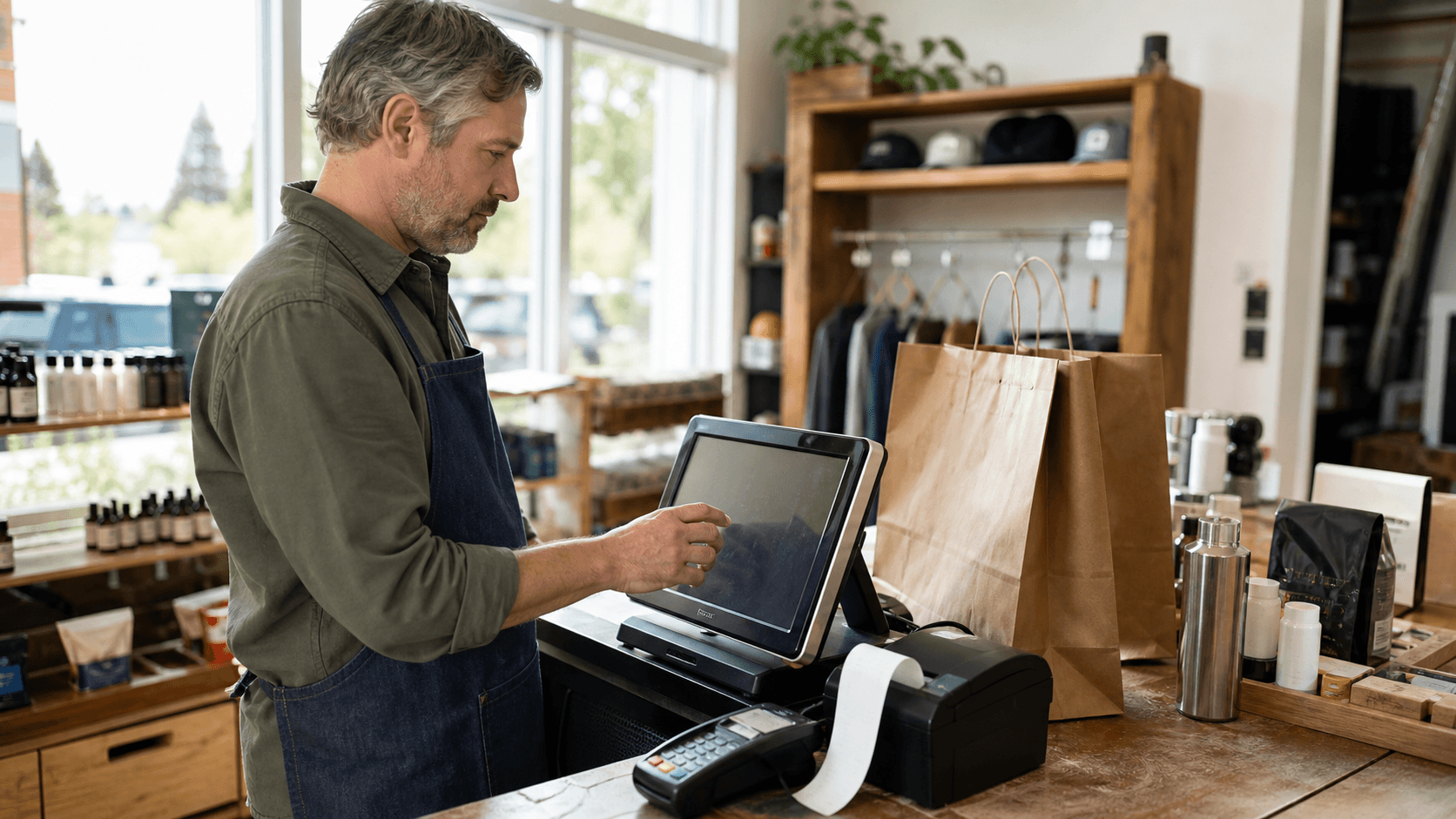
TL;DR: Fiserv's May 2026 Small Business Index says U.S. small-business sales were still positive, but the quality of that growth weakened. Sales rose 0.7% year over year while transactions fell 2.4%, meaning higher average tickets, not more customer visits, did the work. That matters because a small merchant can show stable revenue on the POS screen while losing the repeat traffic that protects labor scheduling, inventory turns, and pricing power.
##What Fiserv's May Small-Business Data Actually Shows
The clean headline is that small-business sales did not fall apart in May.
The more useful reading is harsher: the register is being held up by bigger checks from fewer visits. Fiserv said its Small Business Index stayed at 144, with sales up 0.7% from a year earlier, average tickets up 3.1%, and transactions down 2.4%.
That is not a collapse. It is a traffic warning hiding inside a nominal-sales number.
#Why the average ticket can flatter the business
At a neighborhood shop, the daily dashboard may still look acceptable: fewer receipts, slightly larger baskets, roughly the same revenue line.
But the operating day feels different. A slower morning means the same rent, the same software subscription, the same insurance bill, and a more awkward labor schedule. The merchant can raise prices or sell more per transaction for a while, but fewer transactions leave less room for mistakes.
##Why This Is A Margin Story, Not Just A Consumer Story
Small businesses do not live on revenue alone. They live on visit frequency.
A large retailer can absorb a soft traffic month with procurement leverage, ad budgets, loyalty data, and cheaper capital. A small operator has fewer levers. If transactions decline, the business has to make each visit carry more fixed cost.
The squeeze shows up in practical places:
- staffing hours get trimmed before the owner is sure demand has changed;
- inventory bets get smaller, especially in seasonal or perishable categories;
- card fees and POS costs become more visible when each transaction matters more;
- discounts become dangerous because they may buy volume without restoring habit.
This is why the May index belongs in the same conversation as rates, wages, and consumer credit. It is a live read on how cost pressure travels from the household budget into the merchant's operating model.
##Where The Weakness Is Showing Up
Restaurants are the clearest scene.
Fiserv reported restaurant sales down 0.6% year over year, with average tickets up 3.0% and transactions down 3.6%. Limited-service restaurants were weaker, with sales down 3.4% and foot traffic down 5.4%, while full-service restaurants held up better.
#The cafe counter version of the problem
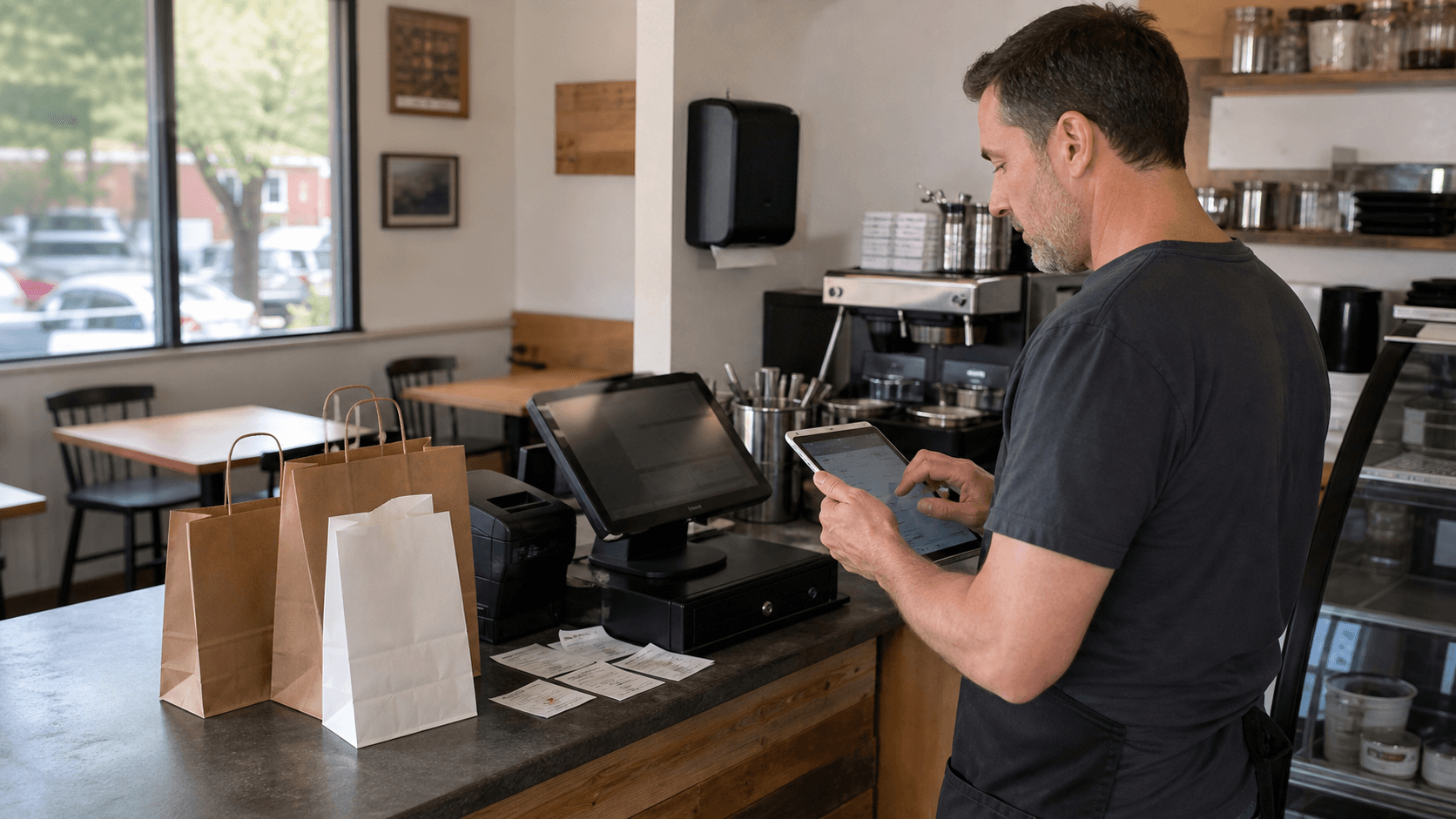
Picture a small cafe owner checking the POS after lunch. The average order is higher because coffee, labor, packaging, and rent are all more expensive. But there are fewer tickets on the counter.
That owner does not just ask, "Did sales grow?" The better questions are more operational:
Can I staff tomorrow's lunch rush with confidence? Did regulars trade down from three visits a week to one? Am I raising menu prices because the brand has power, or because costs leave no choice?
##Who Should Care Beyond Small Merchants
Investors should care because this kind of data cuts between two lazy narratives.
It does not prove the U.S. consumer is dead. Essential spending and some service categories are still producing dollars. Fiserv said essentials sales rose 0.9% year over year, while services sales rose 1.0%.
It also does not prove demand is healthy. Services growth was supported by a 4.2% increase in average ticket size while transactions fell 3.2%. Retail was nearly flat, with total retail sales up 0.1% year over year and down 0.5% from April.
The point is not that every small business is suddenly fragile. The point is that nominal sales can lag the real behavior change. A consumer who still buys but comes in less often is already negotiating with the merchant.
##Why Fiserv's Data Is Useful For Markets
This is not a survey about vibes. Fiserv says the index is derived from point-of-sale transaction data across roughly 2 million U.S. small businesses, including card, cash, check, in-store, and online activity.
That makes it a useful counterweight to broad retail headlines. A national sales number can look sturdy while the small-business channel is quietly shifting from volume growth to price support.
The second-order implication is simple: if traffic keeps weakening, small merchants lose the luxury of waiting for costs to normalize. They either protect margins with higher tickets, protect frequency with promotions, or cut operating capacity.
None of those choices is painless.
##What The Market May Be Missing
The market tends to treat "higher average ticket" as either inflation or pricing power. For small businesses in May, it looks more like a bridge.
A bridge is useful. It keeps sales from cracking while households adjust to fuel, food, rent, and debt-service pressure. But a bridge is not the same as a new growth engine.
The real test for June and July is not whether small-business sales stay slightly positive. It is whether transactions stop bleeding. If the customer count keeps falling while the ticket keeps rising, the story moves from resilient consumer to thinner merchant margin of error.
That is the part worth watching on the POS screen.
#FAQ
What did Fiserv report for May 2026 small-business sales?
Fiserv reported that its Small Business Index stayed at 144 in May 2026. U.S. small-business sales rose 0.7% year over year, average tickets rose 3.1%, and transactions declined 2.4%.
Why does lower foot traffic matter if sales are still up?
Lower traffic means fewer customer visits are carrying the same fixed costs. For a small merchant, that can pressure staffing, inventory, rent coverage, and pricing decisions even when reported sales still look stable.
Is this mainly a restaurant problem?
Restaurants show the problem clearly, especially limited-service restaurants, but the mechanism is broader. Fiserv also reported price-led growth in services and flat-to-soft retail trends, which points to a wider small-business traffic issue.