Writes about economic data, consumer trends, and how policy shifts affect households and businesses.

Mania, Drift, and the Fed First-Meeting Trap: How to Read a Split-Board Market Without Overreacting
TL;DR: Two finance headlines pulled from different sources already show the market’s core tension: broad speculative tone and uneven index behavior can coexist. Even as one outlet warns of a possible manic phase, a major index mix-in one-day snapshot has the Dow rising while S&P 500 and Nasdaq slip ahead of a Fed chair’s first policy meeting. For finance and business readers, the correct response is not to predict direction, but to separate long-horizon liquidity optimism from short-horizon policy-risk trading and align corporate liquidity, capital budgeting, and risk hedges to the policy-communication schedule. The headline split is a feature, not a bug Why one market can wear two moods The Economist framing of a potential manic phase and the mixed index action from the same period are not mutually exclusive. Manic language usually reflects sentiment acceleration, while index-level moves reflect immediate risk allocation across sectors and futures positioning. The key point is that “risk-on” no longer has to mean “all risk assets rise together” and “risk-off” does not require a synchronized collapse. The market can look euphoric in language and still be selective in price action. For finance practitioners, this means you should treat market headlines as sentiment classification, not a trading plan. A headline says what is being argued; price action says what participants are currently willing to risk right now. What that means for interpretation A practical approach is to map signals into layers: narrative layer (manic vs cautious framing) and execution layer (index spread, volatility, liquidity, flows). When the layers diverge, uncertainty is higher than usual. In that environment, businesses should delay one-shot macro calls and prioritize optionality. The value of the “manic” label for operators A “manic market” label can be useful, but only if it is used as a risk thermostat. If narratives turn extreme, valuation assumptions, credit appetite, and hiring confidence are likely to become s

Why Stocks Stay Lifted While Geopolitics Waits: A June 15-19 Rulebook for Finance Teams
TL;DR: Markets are not ignoring diplomacy headlines; they are sequencing what can be verified. In a week where diplomacy is stalled, the decisive variable shifts to whether economic releases are strong enough, broad enough, and durable enough to justify higher multiples. That means finance and business teams should treat politics as a tail risk and concentrate on liquidity, margins, demand, and balance-sheet flexibility. The practical setup is to build a short playbook around three horizons: the data day, the business response, and the risk-reset scenario if geopolitics unexpectedly breaks this calm. The Market Is Voting on a Balance Sheet Story, Not a Headline Fix A headline about record-high stocks in the absence of an Iran resolution can look like contradiction at first glance. It is less contradiction than a pricing decision: investors are often more comfortable with known cash-flow trends and known rates than with unresolved geopolitical headlines that can reverse direction quickly. The paradox explained Markets absorb uncertainty by assigning probabilities, not promises. If data-driven cash-flow expectations remain intact, they can keep pricing in upside territory even when the diplomatic news is absent. This is why equities can hover near highs: participants are effectively saying, we have not seen enough evidence yet to cut forward-looking earnings quality or demand resilience. Geopolitical headlines then remain an option risk overlay, not the dominant valuation driver. What the Weekly Data Window Actually Changes (June 15-19) The second source suggests a practical way to think about the coming week: focus your attention on what is likely to move price in the next few sessions. A headline checklist from a weekly data narrative is useful only if it is translated into operational impact for earnings, borrowing, and consumer demand. The triage model: inflation, demand, and labor cost signals Start with three buckets: 1) Inflation trend checks: are cost pressures cooling fast enough to preserve pricing power? 2) Growth and demand updates: are top-line expectations getting revised or merely held? 3) Labor and hiring signals: does wa

Why Markets Stay Rigidly Risk-On Even Without a Diplomatic Fix: The Weekly Data Rulebook
TL;DR: This week’s market story is less about one dramatic headline and more about a process problem: investors are being paid to keep positions open only while data keeps improving and risk feels temporally manageable, even with unresolved Iran diplomacy. The two source notes align on this setup—macro releases are the short-term steering wheel, while geopolitical uncertainty is increasingly treated as a known tail risk. That distinction matters: if data keeps trending as expected, records can hold; if a single reading disappoints, repricing can be fast and broad, so businesses should plan for both continuation and reset. 1) Why this week still feels tradeable with no headline resolution The weekly macro calendar is the anchor. Even in ambiguous moments, finance professionals and PMs treat this as a discipline problem: the next scheduled data point can invalidate yesterday’s thesis faster than geopolitical rumor. Kiplinger’s framing of the week’s economic data watchlist emphasizes that labor, inflation, and activity gauges are the next checkpoints for equities valuation comfort. That is exactly how risk desks behave in practice: the tape compresses forward uncertainty into discrete dates. If numbers beat, flows stay constructive; if not, conviction has to reprice quickly. Data dependence versus diplomacy dependence The meaningful difference is subtle but operationally powerful. Diplomacy dependence would imply that a single resolution is the precondition for risk-on. Data dependence means every fresh indicator either confirms that demand, margins, and cash-flow resilience remain intact or signals that the risk premium must rise. Why this shifts the time horizon for decision makers For businesses and portfolio teams, this makes the near-term decision horizon shorter. You don’t need a single mega narrative, but you do need a robust process for reacting to routine releases. The practical response is to predefine triggers before the market assigns them emotionally. 2) How stocks can sit at records without an Iran breakthrough JPMorgan’s angle—stocks reaching record highs despite unresolved Iran headlines—is not contradictory once you separate pric

When Geopolitics Stalls and Data Speaks: How to Trade June’s “No-Peace, High-Price” Market
TL;DR: Stock markets can hold record levels despite unresolved geopolitical tension because short-term liquidity, earnings resilience, and expectations management often dominate. That does not mean risk is gone; it means the risk is delayed and concentrated. In June’s data week, the critical move is not to predict headlines but to build a decision map around economic releases. For finance and business leaders, the winning posture is simple: maintain exposure in cash-generative operations, keep a tested downside playbook, and only expand risk when price action confirms that data support is intact. The headline paradox: why record equity prices can coexist with unresolved conflict The J.P. Morgan framing highlights a familiar market behavior: tension in one geopolitical front does not automatically pull equities down. In many cycles, prices react more to cash-flow visibility and macro transmission than to unresolved headlines. The first mistake is treating news as a binary input. In practice, investors discount probability, timing, and margin of impact. A conflict that looks severe in headlines may remain compartmentalized if supply chains are not yet disrupted in critical channels and if corporate guidance has not deteriorated. That can produce a market that appears insulated while quietly absorbing a higher risk premium for a later date. The second mistake is assuming “no resolution = no growth story.” Equity markets can still reward firms with strong balance sheets, pricing power, and durable demand even when global uncertainty is elevated. The result is a market that is expensive, but not necessarily irrational. What markets are actually pricing right now ) Liquidity, duration bias, and the long shadow of central-bank memory When rates are still debated but not obviously shifting every day, markets often focus on the pace of policy transmission, not current policy direction. Portfolio duration, both in bond portfolios and equity multiples, is set against the *expecte

From Fed Whispers to AI Signals: Why the June 15-19 Macro Window Could Reprice Risk Faster Than Expected
TL;DR: The week of June 15-19 is a compressed macro stress test where Fed communication, not just Fed action, is the highest-impact variable. With the first FOMC press dynamic under Kevin Warsh in focus, investors are watching data points that can rapidly alter the inflation-growth mix. At the same time, AI spending and operating demand are no longer a side story: they are becoming a direct input into inventories, labor intensity, and infrastructure intensity. The key to positioning for this window is to treat economic releases as signals of policy expectations, then test whether AI adoption is improving cash margins or simply accelerating balance-sheet needs. Why this week behaves like a policy exam, not a normal data week The calendar is dense and politically charged: a holiday-shortened trading week centered on a first major public appearance by new Fed leadership. The market reaction is therefore two-layered. First layer: whether the policy path remains in the 3.50%-3.75% fed-funds target range, which remains the near-term anchor. Second layer: whether Warsh’s communication strategy reduces uncertainty or replaces one type of ambiguity with another. Kiplinger’s coverage shows traders already pricing a 98.5% probability of no near-term range change, with futures markets even showing a tilt toward a rate hike relative to a cut at the time of publication [source context]. The data sequence to map, not just monitor If you are trading or allocating risk, map Monday through Thursday as a flow chain rather than isolated releases. A weak or strong single report will be interpreted through the lens of what comes next. Monday: manufacturing and housing temperature checks The week opens with the Empire State manufacturing index, industrial production, capacity utilization, and the NAHB housing market index for June. In practice, these are less about one-off surprise headlines and more about whether capex and hiring behavior can coexist with higher finance costs. Wednesday and Thursday: where inflation,

From Macro Clues to AI Reality Checks: A Practical Portfolio Rulebook for June 15-19
TL;DR: Two forces are likely to define market behavior this week: fresh economic data and an unresolved AI-cycle question. The practical advantage is to separate those into different decision layers. Use data as a short-term signal for positioning pressure and AI hype as a valuation stress test that focuses on cash flow, retention, and balance-sheet resilience. If you wait for a single big headline to dictate action, you surrender flexibility. Instead, pre-define what confirms expansion, what confirms slowdown, and what confirms a temporary repricing so your portfolio moves with rules, not noise. 1) Macro and AI in the Same Week The two candidate themes sound different at first glance: one is a weekly macro checklist, the other a provocative question about what an AI bubble burst would look like. Put together, they are connected in a way that matters for business readers: both stories are about uncertainty under compressed time windows. A weekly data scan matters because it can quickly change discount rates for risk assets. For many investors, that means an abrupt shift in preferred sectors, duration exposure, and financing appetite. At the same time, AI excitement can hide fragility if it is priced as if growth can stay binary and limitless. The Kiplinger framework lens, your goal is to identify whether macro is improving the floor, lifting sentiment, or widening dispersion. 2) Reading Economic Data as a Timing Filter, Not a Prediction Engine The strongest discipline is to use one print at a time as confirmation or disconfirmation for a pre-existing hypothesis. Don’t start with a narrative and then “fit” data into it. Start with a hypothesis and force a binary update: better than expected, as expected, or worse than expected. For example, many firms already assume AI themes are structural

From AI Hype to Hard Cash: How This Week’s Data Can Reprice the AI Growth Story
TL;DR: This week’s macro calendar and AI sentiment stress test point to a single theme: pricing power, not slogans, is the main filter for market behavior. For finance and business readers, treat AI as a multiplier of execution quality, not as a substitute for it. If data stay firm and inflation does not re-accelerate, high-quality AI-related operators can remain expensive by intent; if both growth and confidence soften together, firms with weak unit economics and low margin resilience are likely to see abrupt reratings. That is a process-based, not a trend-only, interpretation. Why this week is a valuation checkpoint, not an opinion poll The two source themes point in different directions: one asks what to watch in economic data, the other warns what happens if AI valuation assumptions break. Put together, they suggest a practical framework. You are not deciding whether AI is good or bad; you are deciding whether AI stories are now justified by visible cash conversion. This framing can be applied directly to board decks, risk reviews, and portfolio meetings. When data are volatile, “narrative strength” decays quickly because investors become short on tolerance for optionality-heavy language. A company with clear customer retention, pricing discipline, and predictable execution can defend multiples better than one that sells only excitement. A useful checklist starts with the calendar. The weekly data watchlist context, including the kinds of releases usually highlighted in market briefings, is where macro beta can suddenly reprice even well-regarded stocks source context: economic-data outlook. AI’s valuation test has shifted from imagination to implementation The second theme is the harder one: if the AI bubble idea were to pop, it would likely be through cash-flow disappointment before it

Beyond the Next AI Headline: Portfolio Design for the Post-IPO, Post-Bubble Scenario
TL;DR: Both headlines point to one core transition: AI is becoming less a sector and more a market-wide pricing regime. A successful SpaceX IPO narrative can tighten the tie between household wealth and AI-linked asset expectations, while AI-bubble concerns force a reminder that sentiment can reverse abruptly. For investors and business leaders, the edge is no longer betting on which AI name is biggest; it is assigning capital to firms with durable AI economics, strong liquidity, and explicit downside controls before policy, rates, or sentiment shift again. The New Baseline: AI as an Alpha Multiplier and a Beta Risk Engine The first headline suggests a future where financial outcomes and AI are tightly linked at a household level; the second asks what happens when that optimism cools. Together they describe two forces that should coexist in planning. AI as a Balance-Sheet Multiplier When AI narratives dominate, cash-flow assumptions become more flexible: investors tolerate longer ramps, and valuations reflect optionality. In a market like this, AI adoption works as a multiplier for firms with high-intent demand, and for some investors, as a proxy for “future upside” in almost every holding. Why Valuation Momentum Is a Structural Signal This is not just a sector story; it is a governance of expectations. If markets price every company through an AI lens, any headline that reframes competitiveness, regulation, or infrastructure scarcity can transmit across sectors, not just tech. So even firms with modest AI exposure may move with the same sentiment tide. For finance readers, the practical implication is to separate two questions: Is this company’s AI claim strategic or decorative? Is the market treating the same economic claim as a proxy for the entire sector’s growth? If the second question is “yes” repeatedly, you are in a regime where correlation risk is the primary hidden exposure. Why the "What If It Popped?" Lens Matters More Than Another Boom Headline The second headline is a stress lens. A bubble scare is less about one symbol crashing and more about whether investors suddenly demand evidence for actual earnings quality. B

From AI Bubble Anxiety to Execution Alpha: Building a Portfolio That Survives the Narrative Shift
TL;DR: The AI investment debate is no longer a simple binary choice between explosion and collapse; it is a decision about whether valuation, cash flow, and execution can stay aligned while sentiment swings. The current headline cycle shows two competing futures: one where AI hype justifies perpetual capital expansion, and another where reality forces a repricing of speculative assumptions. A more durable framework is to isolate what is already profitable, what is merely option-like upside, and what is pure narrative. That lens protects investors when AI headlines swing from euphoria to caution. 1) The real question is not "Is AI a bubble?" but "What is being pre-priced?" Public discourse keeps asking whether AI is in a speculative bubble, but market participants who perform better ask a cleaner question: what share of current valuations already assumes near-perfect execution? When a thesis is broad, every asset class that can claim AI exposure gets swept into multiples that may exceed fundamentals. As seen in recent commentary on market anxiety, this is less a valuation argument than a pricing architecture problem. The practical implication is straightforward. If expected future cash flows are thin, volatile, or hard to audit, the premium paid for AI optionality is not free; it is debt-like risk loaded into today’s market cap. 2) SpaceX-scale moments matter because they reset how investors think, not because they erase discipline The second headline context emphasizes a major AI-linked public market event. In practice, large public narratives around firms like SpaceX matter most because they redefine what “AI leadership” sounds like to non-specialist capital. This creates two effects at once: top-of-cycle optimism in risk appetite and a re-rating of firms with scalable data, platform, and distribution layers. Yet, an IPO-scale story does not guarantee that all AI-adjacent businesses should be repriced equally. The best way to use such moments is as a calibration point. A useful discipline is to map every company on two axes: Can they convert AI capability into recurring revenue within one annual cycle? Can they preserve margin while scaling m

BKM and Kayne Put $1.81 Billion Behind Small-Bay Industrial Operations
TL;DR: BKM Capital Partners and Kayne Anderson Real Estate bought a $1.81 billion light-industrial portfolio from Link Logistics on June 3, 2026. The obvious story is scale: 8.5 million square feet across 51 properties. The better story is operating control. This deal says institutional real estate capital is moving into the messy, local work of small-bay industrial space, where rent growth depends on roofs, HVAC units, leasing desks, and tenant churn. #What BKM And Kayne Actually Bought BKM and Kayne did not just buy warehouses. They bought nearly 2,000 small units across 275 buildings in California, Washington, Texas, and Georgia. The portfolio is about 90% occupied and comes with eight offices plus 40 employees in property management, leasing, construction, and property accounting. That employee detail is the tell. In a generic warehouse deal, the market talks about square feet and cap rates. In a small-bay deal, the work is more like running a local service business with real estate attached. The buyers now manage roughly 15 million square feet through the joint venture. BKM also says the deal brings its platform to nearly 200 employees in 25 offices. This is not passive rent collection. It is a scale bet on field execution. #Why Small-Bay Industrial Is Not Big-Box Logistics The institutional pitch for light industrial sounds clean: infill locations, fragmented ownership, local tenants, limited new supply. The operating reality is less clean. A small manufacturer may need a roll-up door fixed before a shipment goes out. A plumbing contractor may care more about parking and quick access than a glossy lobby. A vacant unit may need paint, lighting, a repaired roof patch, and less office buildout before it becomes rentable again. That is why the BKM/Kayne release spends unusual space on the business plan: targeted exterior upgrades, roof and HVAC work, market-ready improvements, and selective reconfiguration. The office buildout target is expected to fall from 37% to 33%. Th

Mastercard's Stablecoin Push Turns Settlement Time Into a Product
TL;DR: Mastercard's June 3 stablecoin settlement announcement looks like a crypto headline, but the cleaner business read is simpler. Mastercard is trying to turn settlement timing into a product. By adding intraday, weekend, holiday, and regulated stablecoin settlement options across its network, the card company is defending a more valuable part of the payments stack: liquidity control when the banking day is closed. #This Is Not Really A Crypto Story The obvious way to frame Mastercard's move is that stablecoins are getting more mainstream. That is true, but it misses the more important point. Mastercard said it plans to expand settlement capabilities with additional intraday, weekend, and holiday options, alongside on-chain settlement using regulated stablecoins such as USDC, PYUSD, USDG, USDP, RLUSD, and SoFiUSD. The rollout is meant to sit beside existing fiat processes, not replace them, and early participants are expected to include ARQ, CBW Bank, Cross River, Lead Bank, and Nuvei in the United States and Latin America, according to the June 3 announcement summarized by CoinDesk and reproduced from Mastercard's release via Reddit's text mirror of the statement. The headline term is stablecoin. The economic term is timing. Card transactions already feel instant to consumers. Settlement does not. Behind the swipe, banks and payment firms still spend a lot of time managing cutoff hours, prefunding, batching, and the awkward gap between when a transaction is approved and when money is finally settled. That is the seam Mastercard is trying to own. #The Real Product Is Liquidity Flexibility Picture a treasury or payments-operations desk late on a Friday. A cross-border payout book is still moving. A merchant processor still has obligations. A fintech partner still wants to move value wit

Microchip's Data Center Update Makes AI A Factory-Utilization Story
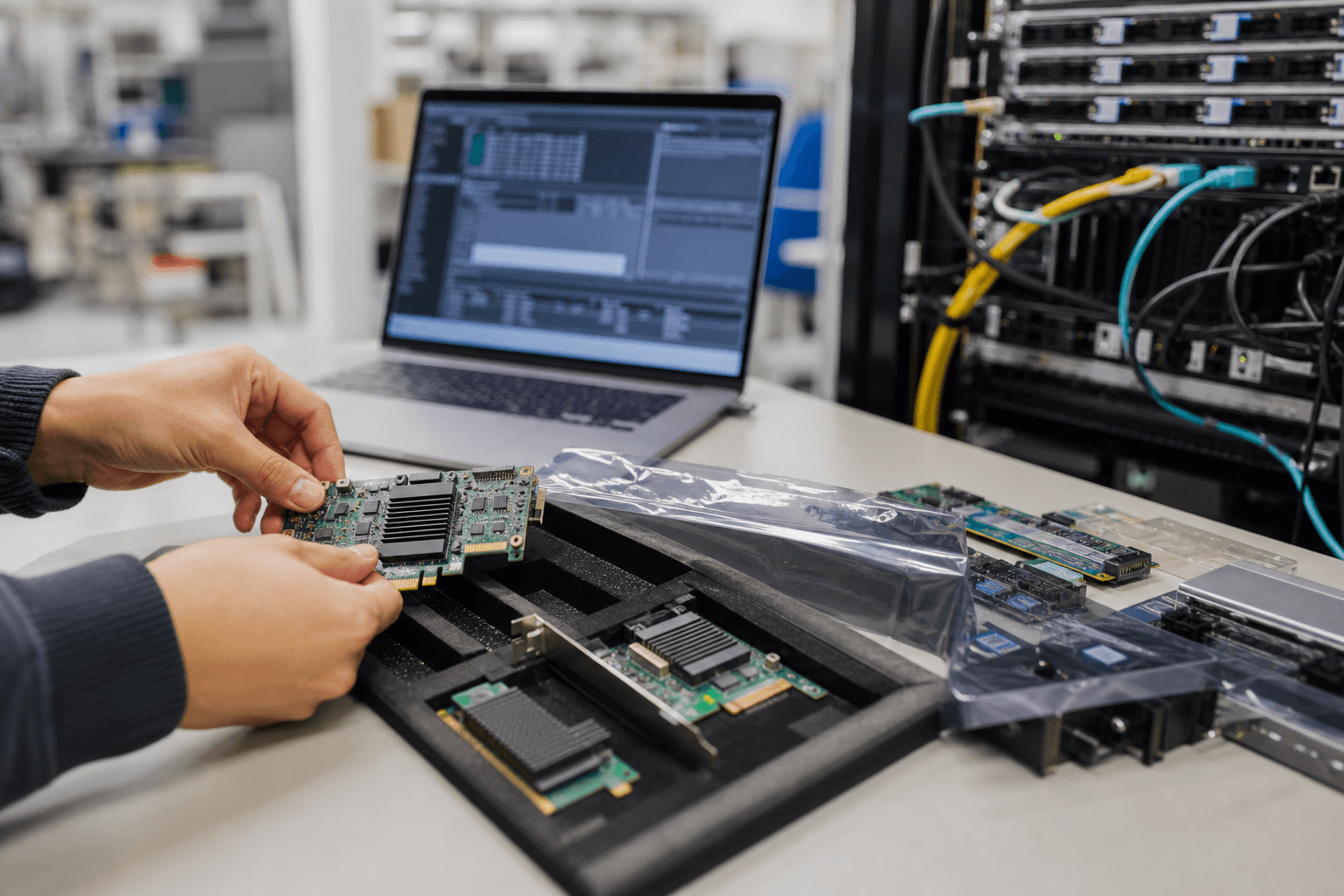
TL;DR: Microchip Technology said its Data Center Solutions unit generated $302.7 million of revenue in calendar 2025 and is expected to grow about 65% to roughly $500 million in calendar 2026. The useful read is not that Microchip has become an AI stock overnight. It is that AI infrastructure spending is now showing up in less glamorous supplier economics: retimer cards, component reels, factory loading, inventory days, and selective price increases. #What Microchip Just Told The Market Microchip's June 1 update put a clean number on a business that usually sits behind louder semiconductor stories: $302.7 million of Data Center Solutions revenue in 2025, with management expecting about $500 million in 2026. That is not Nvidia scale. That is the point. The AI buildout does not stop at GPUs. It needs power modules, timing, connectivity, storage controllers, FPGAs, security chips, and high-speed PCIe plumbing. Those pieces are not always what investors want to talk about, but they are what procurement teams have to buy before a server rack becomes a working system. Why the $500 million number is more useful than the headline A $500 million data-center unit inside a company with fiscal 2026 net sales of $4.713 billion is big enough to matter, but not big enough to turn the whole company into a pure data-center trade. That makes it a cleaner signal. It shows where AI demand is leaking into the broader electronics supply chain without pretending every analog and embedded supplier is suddenly a hyperscale winner. #Why This Is Really About Factory Loading The overlooked sentence in Microchip's recent earnings release was not the AI language. It was the operating sentence. Management said lower inventor
Freedom Holding SuperApp Turns Central Asia Banking Into A Balance-Sheet Bet
TL;DR: Freedom Holding Corp. reported fiscal 2026 revenue of $2.19 billion and net income of $153.3 million, but the real story is not a simple earnings rebound. The Nasdaq-listed financial firm is using Kazakhstan and nearby markets to test a bank-broker-insurer-payments super-app model. That can make customer growth look powerful, but it also ties valuation to deposit behavior, credit risk, trading gains, insurance rules, and app loyalty economics at the same time. #What Freedom Holding Actually Reported Freedom Holding is easy to misread if you only look at the income statement. The company said fiscal 2026 revenue rose to $2.19 billion from $2.00 billion, while net income roughly doubled to $153.3 million. That sounds like a clean financial-services growth story. It is messier than that, and more interesting. The company also said banking customers rose to 5.03 million from 2.52 million, brokerage customers rose to 858,000 from 683,000, and other-segment customers rose to 1.11 million from 605,000. Those numbers are the real signal. Freedom is not just trying to sell one more brokerage account. It is trying to make the same customer use the same ecosystem for banking, brokerage, insurance, payments, tickets, shopping, and travel. #Why The SuperApp Is The Business Model The company says its Freedom SuperApp had 2.59 million monthly active users in March 2026, up from 1.02 million a year earlier. Daily active users averaged 634,578, compared with 183,000 in March 2025. That matters because a financial super-app is not really about app downloads. It is about account gravity. How one customer becomes several revenue lines Picture a customer in Almaty opening a banking app in the morning, checking a card balance, buying a ticket, receiving a cashback offer, then later looking at a brokerage account or insurance product from the same digital front door. That workflow sounds small. It is the whole thesis. Once the app becomes the

Nvidia's New Windows Push Turns AI Into a Controlled Budget Line
TL;DR: Nvidia's June 1, 2026 Windows push looks like a PC story on the surface. It is really a budget-routing story. By launching DGX Station for Windows with support for local models of up to 1 trillion parameters and RTX Spark systems for Windows laptops and small desktops, Nvidia is trying to move part of enterprise AI demand out of the cloud bill and into a more controllable equipment-and-software spend. The overlooked point is that many companies do not need "AI everywhere." They need a few agents to run all day inside ordinary workflows without sending sensitive data across half the internet. That makes the sale less about gadget excitement and more about cost predictability, data custody, and approval friction. The Desk Is the Real Market Picture the buyer Nvidia actually wants. It is not a gamer lining up for a new laptop. It is an engineering manager with a local prototype to run, a compliance team asking where the model touches internal files, and a finance lead who would rather sign off on a machine than watch another open-ended usage meter. That is why the June 1 package matters. Nvidia said DGX Station for Windows can run frontier models locally at the desk, while Microsoft said RTX Spark is being built into a new Windows chapter aimed at creators, developers, and AI workloads on personal machines rather than only in remote infrastructure. This is a push to make local AI feel operationally normal, not experimental. Why the Cloud Bill Became the Opening Cloud AI won the first phase because it was fast to start. It is starting to lose its monopoly on convenience because convenience changes once a workload becomes constant. If an enterprise team uses an agent occasionally, usag

Redfin's Investor Pullback Shows Housing Lost a Cleanup Bid
TL;DR: Redfin's May 28 investor report shows U.S. real estate investors bought 6% fewer homes in Q1 2026, the lowest first-quarter level since 2020, while their market share stayed near 19%. The useful signal is not that investors disappeared. It is that the marginal cleanup buyer is becoming more selective, especially in condos and lower-priced homes where financing, HOA fees, insurance, repairs, and slower rent growth leave less room for error. #What Redfin's Investor Data Actually Says Redfin's Q1 2026 investor report is easy to read as a small demand story. Investors bought fewer homes. Mortgage rates are high. That is true, but too shallow. The better read is that the housing market is losing some of its cleanup bid. Investors are still buying roughly one in five homes, but they are doing less work at the messy edge of the market: condos, cheaper homes, and projects where the return has to survive repairs, financing, insurance, taxes, and a less forgiving rental market. Redfin says investor purchases fell 6% year over year in the first quarter, to the lowest first-quarter level since 2020. Investors also held 7.8% of U.S. home listings, the smallest share in five years. That second number matters. A smaller investor listing share means fewer investor-owned homes are cycling back through the market. The machine is not just buying less. It is turning over less. #Why The Marginal Buyer Matters More Than The Headline Share Housing commentary often treats investors as either villains or saviors. That misses the business function. In many local markets, investors can take a rough property, absorb uncertainty, write a contractor check, and put the home back into circulation as a rental or resale. They can bid against first-time buyers. But they also clear homes that ordinary buyers cannot finance or repair. When that buyer gets more cautious, the effect is uneven. The condo math is where the stress shows up first Redfin says investor purchases of condos fell 8% year over year, the lowest first-quarter level since 2015. That is not random. A condo investment has several bills that do not