G
Gainbrief
Tag

#autos

1 post in this community.

ECEthan Caldwell···5 min read

Valvoline and Monro Show the Split Inside America's Older-Car Economy

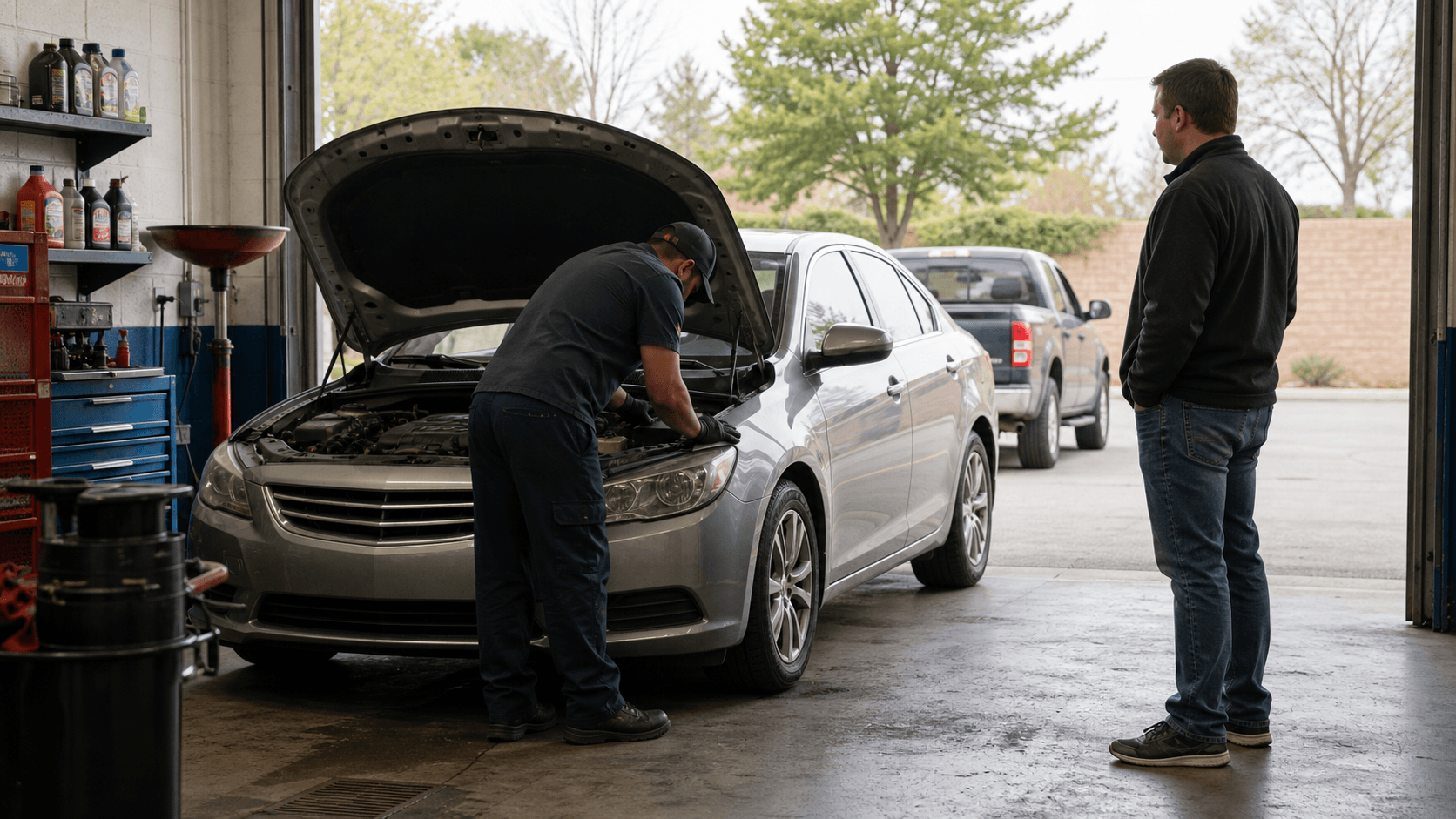
TL;DR: Valvoline and Monro are showing two very different versions of the same U.S. consumer story: Americans are keeping older cars on the road, but the profit pool is not evenly shared. Quick, repeatable maintenance is behaving like a convenience business, while heavier repair and tire work still has to fight traffic, labor, store density, and customer delay. The older-car economy is real; the investable question is who turns breakdown anxiety into predictable visits. #What Valvoline and Monro Are Really Showing The easy version of the auto-aftermarket story is that older cars create more repair demand. That is true, but it is too blunt. A twelve-year-old car does not send money to every chain in the same way. Valvoline reported 25% top-line growth and 8.2% system-wide same-store sales growth for its fiscal second quarter ended March 31, 2026. Monro, by contrast, said fourth-quarter sales fell 7.2%, partly because it closed underperforming stores, while comparable-store sales from continuing locations declined 2.4%. Same broad consumer. Same broad car population. Very different business result. That split is the point. #Why The Older-Car Tailwind Is Uneven S&P Global Mobility said the average age of U.S. light vehicles reached 12.8 years in 2025. That number sounds like a clean demand signal for auto service chains. It is actually a sorting mechanism. The owner of an older sedan may delay a tire replacement, shop around for brake work, or wait until payday for a larger repair. But an oil change is a smaller, more legible purchase. It can be finished quickly. It feels preventive. It does not require the customer to surrender the car for half a day. That matters because the post-pandemic consumer has not stopped spending. The consumer has become more selective about which interruptions are worth paying for. Why convenience can beat repair severity Walk into a quick-service bay and the transaction is almost retail. The customer stays close to the car, sees the work, hears the recommendation, and leaves without rearranging the week. Walk into a broader repair shop and the purchase feels heavier. The customer waits for a diagnosis, compares prices, wonders whether the fix is urgent, and often needs a ride. That difference does not show up cleanly in a vehicle-age chart. It shows up in traffic, conversion, ticket size, and gross margin. ) #Where The Margin Actually Lives The investable version of this story is not "old cars need service." Everyone knows that. The sharper question is which operator can make car care feel like a managed routine rather than a financial ambush. Valvoline's model benefits from a narrow job-to-be-done: keep the vehicle running, make the visit fast, and attach related services without turning the stop into a large repair decision. Monro has a broader repair and tire footprint, which can be valuable, but it also sits closer to the part of the wallet where customers hesitate. There are three different economics hiding inside the same driveway: Preventive maintenance: smaller tickets, higher frequency, easier customer consent. Tires and undercar repair: bigger tickets, more comparison shopping, more delay risk. Store portfolio cleanup: better margins eventually, but lost sales while weak locations are closed. Monro's 90-basis-point fourth-quarter gross-margin expansion shows there can be operational progress even when sales are messy. But investors should not confuse cleanup with demand capture. The customer is not buying "aftermarket exposure" A household with an aging car is trying to avoid a bad afternoon. That household may reward the chain that removes uncertainty before it rewards the chain with the broadest service menu. The business with the cleaner handoff from concern to completed visit gets the first claim on the wallet. #Who Benefits From This Split This is not only a Valvoline-versus-Monro stock note. It is a read-through for a lot of consumer businesses that sit between necessity and discretion. Auto maintenance looks mandatory from a spreadsheet. In real life, timing is negotiable until the car fails inspection, the tire is unsafe, or the dashboard light becomes too annoying to ignore. The winners are likely to be operators that can reduce three frictions at once: price confusion, visit time, and trust. That explains why store productivity matters as much as demand. A chain can have the right macro backdrop and still lose if the location base is tired, the labor model is inconsistent, or the customer does not believe the estimate. #What Investors Should Watch Next The older-car economy is a good theme. It is not a free pass. The next useful indicators are boring but revealing: Watch same-store sales against gross margin, not in isolation. A chain can buy traffic with price or promotions and still weaken the model. Watch store closures and new-store productivity separately. Closing weak units can make a company cleaner, but it does not prove the remaining stores are taking share. Watch whether service recommendations convert without damaging trust. The fastest way to lose a recurring customer is to turn a routine visit into a sales script. The market often treats auto aftermarket as a defensive consumer bucket. The better label is more specific: it is a trust-and-throughput business attached to an aging fleet. That is a much narrower test. It is also a more useful one. #FAQ Why does older vehicle age matter for auto-service companies? Older vehicles usually need more maintenance and repair, which can support demand for oil-change, tire, and repair chains. The financial impact depends on whether customers treat the service as routine and affordable or delay it as a larger expense. Why are Valvoline and Monro showing different results? Valvoline is concentrated in fast preventive maintenance, while Monro has more exposure to broader tire and repair work plus a store cleanup. The same aging-fleet tailwind can produce different outcomes when customer friction and store productivity differ. What is the main investor takeaway? Do not buy the auto-aftermarket theme as one uniform trade. The better businesses are the ones that convert older-car anxiety into fast, trusted, repeatable visits before the customer starts comparison shopping.

0
0