AI's Data-Center Boom Is Becoming A Utility Tariff Fight

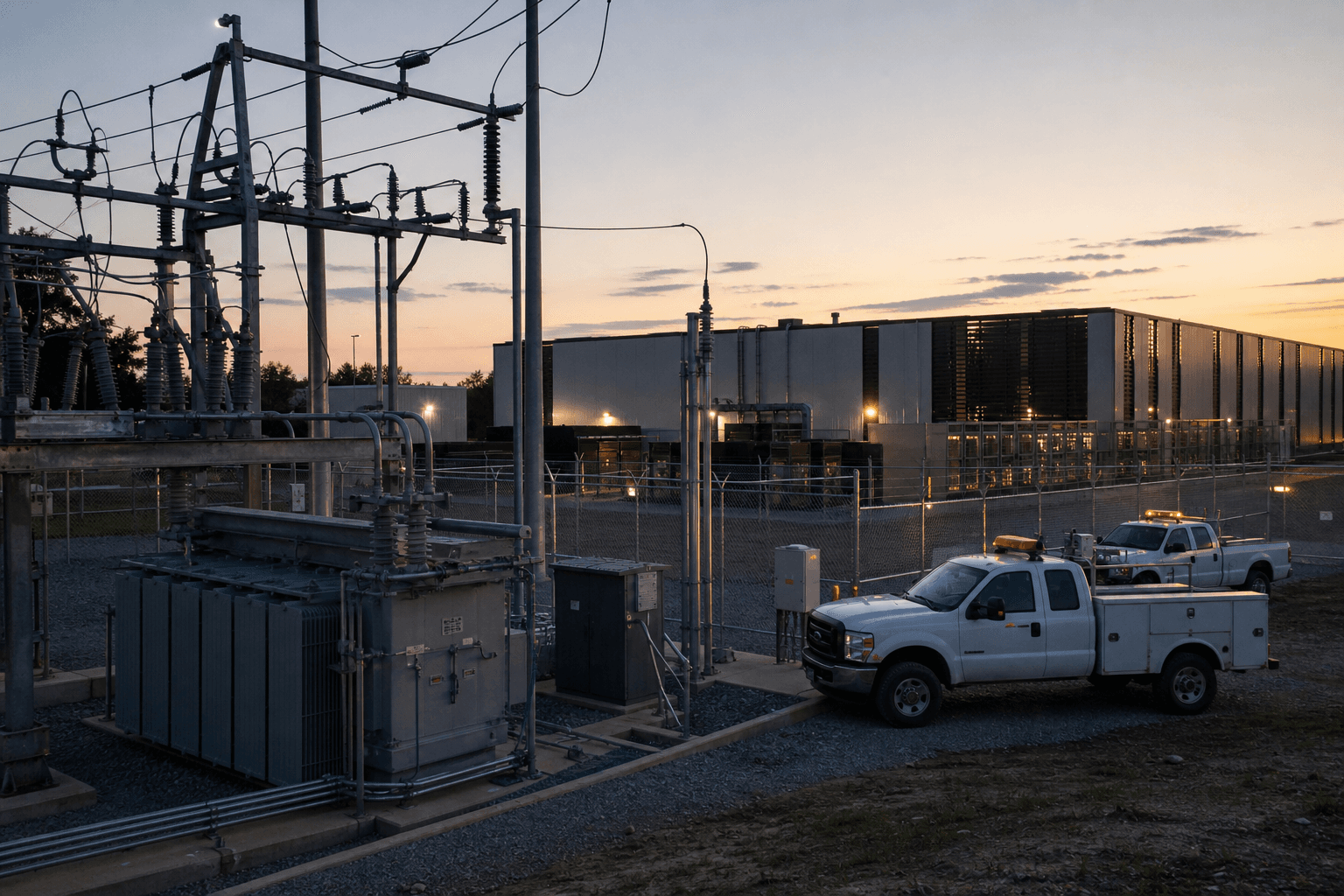
TL;DR: The AI data-center boom is no longer just a chip and capex story. It is becoming a utility-tariff fight. This week, North Carolina lawmakers advanced a bill meant to keep ordinary customers from subsidizing large data centers, just as Duke Energy was seeking a major rate increase, and PJM is openly reworking market rules after a record capacity-price jump tied primarily to data-center interconnection demand. The hidden question is not whether AI needs more power. It is who gets stuck underwriting that power when the load shows up faster than the grid can adapt.
##The Important Scene Is Not In Silicon Valley
The useful image this week was not another rack of GPUs. It was a utility hearing room.
On one side, Duke Energy was asking regulators for rates that could lift a typical 1,000-kWh North Carolina household bill to about $168.54 by 2028 from $144.98. On the other, North Carolina lawmakers were moving a bill that would require large data centers to sign utility service contracts designed to prevent other customers from subsidizing them “to the maximum extent reasonably feasible” (WHQR).
That combination matters more than another bullish AI demand forecast.
It means the AI buildout has entered the part of the economy where growth has to survive public-utility math. Once regulators and legislators start asking who pays for substations, transmission upgrades, backup generation, and stranded capacity if a data-center plan slips, the story changes from “more demand is good” to “more demand must be contractible.”
By the third paragraph, that is the whole point: AI is becoming a cost-allocation business.
##Why This Is Spreading Beyond One State
North Carolina is not inventing the issue. It is just saying the quiet part out loud.
In May, Reuters reported that PJM, the grid operator whose markets influence electricity prices for roughly one in five Americans, is considering a market overhaul after a record capacity-price rise driven primarily by requests to connect data centers to the grid (Reuters via Investing.com). PJM’s own 2026 long-term load-forecast supplement shows utility zones across its footprint asking for forecast adjustments tied to significant data-center growth, including AEP, FirstEnergy, Exelon affiliates, and Dominion (PJM).
That is why this no longer looks like a Virginia-only or Carolina-only story.
It is becoming a template. Utilities want the load. Regulators want the economic development. But households, manufacturers, and small businesses do not want to become involuntary venture investors in hyperscale infrastructure.
##What The Market Still Gets Wrong
The lazy bull case says data centers raise electricity demand, and higher demand is naturally good for utilities.
That is too simple.
Utilities do not only need demand. They need demand with a risk shape regulators will approve. A large industrial load that signs a long contract, posts collateral, accepts special tariffs, and pays for dedicated interconnection is one thing. A politically celebrated project that requires the broader rate base to finance grid upgrades first and argue about cost recovery later is something else entirely.
The difference sounds bureaucratic. It is actually the economics.
#Utilities Are Selling Permission, Not Just Power
If lawmakers and commissions force tougher large-load contracts, utility earnings become less of a clean AI-volume story and more of a structured-finance story.
- How much of the upgrade cost is prepaid?
- What happens if the customer delays or builds fewer phases?
- Who covers fuel, capacity, and reliability costs during stressed periods?
- Can the utility recover enough return without making household bills politically toxic?
That is a harder business than simply adding megawatts to a slide deck.
#Hyperscalers May Need To Buy Certainty Up Front
For the biggest AI builders, this is the twist. The next scarce resource may not be only chips or transformers. It may be tariff certainty.
If states push utilities to ring-fence ratepayer exposure, large data-center tenants may have to accept:
- higher minimum-bill commitments,
- more direct funding for interconnection and backup infrastructure,
- stricter curtailment or load-management terms,
- and less room to socialize costs across everyone else on the system.
In plain English, some AI economics may migrate from software-style optionality toward utility-style take-or-pay discipline.
##Why Investors Should Care
This is where a lot of AI commentary is still behind the tape.
Investors keep treating power as a supporting character in the AI buildout: necessary, expensive, but ultimately manageable. The better frame is that power is becoming the negotiation table where the next layer of AI margins gets divided.
If utilities win approval to protect residential customers while locking hyperscalers into durable large-load contracts, that is bullish for a specific class of regulated and infrastructure assets. If they fail, the backlash risk rises: slower permits, uglier hearings, tighter contract terms, and more resistance to data-center expansion even in pro-growth states.
The market wants this to be a semiconductor story because semiconductor stories scale neatly. Utility stories do not. They run through hearings, rate classes, load forecasts, contract clauses, and public anger about monthly bills.
That is exactly why they matter.
The AI boom is still real. But once its growth plan starts appearing on household utility statements, the winners are not decided only by who can afford more servers. They are decided by who can make everyone else feel they are not paying for them.
#FAQ
Why isn’t rising electricity demand automatically bullish for utilities?
Because regulators do not just approve demand growth. They approve who bears the cost and risk of serving that demand. If ordinary customers are seen as subsidizing data-center expansion, the political and regulatory pushback can offset part of the financial upside.
What should readers watch next?
Watch whether more states adopt large-load protections like North Carolina’s approach, whether PJM finalizes market changes before its next auction cycle, and whether utilities start disclosing tougher contract terms, collateral requirements, or dedicated tariffs for hyperscale customers. That is where the AI power story stops being theory and becomes billable reality.