Tomato Inflation Is A Small Test Of Restaurant Pricing Power

TL;DR: Tomato inflation is not just another grocery-price complaint. The latest U.S. CPI data show tomato prices up roughly 40% from a year earlier, while AP reports a 17% tariff on Mexican tomatoes and a sandwich chain seeing case costs jump from $27 to $93. The business implication is blunt: small ingredient shocks become margin tests when the ingredient is visible, expected, and hard to quietly remove.
##What Tomato Inflation Is Really Testing
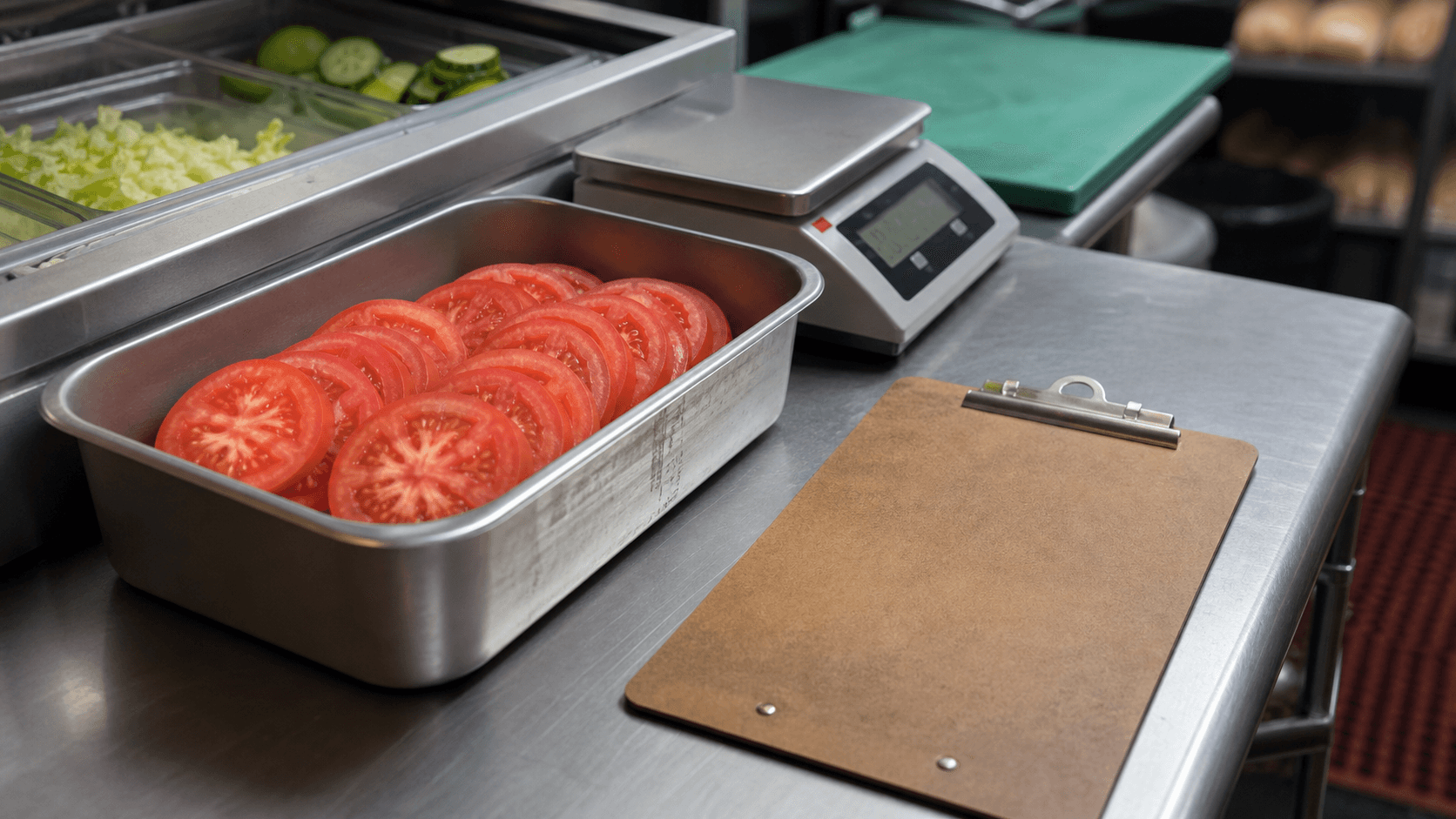
A tomato looks too small to matter until it sits on a prep counter at 9 a.m.
There is the metal pan of slices. There is the kitchen scale. There is the person building sandwiches who cannot simply pretend the red layer is optional, because the customer notices when it disappears.
The latest Consumer Price Index release from the Bureau of Labor Statistics showed tomatoes posting one of the sharper food-at-home jumps in April 2026. AP put the increase at about 40% over the prior year and reported that tomatoes from Mexico were being hit with a 17% tariff.
That sounds like a produce story. It is really a pricing-power story.
##Why Restaurants Feel The Shock Differently
For a household, the tomato decision is simple and visible. Buy fewer. Switch to carrots. Skip the salad this week.
For a restaurant, the decision is uglier. A tomato is not just an input; it is part of the promise printed into the menu.
#Why one ingredient can hit the whole ticket
AP reported that Snarf's Sandwiches, which operates stores in Colorado, Missouri, and Texas, saw cases of tomatoes rise from $27 to $93 in a year. The company said that single ingredient now adds more than $1.7 million in annual spend.
That is the part casual inflation talk misses. A chain does not only absorb the price of tomatoes. It has to decide where the pain goes:
- raise menu prices and risk traffic;
- shrink portions and risk trust;
- remove or limit the ingredient and risk changing the product;
- pressure suppliers and risk availability;
- accept lower store-level margins and hope the shock fades.
The tomato is visible enough that every choice has a customer-facing consequence.
##Where The Cost Actually Moves
The U.S. consumer does not experience food inflation as a neat spreadsheet category.
It arrives as a cashier total at the grocery store, then again as a sandwich that costs more at lunch. The same supply shock can travel through two very different margin systems.
#Grocery shelves can pass through faster
Supermarkets are built to change shelf prices quickly. A produce manager can update a placard, rotate displays, and let shoppers self-select. Some customers trade down, some buy less, and some pay up because tomatoes are still part of dinner.
Restaurants do not get that clean pass-through.
A menu price change is a stronger signal. It resets the customer's mental price for the whole visit. It also competes with labor, rent, beef, bread, delivery fees, card fees, and utilities for the same small pool of customer tolerance.
That is why the tomato shock matters beyond tomatoes. It shows which operators have permission to raise prices and which ones are already negotiating with the customer over pennies.
##Who Benefits And Who Gets Squeezed
The most obvious winners are domestic growers who wanted more protection from imported tomatoes. The U.S. exit from the Mexico tomato agreement was meant to address complaints that imports were undercutting domestic producers.
But the benefit is not evenly shared across the food system.
Restaurants and grocers sit closer to the shopper's irritation. They also absorb the operational mess: changing orders, explaining prices, forecasting demand, and dealing with a perishable product whose cost can move before the customer has adjusted.
There is also a timing problem. Lehigh University supply-chain professor Phillip Coles told AP that prices should ease later in the year as more domestic tomatoes are harvested, but planting and harvesting take time.
The customer sees today's price. The supply chain talks about later.
##Why Investors Should Care
Most investors are trained to look at broad inflation prints, same-store sales, and restaurant traffic. That is useful, but it can be too smooth.
A narrow input shock can reveal the real structure of a business faster than a quarterly margin table. The question is not whether tomatoes matter to national GDP. They do not.
The question is whether a company has enough brand strength, menu flexibility, supplier control, and customer loyalty to move a small cost shock without making the experience feel worse.
That is a useful test for any consumer business.
If a sandwich chain cannot pass through a tomato shock, it probably cannot pass through the next wage shock either. If a grocer can raise the shelf price but loses basket size, the margin line may look better before the traffic line looks worse.
The tomato is not the whole inflation story. It is a clean little audit.
##What The Market May Be Underpricing
The investor blind spot is treating food inflation as either a macro problem or a poor-household problem.
It is also a product-design problem.
Every menu item and grocery trip contains quiet assumptions about what customers consider normal. When an ordinary ingredient becomes expensive, companies have to find out which assumptions were real and which were subsidized by cheap supply.
That is the twist: the tomato does not have to be economically large to be commercially revealing.
It sits in the sandwich where everyone can see it. That is exactly why it matters.
#FAQ
Why are tomato prices getting attention now?
Tomatoes drew attention because CPI data showed an unusually sharp year-over-year increase, and AP reported that tariffs, weather, fuel, and shipping costs all contributed to the squeeze.
Why is this a business story instead of just a grocery story?
Restaurants and grocers cannot handle tomato inflation the same way households do. Businesses must decide whether to raise prices, alter products, pressure suppliers, or absorb margin damage.
What is the main investor takeaway?
Narrow ingredient shocks can expose pricing power. The companies worth watching are the ones that can protect the customer experience while moving unavoidable costs through the system.