April Durable-Goods Orders Put a Price on Delivery Time


TL;DR: U.S. durable-goods orders jumped in April, but the important business signal is not simple factory strength. The Census Bureau said new orders rose 7.9% to $346.0 billion, while shipments rose only 0.5%. That gap matters for investors because a large order book can still mean delayed revenue, working-capital pressure, and execution risk for manufacturers, suppliers, and industrial customers waiting for equipment.
##What the April Durable-Goods Number Really Said
The headline number looked loud: April new orders for manufactured durable goods increased by $25.5 billion, or 7.9%, after a revised 1.3% gain in March.
That is a real demand signal. It is also easy to overread.
The less comfortable line is that shipments of durable goods rose only $1.7 billion, or 0.5%, in the same month, according to the April advance durable-goods report. Orders are a promise. Shipments are when the promise starts turning into revenue, cash collection, installation, and customer productivity.
The market likes the first part. Operators have to live with the second.
##Why Big Orders Can Still Be a Bottleneck Story
Transportation equipment did most of the work. Census said transportation equipment orders rose $23.1 billion, or 21.5%, to $130.9 billion.
That makes the report less like a broad industrial party and more like a calendar problem. A big aircraft, rail, truck, or defense-related order does not move through the economy like a software subscription. It has supplier slots, engineering handoffs, financing terms, inspection windows, and delivery schedules.
#The revenue clock is slower than the order clock
In a factory office, the order does not end the conversation. It starts a meeting.
Someone has to check whether the right components are available. Someone has to decide whether labor gets pulled from another line. Someone has to explain to a customer why a machine that was budgeted this quarter may not arrive until a later quarter.
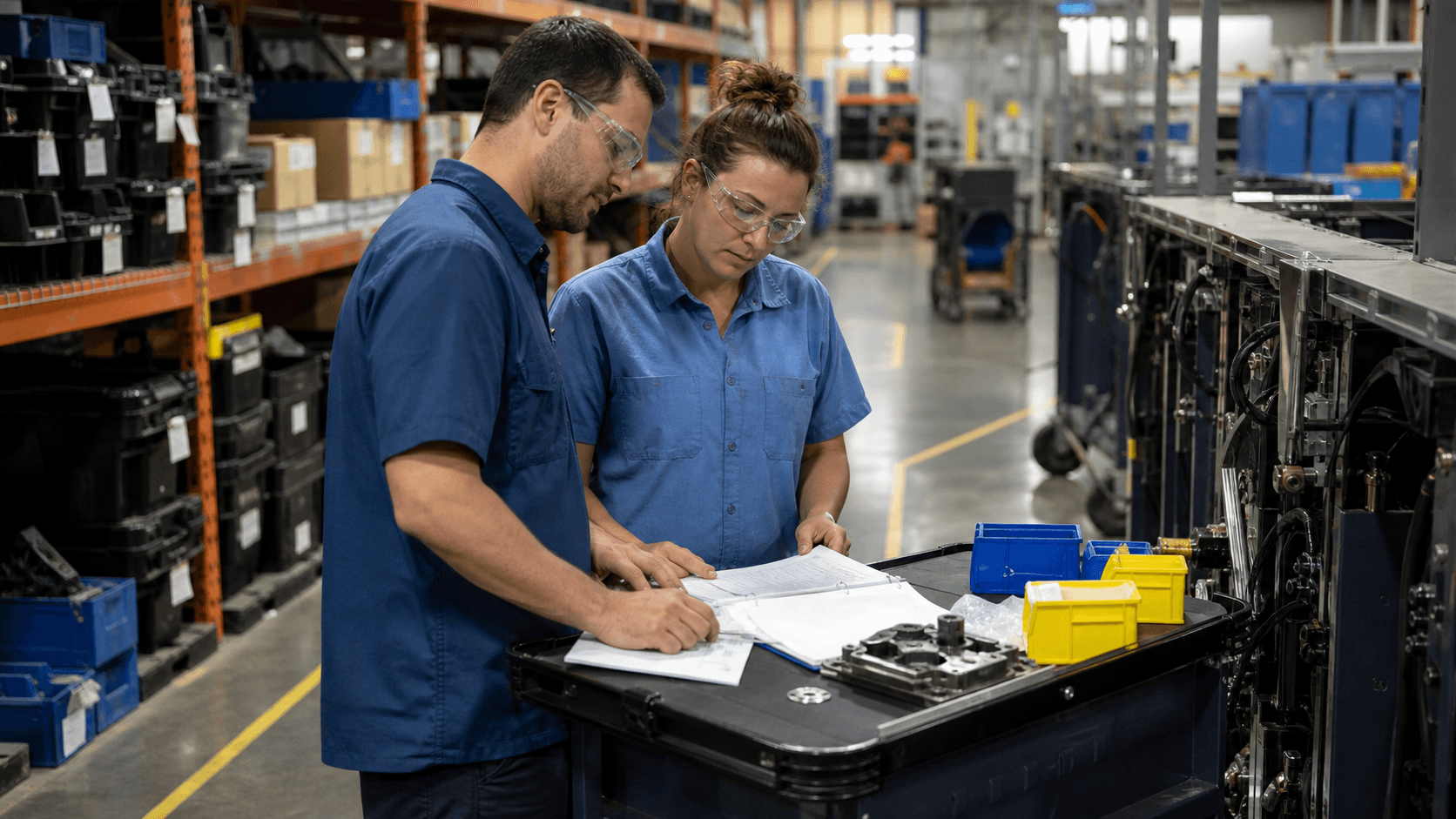
That is the hidden read-through from the April report: investors should separate booked demand from deliverable capacity.
##Where the Business Mechanism Shows Up
The most useful part of the release may be the backlog line. Unfilled orders for durable goods rose $26.7 billion, or 1.7%, to $1.569 trillion. Transportation equipment again led the increase.
Backlog is not bad. For many industrial companies, backlog is the thing that lets management plan labor, materials, and capex with more confidence.
But backlog becomes less flattering when it grows faster than the system can ship.
The second-order effects are practical:
- Suppliers get more negotiating power if customers need scarce parts on a firm schedule.
- Manufacturers carry more working-capital strain if inventory and work-in-process build ahead of shipment.
- Customers face delayed productivity if ordered equipment does not arrive when their budget model assumed.
- Investors risk confusing order volatility with margin durability.
This is why the April number belongs in the same conversation as rates and capital spending. When money is expensive, a delayed asset is not neutral. The buyer may be paying financing costs before the equipment fully earns its keep.
##Who Benefits From the Gap
The obvious winners are companies sitting on scarce production slots. If customers are trying to secure capacity, the seller with a credible delivery schedule can defend price better than the seller with a cheaper quote and a vague timeline.
#Schedule certainty becomes a product
That is the piece casual readers miss. The product is not only the machine, aircraft component, or heavy equipment order. The product is also the confidence that it will be delivered, installed, and usable inside the buyer's planning window.
This favors suppliers with boring advantages: clean procurement, dependable parts flow, enough skilled labor, and factories that can absorb rush orders without breaking quality.
It also punishes companies that sell into the same demand cycle but do not control the delivery clock. A distributor, component vendor, or smaller manufacturer can show healthy demand and still get squeezed if larger customers dictate timing and payment terms.
##Why Investors Should Not Treat This as a Clean Growth Signal
The bullish version of the April report is simple: businesses are still ordering expensive, long-lived goods, and that says recession fear is overstated.
There is truth in that. The BEA's advance estimate of first-quarter GDP also showed investment contributing to growth, with equipment investment up sharply in the quarter.
But the sharper read is that the industrial economy is becoming more schedule-sensitive. Big-ticket demand exists. The question is who can convert it into shipments without giving away margin, tying up cash, or disappointing customers.
That is a different investment question than "are orders up?"
It asks which companies own the bottleneck, which companies are trapped behind it, and which companies are quietly financing the wait.
##What to Watch Next
The next useful check is not whether one monthly orders number stays hot. Durable-goods orders are noisy, especially when transportation moves the headline.
The better test is whether shipments, unfilled orders, and inventories start telling the same story. If orders keep rising while shipments lag and inventories creep higher, investors should read that as execution pressure, not just demand strength.
The April durable-goods report is a reminder that a purchase order can be both bullish and inconvenient. In this cycle, the premium may go to the company that can make the calendar behave.
#FAQ
Why did April durable-goods orders jump so much?
Transportation equipment drove most of the increase. Census reported a 21.5% rise in transportation equipment orders, which accounted for $23.1 billion of the $25.5 billion total increase.
Why are shipments important for investors?
Shipments are closer to revenue recognition, customer delivery, and cash conversion than new orders. When orders rise much faster than shipments, investors need to ask whether capacity, parts, labor, or scheduling constraints are slowing the conversion.
Is this a recession warning or a growth signal?
It is more of an execution signal. The April report shows real demand for long-lived goods, but it also points to a wider gap between booked orders and delivered output.