FedEx Freight's Debut Turns LTL Pricing Into a Public Scorecard


TL;DR: FedEx Freight starting life as a standalone public company on June 1 looks like a classic breakup-value story, but the more important shift is operational. Investors can now watch one of the best less-than-truckload networks in the country as a pure pricing machine, where yield discipline, terminal execution, and customer mix matter more than spin-off theater.
#The market can finally see the freight math directly
FedEx Freight began trading as an independent company on June 1 after FedEx completed the separation of the business, ending years of burying a strong LTL franchise inside a much noisier parcel network. Reuters framed the debut as another corporate breakup designed to unlock value.
That is true, but it is also the least interesting part of the story.
The real change is that FedEx Freight now has to report its economics without the cover of express volumes, e-commerce seasonality, and the endless debate over the parent company’s cost cuts. Investors are no longer buying a logistics conglomerate with one especially good division inside it. They are buying a public scorecard on freight pricing discipline.
#What makes this business different from a simple trucking stock
FedEx Freight is not a loose collection of trucks chasing spot demand. It is a national LTL network built around terminals, linehaul density, dock productivity, and whether management can keep the freight mix attractive enough to protect yield when the economy gets noisy.
At its April investor day, FedEx Freight pitched itself as the largest pure-play LTL carrier in North America and laid out a medium-term framework for 4% to 6% revenue growth and 10% to 12% adjusted operating income growth. FedEx Freight investor day Those are not commodity-trucking promises. They are management promises about mix, service, technology, and discipline.
That is why the June 1 debut matters. A clean public listing forces the market to price the part of the freight economy that operators actually obsess over:
- contractual versus transactional freight
- shipment mix and weight per shipment
- service levels that justify premium pricing
- how much empty capacity management is willing to tolerate in order to avoid dumb volume
#The dock floor matters more than the spin slide
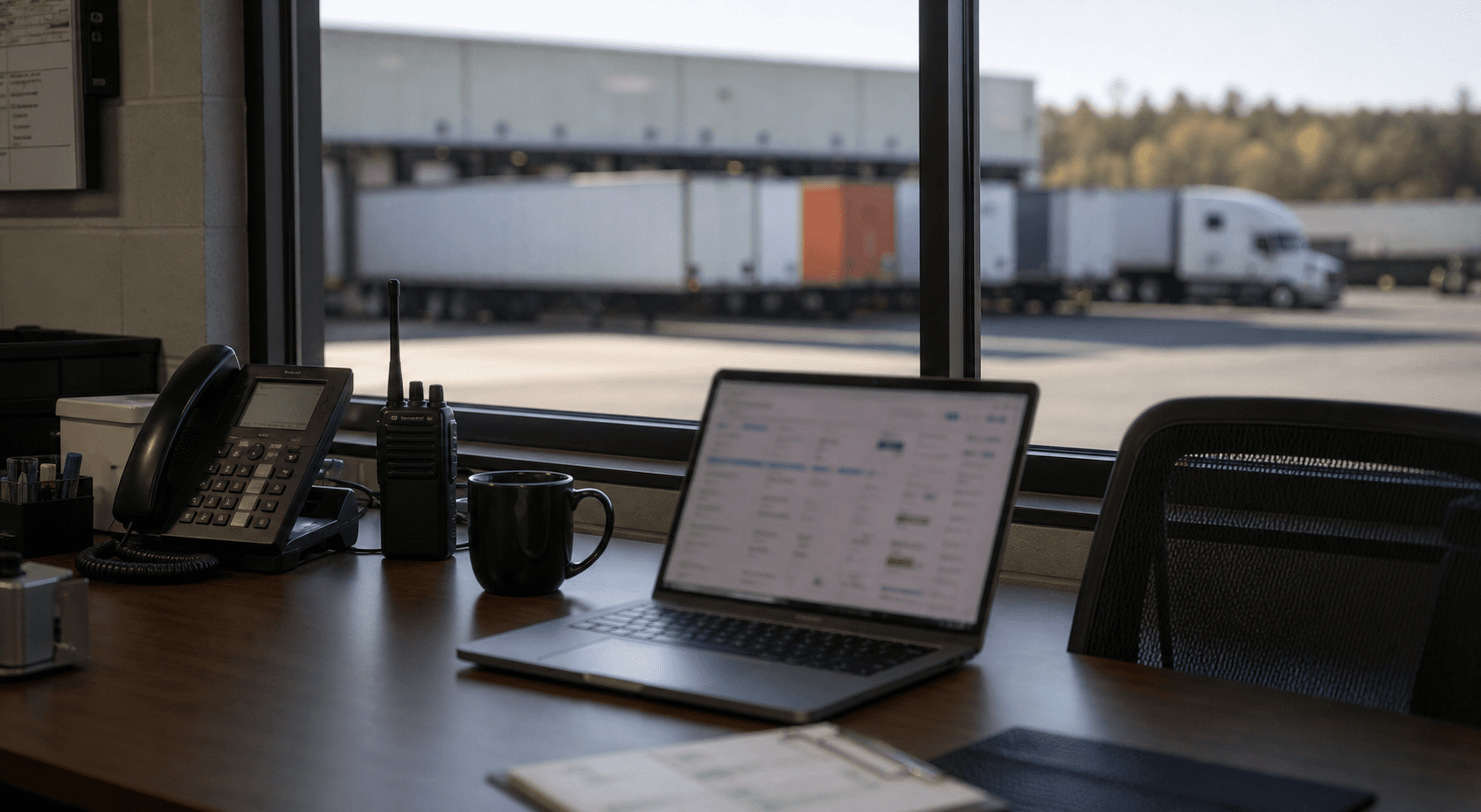
Walk the scene in practical terms. A forklift operator is moving palletized freight across a terminal floor before sunrise, while a revenue-management team a few states away is deciding which lanes deserve capacity and which bids deserve to be rejected.
That second room is where the equity story really lives.
#Why FedEx may have spun off its cleanest margin argument
FedEx’s board approved the spin-off in May and said the transaction would sharpen the focus of both companies. FedEx board approval That logic works for investors, but it creates a harder question for the parent.
Freight was one of the easiest parts of the portfolio to explain. It had a clear network shape, recognizable competitors, and a margin profile that often looked steadier than the broader parcel operation.
Once that business stands alone, the remaining FedEx story has less room to hide behind a good division. The parent now has to prove that its own efficiency campaign, capital spending, and package mix can deserve a cleaner multiple without Freight’s help.
That is the twist in the breakup narrative. The spin-off may unlock value for Freight shareholders precisely because it removes a quality buffer from the parent company.
#The next debate is not volume, it is discipline
Most investors will watch whether industrial demand improves and whether freight tonnage stabilizes. That matters, but it is still first-order thinking.
The better question is whether FedEx Freight can stay selective if the freight market gets incrementally better.
Weak freight cycles often teach carriers good habits. They force carriers to reject ugly freight, rethink service promises, and protect price even when terminals want more volume. The danger arrives when demand improves just enough to tempt management back into low-quality tonnage that flatters revenue and quietly erodes the network.
#Public-market freedom cuts both ways
As a standalone company, Freight gets a cleaner investor base and more strategic freedom. It also gets fewer excuses.
If margins compress, investors will see it immediately. If the company chases volume too aggressively, the blame cannot be spread across Express, Ground, or a restructuring slide. If it keeps yield strong while peers get sloppy, the reward can also be more direct.
That makes FedEx Freight more interesting than a routine spin. It is becoming one of the clearest public tests of whether LTL management teams really believe their own discipline language.
#What U.S. investors should actually watch now
The June 1 listing is only the opening scene. The more useful signals over the next few quarters will be small, operational, and easy to miss in a headline-driven market.
Watch for these:
- whether pricing outpaces any improvement in tonnage
- whether management talks more about shipment quality than simple volume growth
- whether operating ratio discipline survives even if the industrial backdrop softens
- whether capex stays focused on terminals, fleet productivity, and network returns rather than empire-building
If those indicators hold, Freight can become a premium network stock rather than just a newly separated transport name.
If they slip, the market will discover that a spin-off does not fix bad freight habits. It only makes them easier to see.
#FAQ
Why is FedEx Freight’s spin-off a finance story and not just a transport story?
Because the separation changes what investors are buying. Instead of getting Freight buried inside FedEx, shareholders now own a standalone pricing-and-margin engine whose valuation will move with yield discipline and capital allocation.
What is the main business insight behind the article?
The hidden point is that FedEx Freight is now a public scorecard on management discipline. The market will learn quickly whether the company protects price and mix like a quality network operator or slides back into low-return volume chasing.