Dexcom's New Trial Moves Glucose Sensors Into The Coverage Workflow


TL;DR: Dexcom's latest study is not just another med-tech efficacy update. It is a business case for moving continuous glucose monitors out of the endocrinology niche and into the reimbursement, pharmacy, and primary-care workflow. If coverage follows the evidence, the bigger fight will be less about sensors and more about who pays to monitor patients earlier.
##What Dexcom Actually Proved
Dexcom said its CONNECT randomized controlled trial showed that adults with type 2 diabetes who were not using insulin still got a meaningful benefit from wearing the Dexcom G7. Participants using the device saw an average 1.6 percentage point A1C reduction over 26 weeks, which was 0.9 points better than routine care, and the study was run across 22 U.S. primary-care practices rather than a narrow specialist setting.
That setting is the whole story.
A glucose sensor for insulin users is an established tool. A glucose sensor for people managed mostly with metformin, GLP-1 drugs, SGLT2s, diet changes, and primary-care follow-ups is a coverage question.
Dexcom also said 68% of participants using G7 reached A1C below 7.5% at 26 weeks and that time in range was about five hours per day better than the control group. The company explicitly framed the result as evidence that could help establish a new standard of care for non-insulin type 2 diabetes.
#This was a clinic-workflow study disguised as a product update
Look at the scene behind the press release. A patient shows up at a regular primary-care office with an elevated A1C, maybe already on a GLP-1, maybe trying to avoid insulin, and the clinician has to decide whether to escalate drugs, wait longer, or monitor more closely.
The sensor changes that visit from a quarterly guess into a daily data stream.
##Why The Money Question Starts Here
Dexcom is already a large device company, not a speculative startup. In its first-quarter 2026 results, it reported $1.192 billion in revenue, up 15% year over year, and kept full-year revenue guidance at $5.16 billion to $5.25 billion.
So this is not about proving there is a business. It is about proving where the next layer of the business can come from.
Dexcom's traditional economics are strongest when the device is medically necessary, reimbursed, and embedded in long-term patient behavior. The non-insulin type 2 population is attractive because it is broader, but it is also harder. The medical benefit has to be clear enough for payors, pharmacy benefit managers, employers, and health systems to justify recurring sensor cost before a patient progresses to more intensive treatment.
That is why the business implication is larger than the clinical headline:
- A stronger evidence base gives clinicians and payors a cleaner argument for earlier CGM use.
- Earlier CGM use shifts spending upstream, before insulin dependence or acute complications make costs more visible.
- Upstream monitoring creates a new fight over which budget owns the savings: pharmacy, medical claims, employer benefits, or risk-based provider groups.
The market usually talks about medical devices as if adoption is a consumer preference story. In U.S. healthcare, it is usually an authorization story first.
##The Real Expansion Is Into Primary Care
Dexcom has been telegraphing this direction for months. Ahead of ADA, it said it was pushing toward earlier-stage intervention and preventative care, and its Q1 release pointed to ongoing investment in broader market access, U.S. channel expansion for G7 15 Day, and new glucose-health products.
That sounds like product roadmap language. It is really channel strategy.
Endocrinology is important, but it is not where scale lives. Scale lives in the ordinary primary-care office, the retail pharmacy counter, the benefits manager trying to contain diabetes spend, and the insurer trying to decide whether more monitoring now reduces more expensive care later.
#The reimbursement workflow is becoming the moat
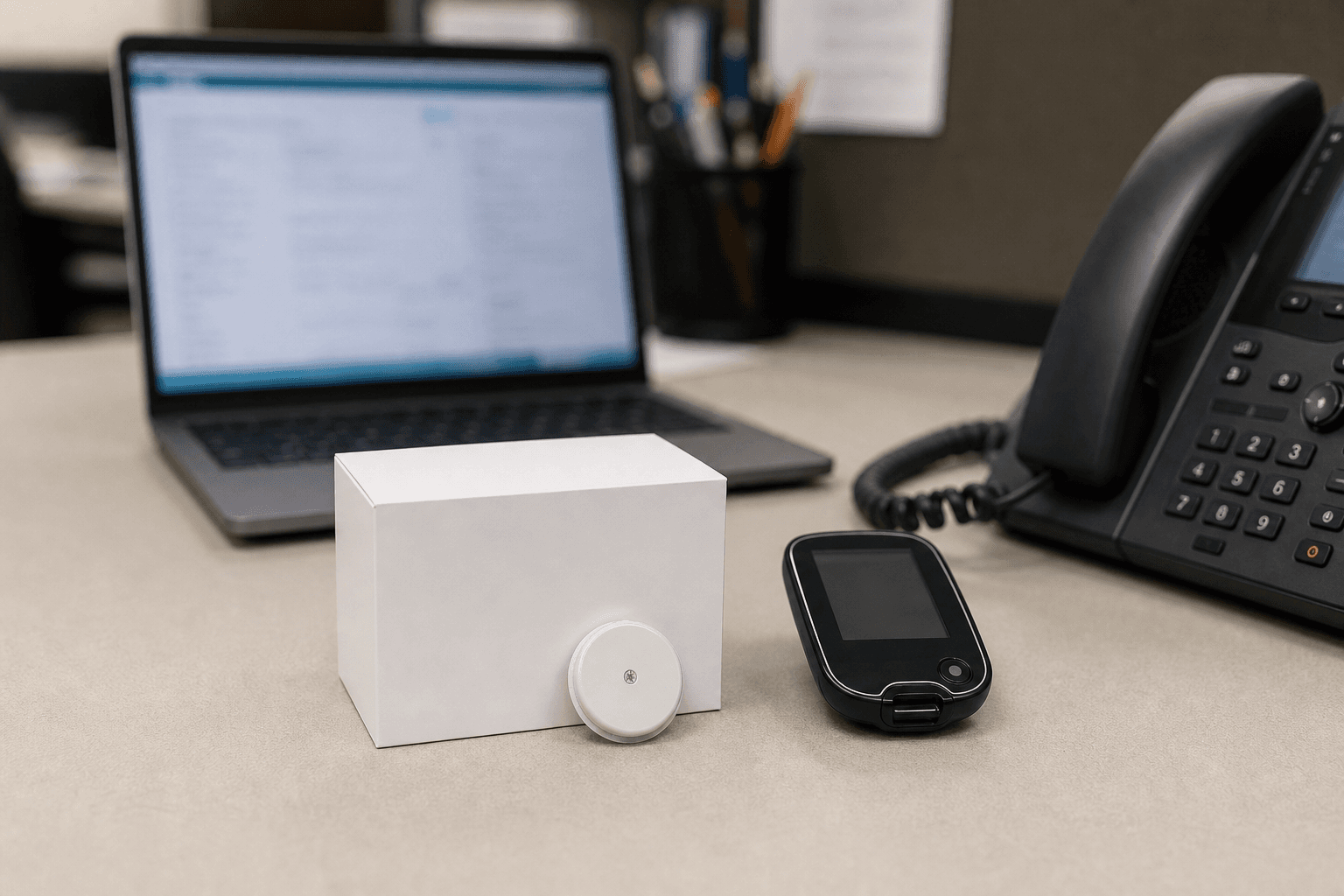
If this category broadens, the winning company is not just the one with the most accurate sensor. It is the one that best fits the approval chain.
Can the device be prescribed easily in primary care? Can the claim clear without endless exceptions? Can the data feed into coaching, medication adjustments, and adherence workflows? Can the product show enough value that an employer or health plan treats it as prevention rather than gadgetry?
Those are boring questions. They are also where durable healthcare margins usually hide.
##What Investors And Payors Could Be Missing
The easy bullish story is that Dexcom just expanded its addressable market.
The more interesting story is that it may be helping redefine where diabetes management spending begins.
For years, a lot of U.S. healthcare economics has been built around waiting until a patient is sick enough, expensive enough, or drug-intensive enough to trigger a stronger intervention. A CGM for non-insulin users challenges that timing. It says the economic value may show up earlier, in tighter monitoring, better medication feedback, and fewer blind spots between office visits.
That creates winners and friction at the same time.
- Dexcom gets a larger clinical and commercial argument.
- Clinicians get a more usable tool in routine care.
- Patients may get feedback before their treatment escalates.
- Payors inherit another near-term coverage cost they have to defend.
The tension is obvious: the company books revenue when sensors ship, but the system-level savings, if they come, arrive later and are spread across different stakeholders.
##The Twist
This is why Dexcom's study matters as a finance story.
The big opportunity is not simply "more people wearing sensors." It is that continuous monitoring may be moving from a diabetes-device category into a healthcare-financing workflow, where evidence, coding, coverage, and budget ownership matter as much as hardware.
If that shift sticks, Dexcom is not just selling better sensors. It is selling a reason for the healthcare system to spend earlier in order to avoid paying more later.
That is a stronger market thesis than another product cycle, and a messier one too.
#FAQ
What did Dexcom's CONNECT trial show?
Dexcom said adults with type 2 diabetes who were not using insulin and wore Dexcom G7 achieved an average 1.6 percentage point A1C reduction at 26 weeks, 0.9 points better than routine care, with improved time in range and broad benefit across medication groups.
Why does this matter beyond the device business?
Because the study supports earlier CGM use in primary care, which shifts the commercial debate toward reimbursement, pharmacy approval, employer benefits, and insurer budget ownership rather than just sensor performance.
Why call this a coverage workflow story?
In U.S. healthcare, broader adoption usually depends on who can prescribe, who gets reimbursed, and which part of the system pays first. Dexcom's new evidence makes that workflow more valuable than a simple hardware upgrade cycle.