OECD's 2026 Outlook Has A Fragile Assumption About AI Capex

TL;DR: The OECD's June 3 economic outlook warns that a longer Middle East war could slow global growth and push inflation higher, but the sharper U.S. business lesson is inside the AI boom. AI capex may cushion America from a weaker consumer cycle, yet it also makes data-center power, semiconductor logistics, and industrial inputs more important to GDP, margins, and rate expectations.
##What The OECD Outlook Actually Changes
The headline from the OECD's June 3 outlook is easy to file under macro risk: global growth is projected to slow from 3.4% in 2025 to 2.8% in 2026, then recover to 3.1% in 2027 if energy disruption eases.
That is important. It is also not the most useful part for investors.
The useful part is the contrast. The U.S. is still getting support from technology investment while much of the world is more directly exposed to energy shock. That makes AI capex look like insulation.
The mistake is treating insulation as independence.
#Why AI Capex Is Not Just A Tech Story
AI investment is now large enough to sit inside the macro conversation, not just inside Big Tech earnings calls. Axios notes that the OECD scenarios are playing out against an "AI-boosted economy", with the U.S. the clearest beneficiary because it is more insulated from the energy shock.
That sentence should make investors pause.
The U.S. may be less exposed to imported energy than Europe or parts of Asia. But AI infrastructure does not run on optimism. It runs through power contracts, transformers, chips, construction labor, cooling equipment, permitting, and utility interconnection queues.
So the AI boom is doing two things at once:
- It supports demand when consumer spending and real income growth look less exciting.
- It concentrates more economic weight in a few physical bottlenecks.
- It gives equity markets a growth story that still depends on boring supply-chain execution.
- It keeps the Federal Reserve from seeing a clean slowdown if investment remains hot.
That is a different kind of resilience. It is resilience with a bill attached.
##Why The Data-Center Desk Matters More Than The Press Release
Picture a data-center developer's project desk on a Wednesday morning.
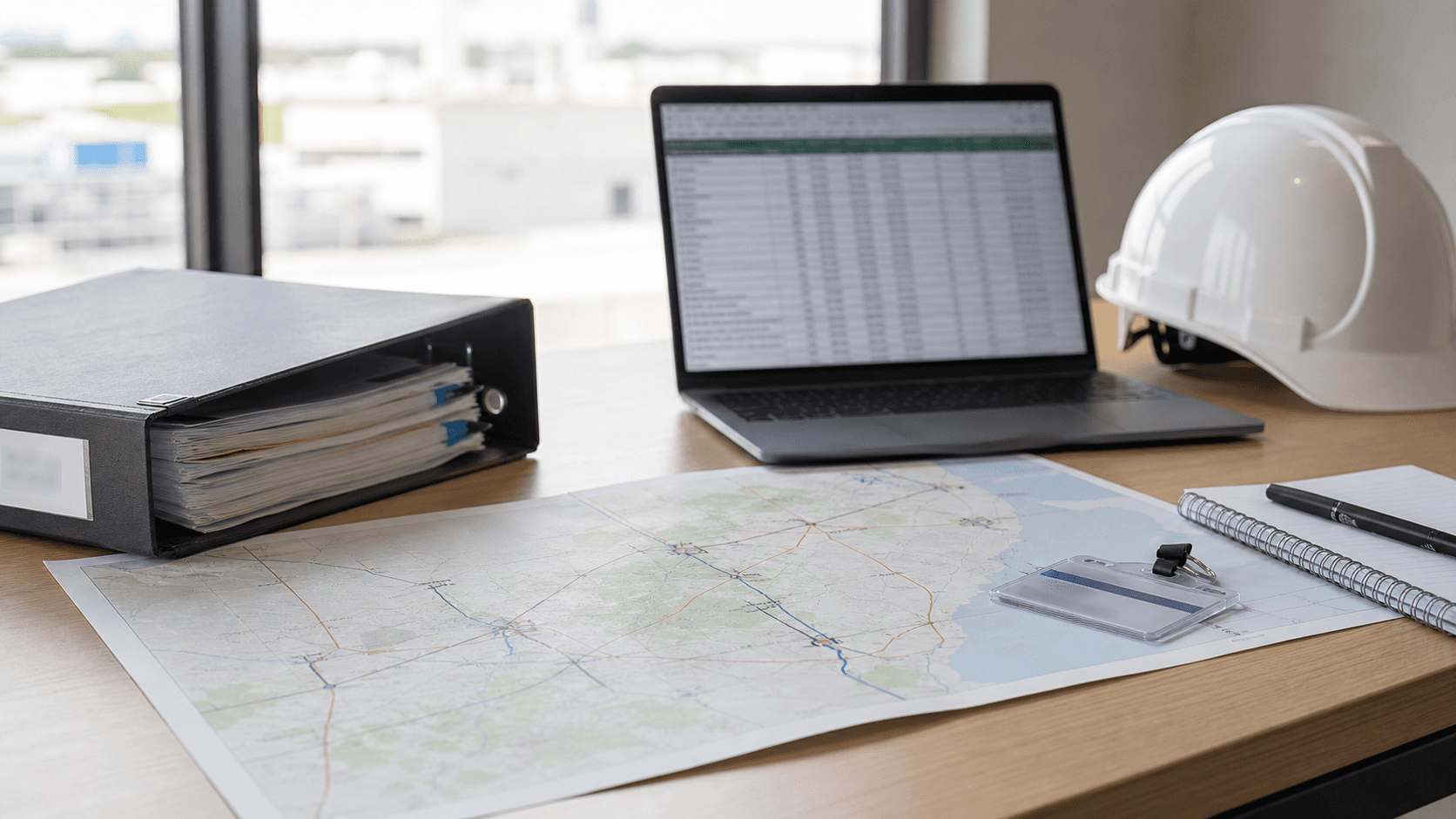
There is a utility interconnection packet, a spreadsheet of power availability by site, a construction schedule, and a procurement note on gear that will not arrive when the sales deck said it would. The investor presentation talks about AI demand. The desk talks about megawatts, lead times, and who pays for delays.
That is where the OECD outlook becomes practical. If energy disruption lifts inflation, the obvious market reaction is to ask whether central banks can cut. The less obvious business reaction is to ask which companies can keep building when input costs, financing costs, and delivery schedules all move against them.
AI capex does not avoid macro friction. It relocates it.
#The Balance-Sheet Mechanism Is Simple
Higher energy prices hit a data-center project in several places.
Power purchase agreements become more valuable if they are locked in, and more painful if they are not. Construction budgets absorb higher equipment, logistics, and labor costs. Utilities may ask for more upfront commitments. Tenants may still want capacity, but the return on each new site depends on timing.
That timing matters for investors because AI capex is often discussed as if demand automatically creates value. It does not.
Demand creates a queue. Execution determines who converts the queue into revenue without giving the margin back to suppliers, utilities, debt markets, or delays.
##Where Semiconductor Logistics Enters The Macro Story
The same logic applies to chips.
A semiconductor procurement desk is not glamorous. It is trays, forms, supplier rows, customs timing, and a list of components that can hold up a bigger deployment. But when AI infrastructure becomes macro-relevant, that desk becomes part of the growth story.

The OECD's downside scenario, as reported by Reuters, includes higher inflation and a risk that central banks would need to tighten rather than relax policy. That matters because AI infrastructure is capital intensive. It needs cheap enough capital, predictable enough input costs, and reliable enough delivery windows.
If one of those cracks, the market can still love the AI story while the actual project economics get worse.
That is the investor blind spot. AI demand can be real and still be less profitable than expected.
##Who Benefits From This Version Of Resilience
The obvious beneficiaries are the hyperscalers and chip suppliers with the strongest order books. But the more durable winners may be the companies that control bottleneck reliability.
That includes utilities with credible power availability, equipment suppliers with capacity, engineering firms that can reduce permitting and construction delays, and semiconductor companies with disciplined allocation.
It also includes software vendors only when their product helps a buyer measure or reduce a specific cost line. Generic "AI transformation" will be a harder sell in a world where CFOs are already funding the physical AI buildout through higher capex budgets.
The losers are not necessarily companies with weak AI exposure. The losers are companies that depend on the AI cycle but have no control over the constraints.
##What The Market May Be Missing
The easy trade is to say the U.S. has AI, so the U.S. has resilience.
The better question is whether that resilience is becoming more capital hungry, more power hungry, and more supply-chain sensitive than investors want to admit.
The OECD outlook is useful because it does not let the AI story float above the rest of the economy. It pulls the story back to energy, inflation, rates, and physical capacity.
That is the twist: AI capex may be the thing holding up part of the growth story, but it is also one more reason the growth story is harder to separate from the power grid.
#FAQ
Why does the OECD outlook matter for U.S. investors?
It frames AI-related investment as a source of U.S. resilience while global growth slows and inflation risk remains live. That changes how investors should read capex, margins, rates, and supply-chain exposure.
Is this mainly about geopolitics?
No. The geopolitical shock is the catalyst, but the business mechanism is physical: energy prices, data-center power, chip availability, construction timing, and financing costs.
Which companies should investors watch most closely?
Watch hyperscalers, chipmakers, utilities, electrical equipment suppliers, engineering firms, and data-center developers. The key question is not only who has AI demand, but who controls the bottlenecks that turn demand into profitable capacity.