The Resilient Consumer Is Becoming A Checkout Finance Story

TL;DR: The U.S. consumer still looks alive if you stare at top-line spending. The more interesting and less comfortable story is where that spending is being financed: revolving credit accelerated in April, and the Federal Reserve's new BNPL work suggests a growing share of checkout demand is now being subsidized by lenders and merchants rather than by cleaner household balance-sheet strength.
#The signal hiding inside a "resilient" consumer
The market keeps looking for a clean answer on the consumer. Is the household still strong, or finally cracking?
I think that framing is getting stale. The better question is who is carrying the transaction.
The Federal Reserve said on June 5 that U.S. consumer credit rose at a 4.8% annual rate in April, with revolving credit up at a 10.4% rate, far faster than nonrevolving credit at 2.9% (Federal Reserve G.19). That came after the Bureau of Economic Analysis reported that April personal spending rose 0.5% while the personal saving rate sat at just 2.6% (BEA).
That is not a collapse story. It is a funding story.
#The checkout is doing more of the economic work
The Fed's new June 5 note on buy now, pay later makes the point even sharper. It estimates that major BNPL providers originated about $156.7 billion of U.S. consumer credit products in 2025, and roughly half of that was not the classic "pay in 4" plan but other installment structures (Federal Reserve FEDS Note).
That matters because BNPL is no longer a niche checkout gimmick for sneakers and impulse buys. It is turning into a broader financing layer sitting directly inside retail conversion.
And the economics are not neutral. The Fed note says merchant fees for BNPL providers tend to run around 5% to 8%, versus roughly 2% to 3% for credit cards. In other words, part of "consumer resilience" may simply be merchants paying more to keep the basket moving.
#Why investors should stop calling this only a household story
If a shopper buys the same item, but the purchase increasingly depends on revolving credit, installment lending, or zero-APR financing, the revenue line still lands. But the margin map changes underneath it.
Retailers may protect volume while giving up more economics at the point of sale. Payment platforms and BNPL lenders gain leverage over conversion. Credit losses and funding costs become more important to the business model than the headline sales print suggests.
That is why the consumer debate now belongs partly in financials, not just in retail. The transaction is getting split across more balance sheets.
#One scene worth keeping in mind
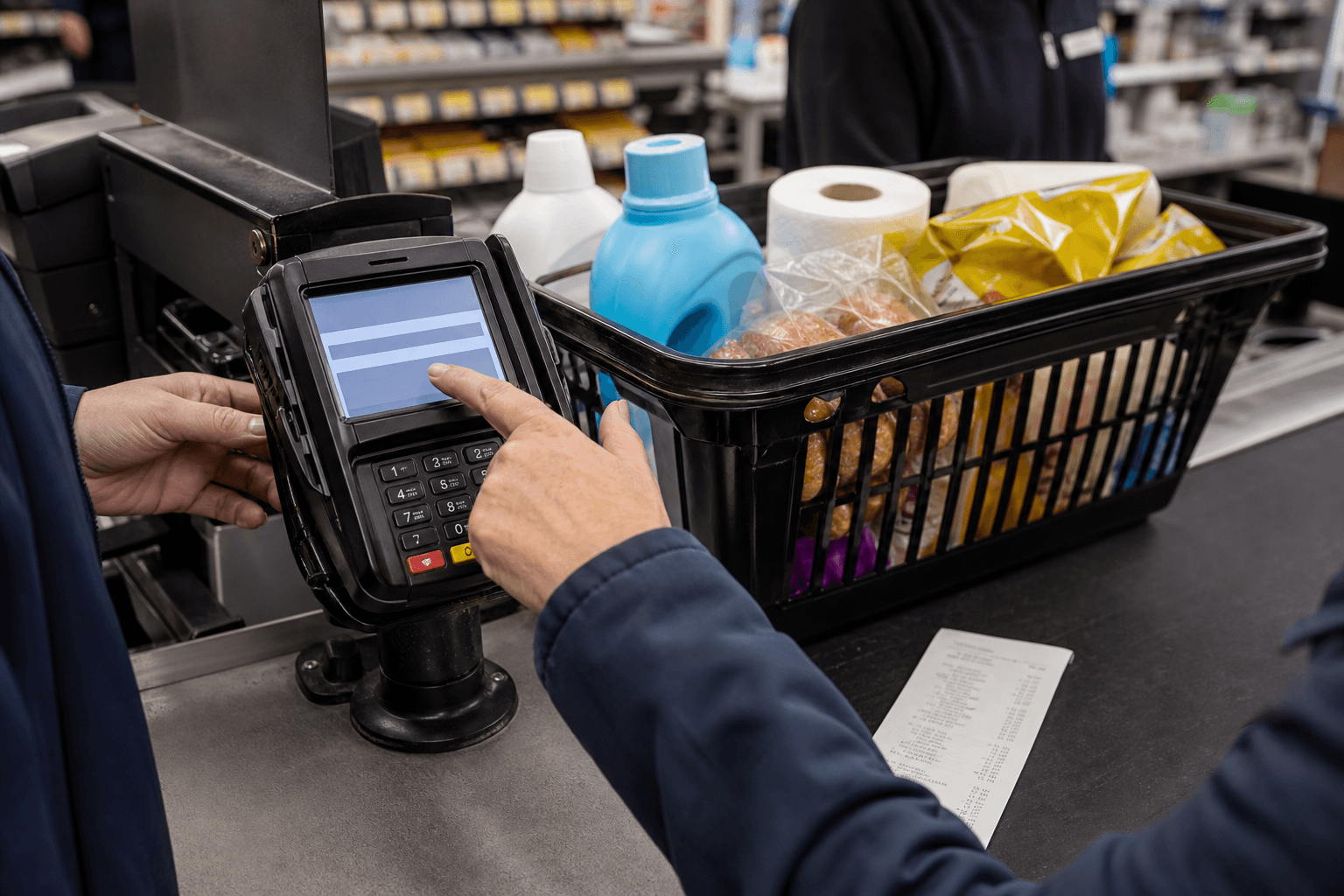
Picture an ordinary checkout page. The item price has not changed. The customer still clicks buy. But instead of one card swipe, the sale now arrives with a menu of monthly payments, a lender approval, a merchant fee, and a financing partner taking a slice of the economics in exchange for preserving conversion.
Same demand on the surface. Different plumbing underneath.

#The "soft landing" version can still be expensive
This is the part many casual market reads miss. You do not need a consumer crash for consumer-facing business models to get worse.
You just need household demand to become more finance-assisted.
That can produce an awkward middle ground:
- Retailers keep comp sales respectable, but pay more to close each transaction.
- BNPL and payment providers grow because they are solving a conversion problem, not because households are healthy.
- Banks and investors have to watch whether today's revolving-credit growth is tomorrow's loss content.
#The second-order consequence is a margin transfer
If this trend holds, the biggest winners may not be the brands consumers are buying from. They may be the companies controlling approval, underwriting, and checkout placement.
That changes how to read consumer resilience in earnings season. A stable sales line at a retailer could coexist with rising payment costs. A strong quarter at a lender or payment platform could say as much about household strain as it does about product innovation.
This is also why I would be careful with simple "the consumer is fine" takes. Maybe the consumer is still spending. But increasingly, the system may be paying to make that sentence true.
#The twist is that financing is becoming part of merchandising
Retail used to separate pricing, promotion, and payments. That wall is getting thinner.
Once installment choices, soft approvals, and financing offers sit directly inside the purchase flow, payments stop being back-office plumbing. They become part of the merchandising engine itself.
That is good news for the platforms sitting in the checkout box. It is less obviously good news for everyone else.
The next consumer slowdown may not first show up as empty stores. It may show up as a quieter transfer of margin from merchants to whoever finances the click.
#FAQ
What changed in the Fed's June 5 consumer credit release?
The Fed said total consumer credit increased at a 4.8% annual rate in April 2026, with revolving credit rising at a 10.4% annual rate, much faster than nonrevolving credit at 2.9% (Federal Reserve G.19).
Why does the BNPL research matter for business readers?
Because the Fed's June 5 note shows BNPL has become a much larger financing layer than many investors still assume, with about $156.7 billion of 2025 originations among major providers and a large share now extending beyond classic pay-in-4 products (Federal Reserve FEDS Note).
What is the non-obvious investing angle?
The important shift is not just whether consumers spend, but who captures the economics of enabling that spend. If conversion increasingly depends on installment finance and higher checkout fees, margin power can move from merchants toward lenders and payment platforms.