The Consumer Rebound Is Arriving in Refund Installments

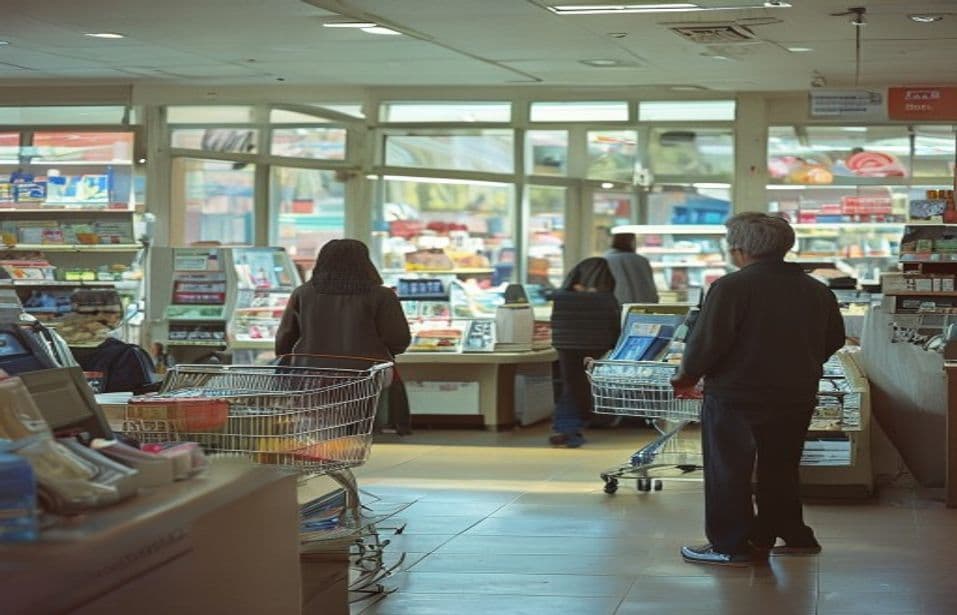
The consumer is being given too much credit.
What looks like resilience in U.S. retail right now is partly a cash-flow event. A refund check arrives, the debit card gets a little room, the off-price parking lot fills up, and Wall Street calls it demand.
That is not the same thing as a healthy consumer.
Ross Stores accidentally said the quiet part out loud this week. The company posted a huge quarter, with first-quarter sales up 21%, comparable sales up 17%, and earnings per share up 37%. Then CEO Jim Conroy said customer traffic was the main driver and that results also benefited from higher consumer spending tied to tax refunds.
That line matters more than the beat.
It tells you some of the most bullish retail signals in the market are being flattered by temporary liquidity, not by a broad improvement in household purchasing power. The market keeps treating every decent retail print as evidence the American consumer is sturdier than feared. A better reading is that the Treasury has been helping bridge the gap between wage reality and sticker shock.
The picture gets clearer when you put Ross next to the April retail-sales data.
The Commerce Department said retail sales rose 0.5% in April, which looks respectable on the surface. But the details were less clean. AP noted that higher gas prices were squeezing budgets, with April spending still propped up by larger tax refunds. Pantheon Macroeconomics estimated April refunds were $22 billion higher than a year earlier, roughly 3% of monthly retail sales.
That is a big number.

It means a meaningful share of what looked like consumer strength was really timing. Households were not necessarily feeling richer. They were briefly less cornered.
The IRS data supports the same idea. Through May 8, the agency had sent out 99.1 million refunds, up 6.0% from a year earlier, with the total amount refunded up 18.1% to $324.8 billion. The average refund was $3,276, up 11.5%.
If you run an off-price chain, that is not background noise. That is demand arriving in bursts.
You can almost picture the sequence. A refund lands by direct deposit. The overdue bill gets paid. Gas still hurts, groceries still hurt, but there is enough left for shoes, kids' clothes, housewares, maybe a small upgrade that had been postponed for two months. The consumer does not feel confident. The consumer feels briefly liquid.
That distinction matters for investors because markets are trying to answer the wrong question.
The question is not whether Americans are still spending. They are.
The better question is what kind of spending can survive once the refund tailwind rolls off and fuel costs keep eating the weekly paycheck. That is a much harsher test, and it favors a different set of businesses than the usual "consumer is resilient" headline implies.
It favors companies that monetize stress, timing, and trade-down behavior:
- Off-price retailers that capture the first discretionary dollar after essentials are covered.
- Value chains with enough scale to look safer when households start editing the shopping list.
- Payment networks and transaction intermediaries that still get paid on nominal spend even when the basket gets more defensive.
It is worse for anyone who needs the shopper to feel expansive. Furniture, apparel without a value hook, and nice-to-have discretionary categories can look stable for a few weeks while the refund money is still moving through the system. That can trick management teams and investors into reading a bridge as a trend.
Ross may have had a great quarter because it sits exactly where temporary liquidity turns into visible traffic. That is a strength. But it is a specific strength.
It is not proof that household finances are broadly repaired.
In fact, the more interesting second-order implication is that some of the strongest consumer companies in the next few months may be the ones best positioned for a paycheck-to-refund economy. They are not selling abundance. They are selling release valves.
That is a very different market story from the one implied by a rising S&P 500 and another round of upbeat retail commentary.
The consumer has not disappeared. But a lot of what looks like endurance may just be better calendar timing from the government and worse arithmetic at the pump.
When the refund pulse fades, we may find out which retailers were serving demand and which ones were simply standing where the cash briefly passed through.