United and Delta's Real Oil Trade Is Capacity, Not Fares


TL;DR: Jet fuel has become the quiet vote on U.S. travel stocks. AP reported this week that United Airlines, Delta Air Lines, and Norwegian Cruise Line rose as oil fell, while IATA's latest jet-fuel monitor still shows a costly fuel backdrop. The business implication is simple: investors are not just buying summer demand. They are betting on which travel companies can keep capacity profitable when fuel moves faster than ticket prices.
##What the Oil Move Changed for Travel Stocks
The clean market story is that lower oil is good for airlines and cruise lines. That is true, but too shallow.
The better read is that fuel is acting like a capacity governor. When crude drops, the market is not merely adding back a few cents of margin. It is repricing the odds that airlines can keep flying fuller schedules without giving away the summer profit pool.
That is why the move showed up so quickly in public equities. In a May 27 market wrap, AP said companies with large fuel bills led after crude prices fell, with United Airlines up 6.3%, Delta up 3%, and Norwegian Cruise Line Holdings up 6.1%. Brent crude fell 4.6% that day to $92.25.
For a normal industrial company, a lower input price can be a margin tailwind. For an airline, it can decide whether a marginal flight should exist.
##Why Jet Fuel Is Really a Capacity Trade
Airlines sell seats before they know the final cost of operating the network. The plane, crew, gate slot, maintenance plan, and customer promise are committed in advance. Fuel is the bill that keeps moving after much of the revenue has already been locked in.
That is why the fuel story is not just "higher cost, lower profit." It is "higher cost, less flexibility."
#How the cost gets passed through
The first pressure point is not always the advertised airfare. U.S. carriers usually do not slap a clean fuel surcharge on domestic customers. They work through base fares, seat upgrades, change behavior, baggage economics, route pruning, and the quiet art of not adding weak capacity.
An AP report from March captured the mechanism well: jet fuel is one of the airline industry's largest expenses, typically about a quarter of operating costs, and executives were already talking about strong bookings offsetting higher fuel costs.
That is a fragile balance. Strong demand lets airlines absorb fuel for a while. Weak demand turns fuel into a schedule knife.
##Where the Real Operating Scene Happens
Picture the airline operations desk, not the Wall Street chart. A planner is looking at a route map, a fuel invoice, a load-factor forecast, and a maintenance window. The question is not whether people want to travel. The question is whether the next flight clears the hurdle after fuel, labor, airport fees, and disruption risk.
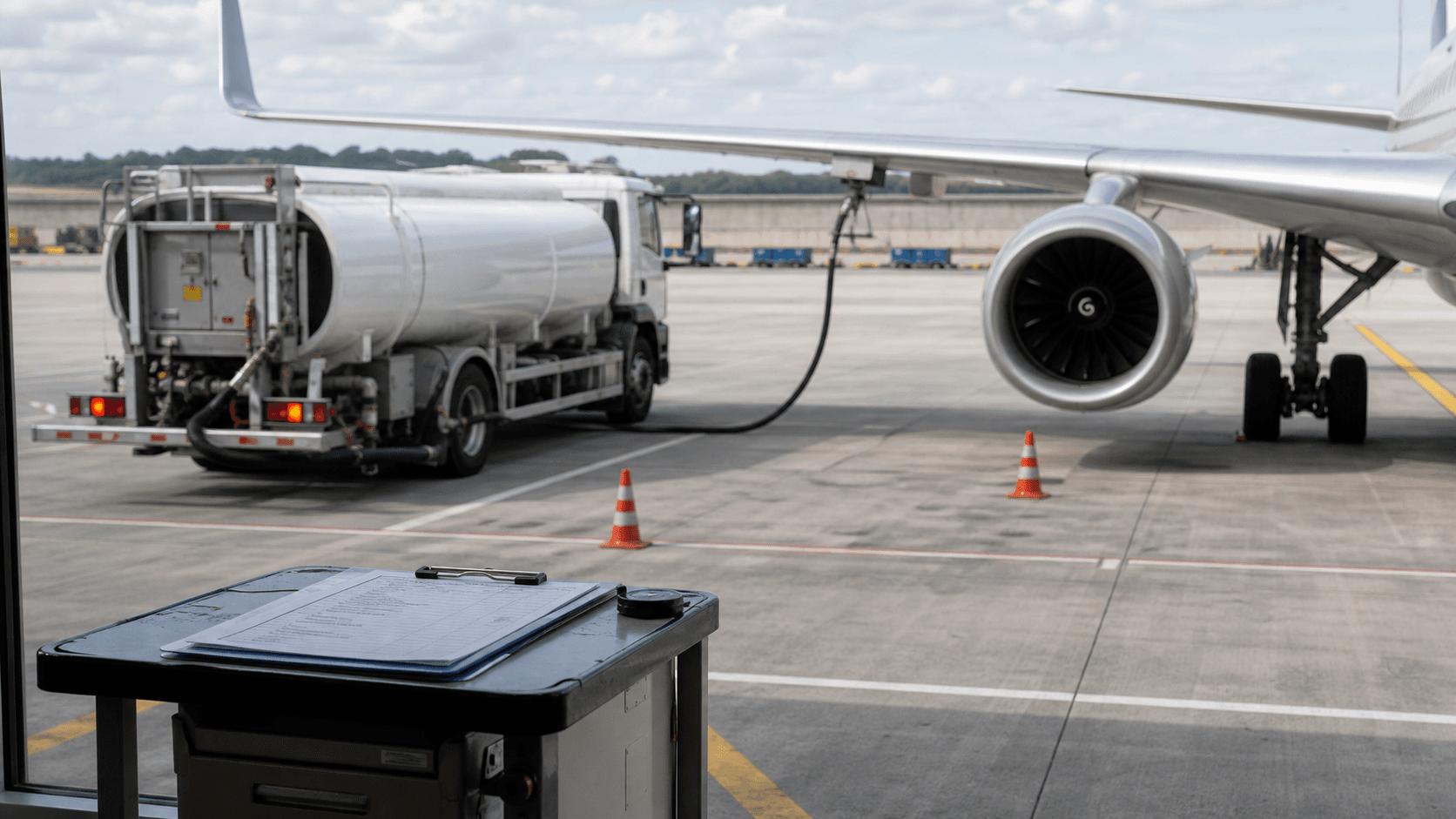
The public sees the ticket price. The operator sees the route as a moving spreadsheet with wings.
That is why IATA's jet-fuel monitor matters more than the headline oil quote. IATA said the global average jet-fuel price last week fell 1.7% from the prior week to $159.85 per barrel. A decline helps, but that is still a price level that forces discipline.
The companies with the best hand are not necessarily the ones with the loudest demand commentary. They are the ones that can turn fuel volatility into controlled capacity instead of panic pricing.
##Who Has Pricing Power and Who Gets Exposed
The fuel shock separates travel businesses into three groups:
- Network airlines can reroute aircraft, lean on loyalty programs, sell premium seats, and protect corporate-heavy routes.
- Ultra-low-cost carriers have less room because their whole promise depends on cheap seats and high aircraft utilization.
- Cruise lines and vacation operators benefit when fuel falls, but they still face the same customer-wallet test if airfares and trip costs climb together.
This is why fuel relief can make airline stocks jump even when consumers are not euphoric. The market is buying operating room.
#Why lower fuel does not automatically mean cheap tickets
Travelers should not assume every drop in crude becomes a cheaper fare. If demand is firm, carriers have every reason to use lower fuel to repair margins, pay down stress, and keep schedules stable.
That may annoy customers. It is also rational finance.
Airlines had to absorb fuel pain while customers were still booking. When the input cost eases, management will try to keep the spread. The consumer gets availability; shareholders get a chance at margin repair.
##What Investors Should Watch Next
The useful metric is not only crude oil. Watch capacity language.
If carriers talk about "discipline," "selective growth," or "capacity balance," they are telling you fuel volatility has moved from the commodity desk into network planning. If they talk about record bookings but cut marginal routes, the demand headline is probably less powerful than it looks.
This is the overlooked point: jet fuel is not just an expense line. It is a real-time test of business-model quality.
A strong airline can treat fuel volatility as a planning constraint. A weak one experiences it as a forced strategy.
#FAQ
Why does jet fuel matter so much for airline investors?
Jet fuel is a large and volatile operating cost, so it affects margins, route decisions, and pricing power. When fuel moves quickly, it can change whether a flight is worth operating even if passenger demand looks healthy.
Does lower oil mean airfares will fall?
Not automatically. Airlines may use fuel relief to rebuild margins, stabilize schedules, or avoid deeper price hikes rather than immediately cutting fares.
Why is this a Gainbrief business story?
This is not only an energy-market story. It is a business-model story about who controls capacity, who can pass through costs, and which travel companies have enough pricing power to survive a volatile input bill.