Amazon's June Prime Day Is A Merchant Calendar Grab


TL;DR: Amazon moving Prime Day back into June looks like a scheduling detail, but the real play is earlier control over the summer retail cash cycle. By pulling a major discount event ahead of July, Amazon is trying to capture merchant ad budgets, inventory positioning, grocery volume, and household stock-up spending before competitors and holiday clutter do.
#Amazon is moving the shopping calendar, not just a sale
Amazon said Prime Day 2026 will run from June 23 to June 26 across 26 countries, with deals spanning electronics, apparel, beauty, fresh groceries, and household essentials, after last year's event became its biggest Prime Day yet and small sellers hit new sales milestones (Amazon). Reuters reported that Amazon is holding the event in June for the first time since 2021 after five straight July editions, explicitly citing the 2026 World Cup calendar and the July 4 holiday window as reasons for the shift (Reuters via Investing.com).
That sounds tactical. I think it is more structural.
Prime Day is not just when consumers click “buy.” It is when sellers decide how early to push inventory into Fulfillment by Amazon, how much performance marketing to pre-fund, and how aggressively to discount before back-to-school and midsummer promotions collide.
Move the event three or four weeks earlier and you move all of that working capital with it.
#The real target is merchant workflow
The easiest way to see this is not through the shopper. It is through the seller spreadsheet.
#Earlier dates force earlier cash decisions
An Amazon merchant that thought it had until July now has to make June decisions on:
- purchase orders and inbound inventory timing
- sponsored-product ad budgets
- markdown depth
- warehouse placement risk
- reorder bets for essentials versus discretionary goods
That matters because Prime Day has become too large to treat as a normal promotion. Reuters said the 2025 event helped drive $24.1 billion in U.S. online spending after Amazon stretched it to four days from two (Reuters via Investing.com).
When an event gets that big, the date itself becomes infrastructure. It decides whose inventory sits closest to demand, whose ad spend gets cleared first, and whose margin gets sacrificed before the rest of the market even starts its summer push.
That is why I read this as a calendar land grab.
#Groceries make the shift more interesting
The other tell is groceries.
#Essentials turn a promotion into a repeat-behavior test
Amazon’s own retail post framed Prime Day around fresh groceries, pantry staples, and household essentials as much as electronics and apparel (Amazon). Reuters added that Amazon wants members to stock up for World Cup and holiday gatherings, and that management expects groceries and household essentials to become a bigger share of total units shipped over time (Reuters via Investing.com).
That changes the economics of the event.
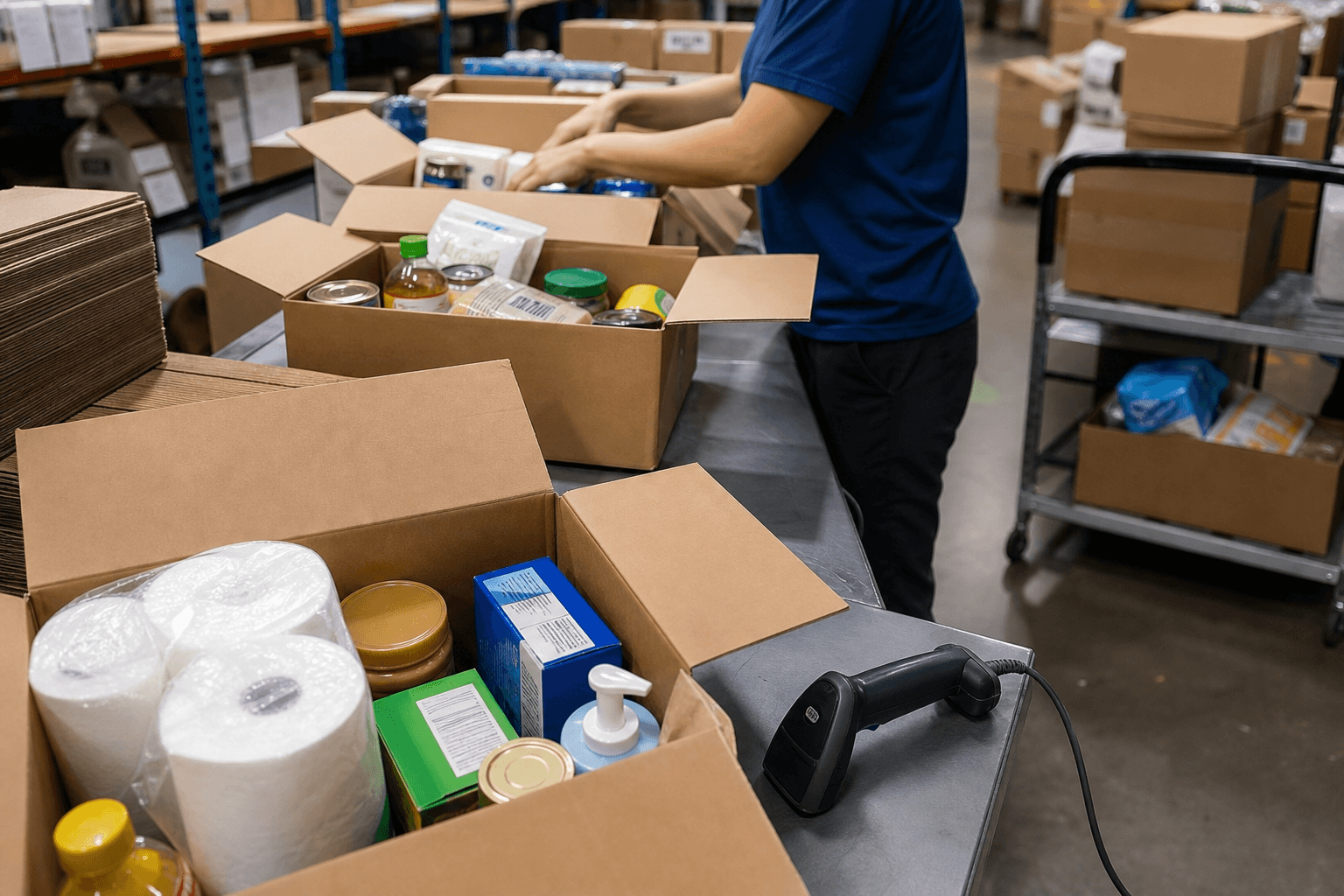
A TV or air fryer is a promotion. Groceries and household basics are frequency.
If Amazon can use Prime Day to train members to treat it as the place to load up on bananas, ice cream, pantry goods, and last-minute party supplies, then the company is not just winning a few days of GMV. It is trying to convert a seasonal deal window into a habit loop that looks a lot more like Walmart’s core business.
That also explains why the timing matters. June gives Amazon more room to capture those repeatable household orders before July 4 traffic, travel, and store promotions scatter consumer attention.
#The hidden squeeze lands on everyone else
Retail headlines usually frame Prime Day as a battle for shoppers.
The nastier part is what it does to everyone upstream.
If Amazon pulls promotional urgency into late June, rival retailers have to decide whether to answer early and damage margins, or wait and risk losing traffic. Brands have to decide whether to fund Amazon performance spend sooner, even if that means less flexibility later in the quarter. Smaller merchants have to carry inventory and marketing costs earlier, which is easy to miss until it shows up in cash conversion and discounting behavior.
In other words, Amazon is not only asking consumers to shop earlier. It is asking the rest of retail to finance summer earlier.
That is why this move feels more important than the headline suggests. The sale date is the visible part. The real asset is the ability to set the operating tempo for thousands of merchants and millions of shopping baskets at once.
#What to watch next
The best signal will not be whether Prime Day is “big.” It almost certainly will be.
The better question is whether Amazon keeps using Prime Day to pull more boring, high-frequency categories into the event and whether competitors are forced to follow the calendar instead of setting their own. If that happens, Prime Day becomes less of a shopping holiday and more of a retail clearing mechanism.
That is a stronger business than a discount festival.
#FAQ
Why does moving Prime Day from July to June matter for investors and operators?
Because the timing changes when merchants commit inventory, ad spend, and discount budgets. It is a workflow shift that can move cash needs and promotional pressure earlier, not just a marketing tweak.
Why are groceries such an important signal in this story?
Groceries and household essentials create repeat buying behavior, unlike one-off electronics deals. If Amazon can make Prime Day a stock-up moment for essentials, it gets closer to owning routine household spend instead of occasional deal traffic.
Who is most pressured by the earlier Prime Day window?
Rival retailers, marketplace sellers, and brands that rely on Amazon traffic. They may have to fund promotions and inventory earlier or accept weaker visibility during one of the largest online spending windows of the summer.