Factorial's Nasdaq Debut Moves Solid-State Batteries Into The Factory Ledger

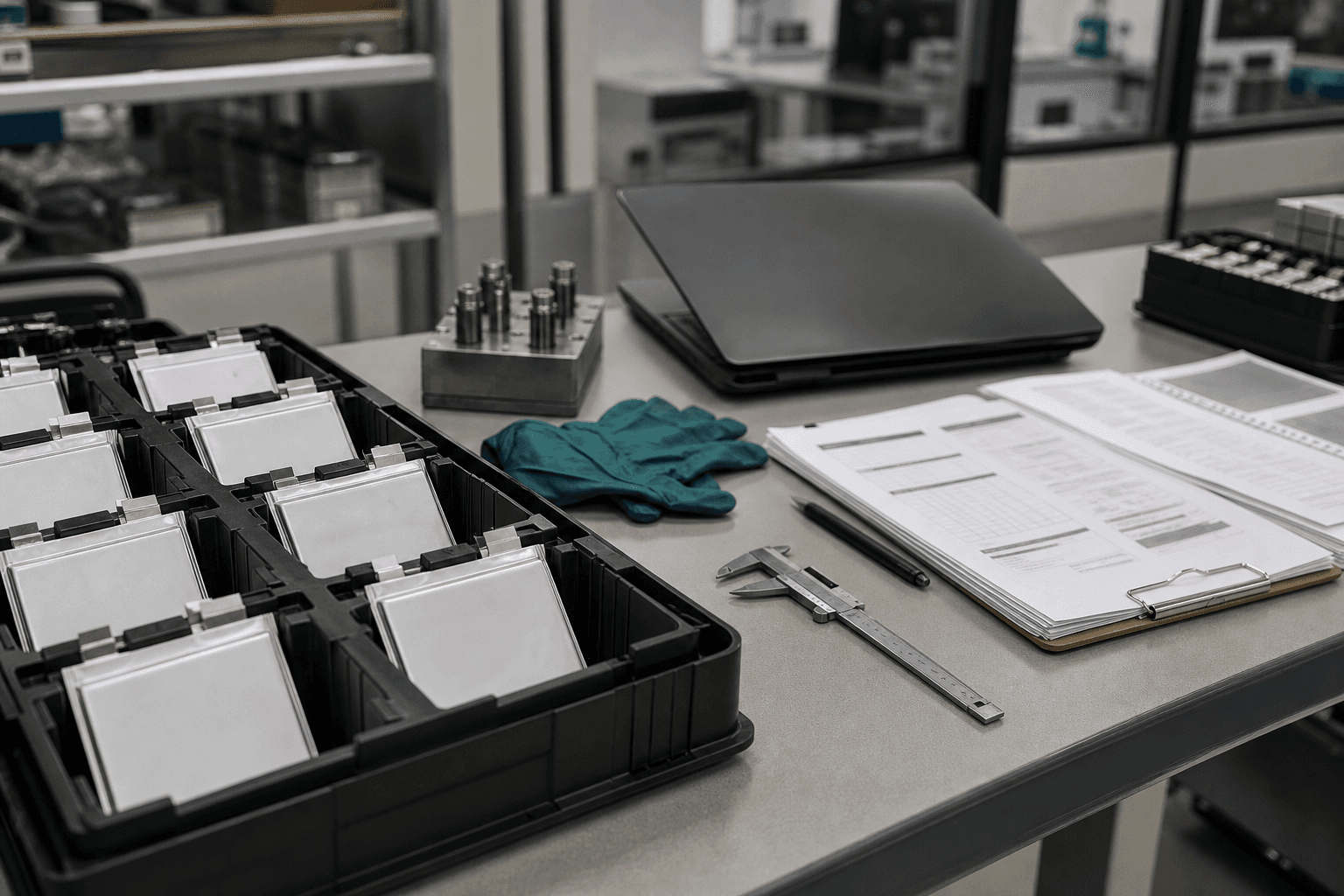
TL;DR: Factorial Energy began trading on Nasdaq on June 8 after completing its Cartesian Growth III SPAC combination, with the company saying the deal implies about $1.3 billion of equity value and brings in more than $100 million of gross proceeds. The important point is not that solid-state batteries have become easy. It is that the financing question has moved from science risk to factory and qualification risk, where public investors are now being asked to fund the slow middle mile.
##What Factorial Actually Brought To Nasdaq
Factorial Energy is not selling investors a vague clean-tech mood. It came public through a completed business combination with Cartesian Growth Corporation III, and its Series A common stock and warrants were expected to trade on Nasdaq under FAC and FACWW.
The company says the transaction implies roughly $1.3 billion of equity value and provides more than $100 million of gross proceeds for commercialization across defense and aerospace, hyperscale data centers, robotics, and e-mobility.
That is the clean headline. The messier story is more useful.
Solid-state batteries have spent years living in the same investor category as many advanced manufacturing dreams: impressive test cells, famous partners, ambitious energy-density claims, and a brutal gap between a lab result and a repeatable production line.
Factorial's Nasdaq debut does not close that gap. It puts a public price tag on it.
##Why The Middle Mile Is The Real Business Story
The seductive part of the story is the vehicle test.
Factorial points to Mercedes-Benz integrating its FEST cells into a lightly modified EQS test vehicle and completing a 1,205-kilometer journey from Stuttgart to Malmo on one charge. It also cites Stellantis lab testing of 77Ah cells and its earlier 100Ah-plus lithium-metal solid-state battery milestone.
Those proof points matter. They are not the same as commercial economics.
#The hard handoff is from demo cell to customer process
The next test is not whether a battery can look impressive in a controlled demonstration. It is whether engineers, buyers, suppliers, safety teams, and finance departments can agree that the battery can be ordered, handled, insured, warranted, and installed without turning every shipment into a special project.
Picture a qualification meeting at an automaker or drone supplier. On the table are sample cells, test reports, thermal data, production schedules, and a cost model that still has too many yellow-highlighted assumptions.
The battery may work. The question is whether the organization can buy it.
That distinction is where many industrial technologies lose years. The customer does not only buy performance. The customer buys process confidence.
##Where The SPAC Structure Helps And Hurts
The SPAC route gives Factorial a public listing and a larger capital base at a moment when battery commercialization still needs patient money. According to a June 5 SEC filing, Cartesian Growth Corporation III consummated the business combination, domesticated, and changed its corporate name to Factorial Energy Inc.
That mechanics point matters because public-market capital is not free. It comes with a scoreboard.
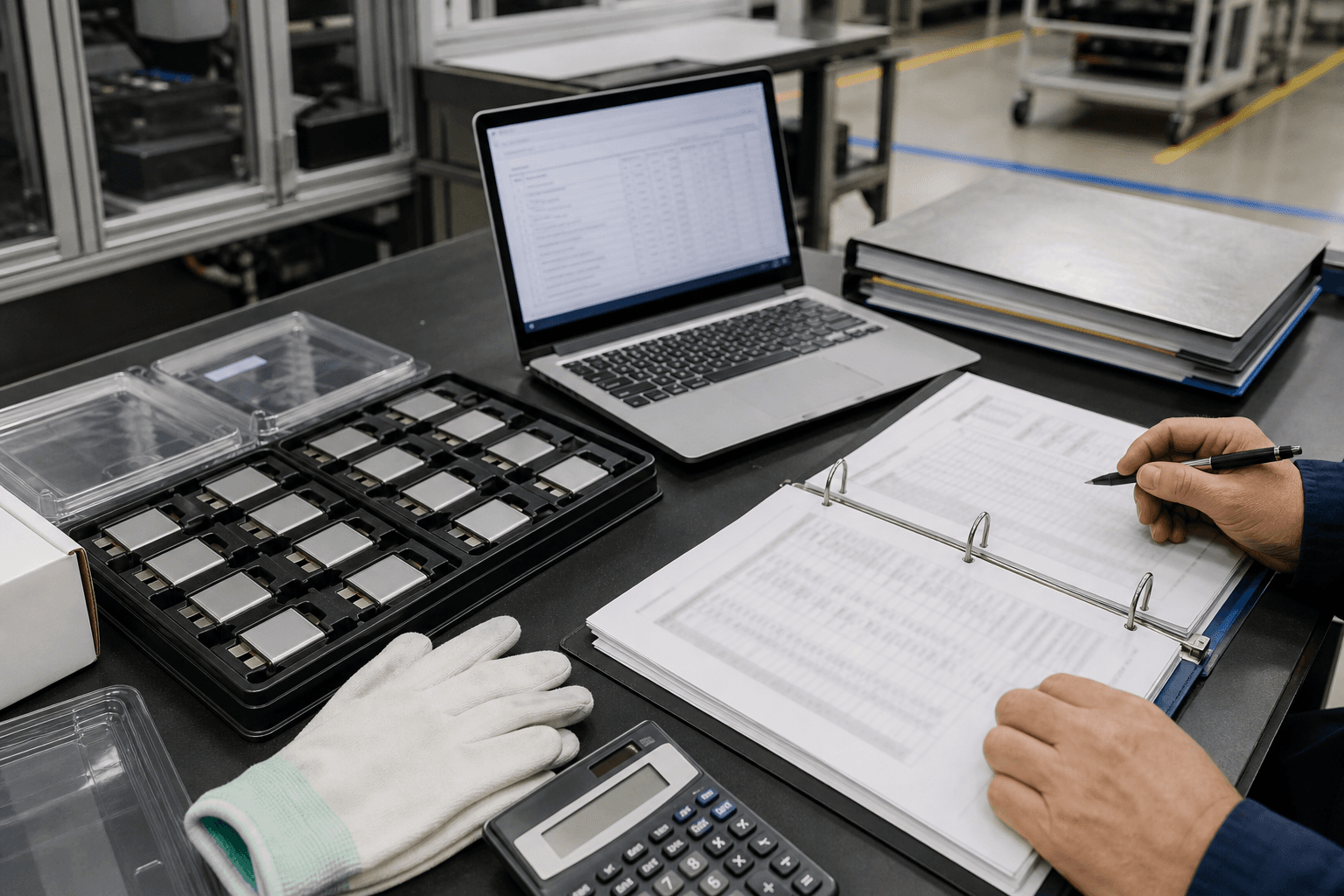
Every quarter, investors will want signs that the company is moving from validation language to operating evidence:
- customer qualification milestones that become purchase commitments;
- manufacturing partnerships that lower capital intensity without surrendering control;
- production yields that can survive real procurement audits;
- cash burn that matches the promised commercialization path.
This is where the SPAC structure is both useful and dangerous. A battery company needs capital to cross the awkward stage between "partnered with automakers" and "shipping at commercial rhythm." A public ticker can make that long-cycle work look like a short-cycle trade.
##Who Is Really Taking The Risk
Factorial's investor materials have emphasized backing and relationships with names that matter: Mercedes-Benz, Stellantis, Hyundai, Kia, and In-Q-Tel. The company also says its capital-light commercialization model relies on joint manufacturing partnerships.
That is a rational strategy. It is also an admission.
Building battery manufacturing capacity alone is punishing. Materials, equipment, process control, safety validation, working capital, and warranty obligations consume capital quickly.
#A capital-light model still has heavy proof requirements
"Capital-light" does not mean "risk-light." It means the company is trying to push some of the steel, equipment, and operating burden into partnerships.
But customers will still ask the same questions:
Can the process be repeated? Can the cell be made at useful volume? Can the supplier survive if a launch slips? Can the economics hold after quality control, scrap, logistics, and warranty reserves?
Those are not science questions. They are CFO questions.
That is why Factorial is more interesting as a financing case than as a battery-hype case. The company is trying to convert technical credibility into procurement credibility before the capital window closes or competitors catch up.
##Why This Fits The Gainbrief Beat
This is not just an electric-vehicle story. It sits in the same bucket as AI data centers, grid equipment, semiconductor packaging, and defense supply chains: technologies where demand sounds huge, but the investable question is who pays for the bottleneck.
In Factorial's case, the bottleneck is the passage from qualified cell to repeatable production program.
The company said in December that the original combination included $100 million of PIPE capital and that Cartesian III held about $276 million in trust before redemptions. The June closing announcement points to more than $100 million of gross proceeds.
That tells the story in miniature. The market did not hand Factorial an unlimited factory budget. It handed Factorial enough capital to prove whether its partnership model can turn technical evidence into commercial cadence.
The stock may trade like a theme. The business will be judged like an industrial supplier.
##What Investors Should Watch Next
The wrong question is whether solid-state batteries are "real." The better question is whether Factorial can make its specific version commercially legible to customers with conservative buying processes.
Watch for boring evidence.
Not just road-test distance. Not just partner logos. Not just addressable-market language.
Watch for production program details, binding customer economics, manufacturing yield signals, safety and warranty treatment, and whether the company can explain cash use without leaning on futuristic demand curves.
That is the quiet twist in Factorial's public debut. The company has graduated from the battery dream stage into the factory ledger stage. That is progress, and it is where the work gets less glamorous.
#FAQ
What happened to Factorial Energy on June 8, 2026?
Factorial Energy completed its business combination with Cartesian Growth Corporation III and began its Nasdaq listing process under the ticker FAC, with warrants under FACWW.
Why does the Factorial listing matter for investors?
It gives public investors a way to price a solid-state battery commercialization story, but the key risk is no longer just technical validation. The key risk is whether Factorial can move through manufacturing qualification, customer procurement, and cash discipline.
Is Factorial already a scaled battery manufacturer?
No. The company has important validation milestones and strategic relationships, but the public-market test is whether those milestones become repeatable production programs with credible economics.