FedEx Freight's First Public Test Is Price Discipline

TL;DR: FedEx Freight begins regular-way NYSE trading on June 1, 2026, after FedEx approved the LTL carrier's spin-off under ticker FDXF. The overlooked point is not the stock mechanics. It is the new public-company pressure on a freight network whose margin plan depends heavily on yield discipline. Shippers may see the same terminals and trucks, but the rate conversation is now happening across the table from a standalone equity story.
##What FedEx Freight Is Putting On The Tape
FedEx says FedEx Freight will begin trading on the NYSE under FDXF on June 1, 2026, with FedEx stockholders receiving one FedEx Freight share for every two FedEx shares held on the May 15 record date. FedEx is distributing 80.1% of FedEx Freight and retaining 19.9%.
That sounds like a securities-processing event. It is more useful to read it as a pricing event.
Less-than-truckload freight is a business of thousands of small promises: pickup windows, terminal handoffs, cube utilization, claims discipline, and whether a customer gets a discount because volume is soft. When the freight segment lived inside FedEx, those tradeoffs were partially buried inside a larger parcel-and-logistics story.
Now they are easier to see.
##Why The Real Test Is Rate Discipline
FedEx Freight is not coming public as a speculative growth concept. At its April investor day, FedEx described the business as the largest pure-play LTL carrier in North America, with 40,000 team members and a pitch built around network scale, transit times, and reliability.
That is the polite version.
The market version is sharper: a standalone FedEx Freight has to prove that reliability can be monetized even when shippers are asking every carrier for relief.
#Why LTL margins depend on refusing bad freight
In LTL, the cheap shipment is often expensive.
A pallet that looks profitable on a rate sheet can become a margin leak if it is awkward to handle, poorly routed, claim-prone, or accepted into the wrong lane at the wrong discount. The operating discipline is not only filling trailers. It is deciding which freight deserves space when the network is underused and sales teams want volume.
That is where a public-market wrapper changes behavior.
The standalone company will have its own multiple, its own investor calls, and its own compensation logic. A discount that once helped a bigger FedEx customer relationship may now look like a direct hit to FedEx Freight's margin story.

##Where Shippers Will Feel The Change
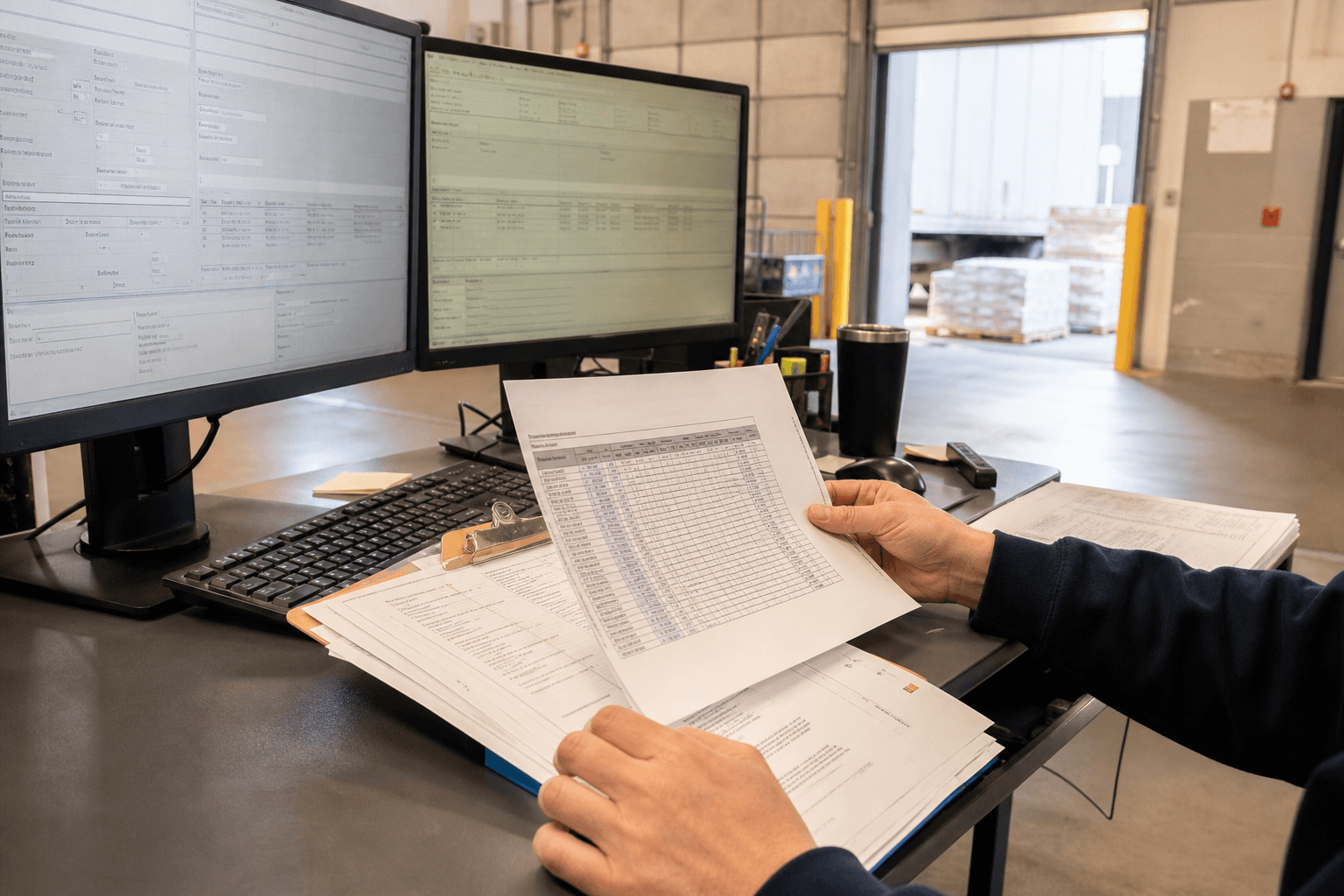
Picture a regional manufacturer reviewing a stack of bills of lading and a freight-rate portal on a Monday morning.
The buyer does not care that FedEx Freight has a new ticker. The buyer cares whether a two-pallet shipment from Ohio to Texas costs 4% more, whether a missed pickup gets fixed, and whether a competitor will match the lane rate.
That is the operating scene behind the spin-off.
FedEx Freight can talk to investors about focus, capital allocation, and technology. Customers will experience the same plan through smaller moves:
- fewer casual exceptions on low-quality freight
- more attention to lane-level profitability
- tighter rules around accessorial charges and claims
- a stronger push to sell reliability as a premium service, not a free apology
None of those changes has to be dramatic. That is the point. Public-company margin repair often shows up as a thousand small frictions before it appears as one clean number.
##Who Benefits From The Split
FedEx receives a capital benefit too. The company said FedEx Freight will pay FedEx an approximately $4.1 billion cash dividend before separation, funded partly by a $3.7 billion senior notes offering completed in February 2026 and delayed-draw term loan borrowings.
That makes the separation more than a clean corporate simplification. It also turns freight cash flows into balance-sheet flexibility for the parent.
#The retained stake matters
The information statement says FedEx will retain 19.9% of FedEx Freight after the spin-off and generally must dispose of that retained stake within 24 months to preserve the tax-free status of the separation.
That creates a second clock.
FedEx Freight has to establish itself as a credible standalone operator, while FedEx still has an equity stake that may eventually come back to market. Investors are not only underwriting LTL demand. They are underwriting the timing and absorption of future share supply.
##What Investors Should Watch First
The first clean signal is not whether FDXF trades well for a few days. Spin-offs can get distorted by index flows, forced selling, and holders who never wanted a separate freight stock.
The better signal is whether FedEx Freight can defend yield without giving away service quality.
If management chases volume to please customers, the spin-off becomes a cleaner-looking version of the old segment. If management protects price too aggressively, shippers test competitors. The investable version sits in the narrow middle: enough discipline to improve margins, enough service to keep freight sticky.
That is the business tension worth watching after the bell-ringing photos fade.
##Why This Is Not Just A FedEx Story
The broader lesson is that spin-offs do not merely reveal value. They change incentives.
Inside a conglomerate, a business can be managed for strategic fit, customer breadth, or internal cash balance. As a standalone public company, it has to defend a simpler story. In FedEx Freight's case, that story is whether LTL reliability deserves a premium in a freight market where customers still remember the last discount they got.
The trucks may look familiar. The rate desk just got a new boss.
#FAQ
When does FedEx Freight start trading as a separate company?
FedEx Freight is expected to begin regular-way trading on the New York Stock Exchange on June 1, 2026, under ticker FDXF.
What do FedEx shareholders receive in the spin-off?
FedEx stockholders receive one FedEx Freight share for every two FedEx shares held on the May 15, 2026 record date, with FedEx distributing 80.1% of the new company and retaining 19.9%.
Why does this matter for freight customers?
Customers may not notice a new ticker directly, but they may notice more disciplined pricing, fewer informal exceptions, and a stronger push to charge for reliability. The standalone company has to prove margin quality to public investors.