GRAIL's Galleri Data Turns Cancer Screening Into A Reimbursement Workflow Test

TL;DR: GRAIL's May 31 PATHFINDER 2 data makes Galleri look less like a speculative cancer-screening science project and more like a workflow and reimbursement test for U.S. healthcare. The business implication is simple: detecting more cancers is not enough. GRAIL has to prove that primary-care doctors, health systems, payers, and follow-up specialists can absorb a blood-test screening product without turning early detection into another unpaid administrative queue.
##What GRAIL Just Put In Front Of The Market
GRAIL said the Galleri multi-cancer early detection test increased cancer detection 6.5-fold when added to recommended breast, colorectal, cervical, and lung screenings in the full 35,878-person PATHFINDER 2 cohort.
That is the headline number. The more investable question is whether the U.S. healthcare system knows what to do with that number at scale.
Multi-cancer screening is a very different business from selling a one-off lab test to worried consumers. It needs physicians to order it, patients to trust it, payers to decide when to cover it, and health systems to route positive signals into diagnostics without clogging specialists.
#Why the data is only the opening bid
GRAIL also reported that 71% of new cancers detected by Galleri were stages I-III, and that the test found signals in cancer types that often lack routine screening paths. That matters clinically.
But commercially, the important word is "path." A positive blood test does not finish the job. It starts a handoff.
##Why This Is A Healthcare Workflow Story
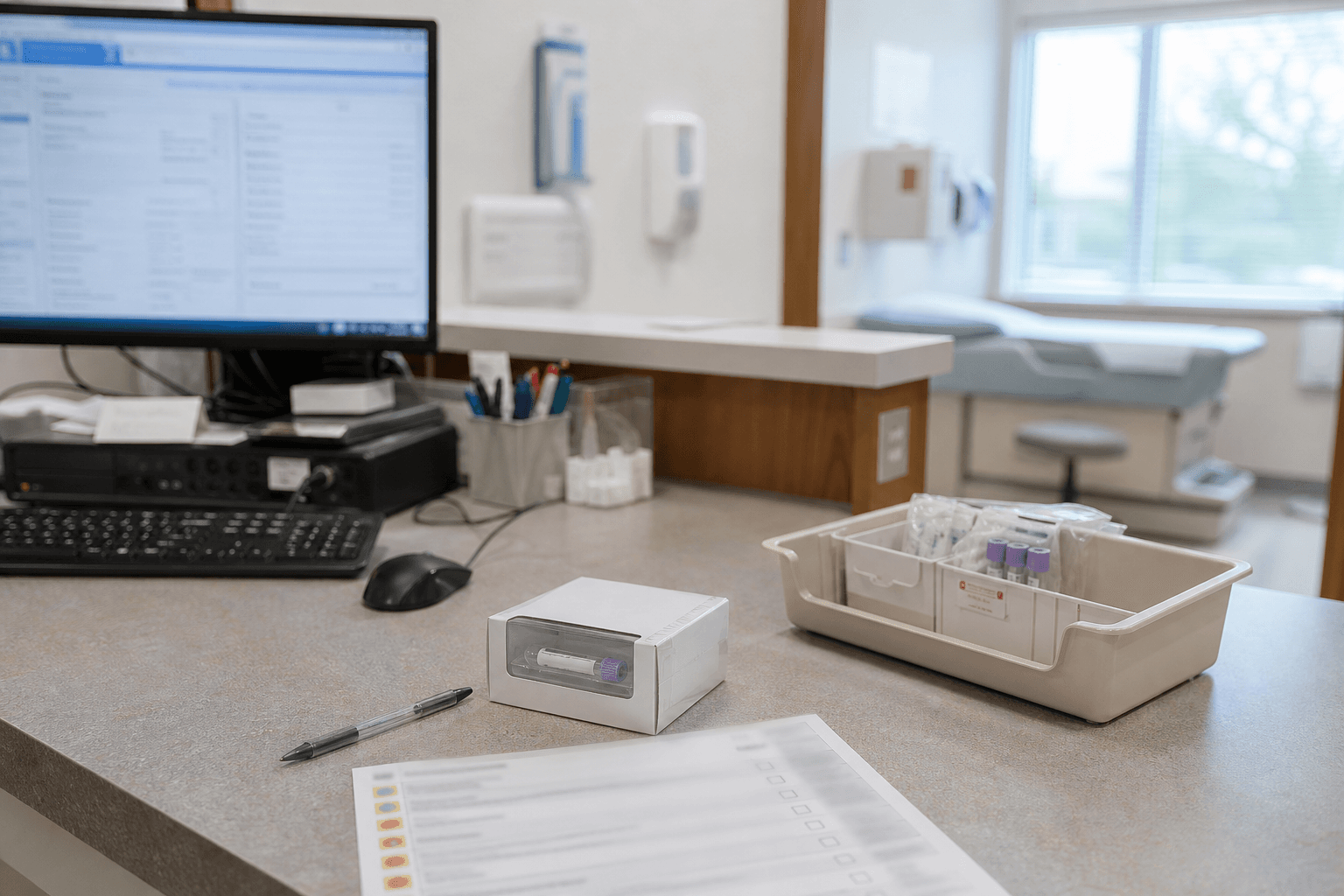
Picture a primary-care office at 8:15 a.m. The physician is already behind. A patient over 50 asks about Galleri after reading an ASCO headline. The doctor has to decide whether the patient fits the risk profile, whether existing screenings are current, how to explain a possible positive result, and who owns the next diagnostic step.
That is where the business model either scales or stalls.
GRAIL knows this. Its April announcement with Epic said health systems will be able to order Galleri in the EHR, receive structured results, and manage follow-up in existing clinical workflows, with broad availability expected by the end of 2026.
The Epic integration is not a software footnote. It is the distribution channel.
#The hidden constraint is follow-up capacity
Investors tend to stare at sensitivity, specificity, and test volume. Payers will stare at something colder:
- How many diagnostic workups follow a positive result?
- How many cancers are found early enough to change treatment cost?
- Who pays when the test is not yet broadly reimbursed?
- Does the workflow reduce late-stage cost, or simply add another front-end expense?
That last question is the whole debate.
##Where The Money Actually Moves
GRAIL's own first-quarter filing says Galleri revenue is currently generated primarily in the United States through primary-care physicians, health systems, employers, digital health platforms, payors, and life insurance providers, and that Galleri is not currently broadly reimbursed.
That sentence is the business case in miniature.
Self-pay can prove demand. Employer and life-insurance channels can create useful early volume. But the big pool of money sits with health plans and government reimbursement. Without that, Galleri remains a promising product with a narrower commercial lane.
GRAIL reported first-quarter Galleri revenue of $39.8 million, up 37% year over year, with test volume above 56,000. Good growth. Still, this is not a mature preventive-care annuity yet.
##Who Has To Say Yes
This is not just a GRAIL shareholder story. It touches several buyers and gatekeepers at once.
Health systems want screening tools that fit inside existing clinic routines. Employers may like earlier detection if it reduces catastrophic claims and absenteeism. Life insurers may see underwriting value. Payers, however, will ask for evidence that earlier detection changes total cost, not just detection counts.
That is why the May 31 PATHFINDER 2 data matters. It gives GRAIL a stronger clinical packet to take into coverage discussions, but it does not remove the economic negotiation.
The best version of the story is clean: a blood test catches cancers earlier, care teams route patients faster, and payers avoid some late-stage treatment expense.
The messy version is also possible: clinicians get another ordering decision, patients get anxious follow-up, specialists absorb extra volume, and payers see a new bill before the savings are obvious.
##Why The Investor Takeaway Is Not Just The ASCO Headline
The casual read is that GRAIL won a data point. The sharper read is that GRAIL has moved the argument from "does Galleri find more cancers?" toward "can the healthcare system finance and operationalize what Galleri finds?"
That is a better place to be, but it is also a harder place.
Clinical data can arrive in a conference session. Reimbursement, EHR adoption, physician behavior, patient education, and follow-up capacity move more slowly.
The market should watch the boring metrics now: covered lives, contracted health systems, repeat ordering behavior, average selling price, and the cost of getting each positive result to a resolved diagnosis.
If those improve together, Galleri becomes a preventive-care platform. If they split apart, it stays an impressive test with an expensive workflow attached.
#FAQ
What did GRAIL announce on May 31, 2026?
GRAIL presented full PATHFINDER 2 results showing Galleri increased cancer detection 6.5-fold when added to recommended screenings for breast, colorectal, cervical, and lung cancer in a 35,878-person cohort.
Is Galleri broadly reimbursed in the United States?
No. GRAIL's recent 10-Q says Galleri is not currently broadly reimbursed, which makes payer coverage and pricing a central business risk.
Why does the Epic integration matter financially?
Epic can put Galleri ordering and results into health-system workflows. That may reduce administrative friction, but it also makes GRAIL dependent on whether clinics and care coordinators can manage follow-up efficiently.