Ciena's AI Quarter Turns Optical Networking Into A Delivery Test

TL;DR: Ciena's June 4 fiscal second-quarter report showed AI infrastructure demand moving beyond chips and into optical-network delivery. Revenue rose 40% to $1.57 billion, adjusted operating margin reached 19.5%, and the company raised fiscal-2026 revenue guidance to about $6.3 billion. The interesting business implication is not just that AI needs bandwidth. It is that the winners in the AI buildout may be the suppliers that can turn scarce optical components into scheduled, recognized, high-margin revenue.
##What Ciena's June 2026 Quarter Actually Showed
Ciena did not report a quiet networking quarter. It reported a fulfillment test.
The company said fiscal second-quarter revenue reached $1.57 billion, up 39.5% from a year earlier, while adjusted EPS rose to $1.64 from $0.42. That is the obvious headline.
The better signal sits one layer lower: optical networking alone produced $1.10 billion of revenue, or 70% of total revenue. In other words, the AI infrastructure story is no longer only about accelerators, cloud leases, and power contracts. It is also about whether high-speed connectivity equipment arrives on time.
#Why the margin line matters more than the revenue beat
Ciena's adjusted operating margin was 19.5%, up from 8.2% a year earlier. That is not a normal "demand is strong" footnote.
It says operating leverage is showing up while the company is still managing a dynamic supply environment. When a supplier can raise revenue, expand gross margin, and keep operating expense growth below revenue growth, the market is watching something more durable than a single order surge.
##Why Optical Gear Is Becoming An AI Delivery Bottleneck
The cleanest way to think about Ciena is this: GPUs create the appetite; optical systems decide how much of that appetite can become a working network.
A data-center buyer can announce a huge AI cluster, a cloud provider can sign the capacity plan, and a telecom carrier can model the traffic. None of it becomes useful if the physical network handoff is late.
That is why Ciena's language about "in and around the data center" matters. The AI trade has been trained to look at compute. Ciena's quarter is a reminder that compute only becomes revenue-producing infrastructure after it is connected, routed, monitored, and delivered into customer networks.

#The operating scene is not glamorous
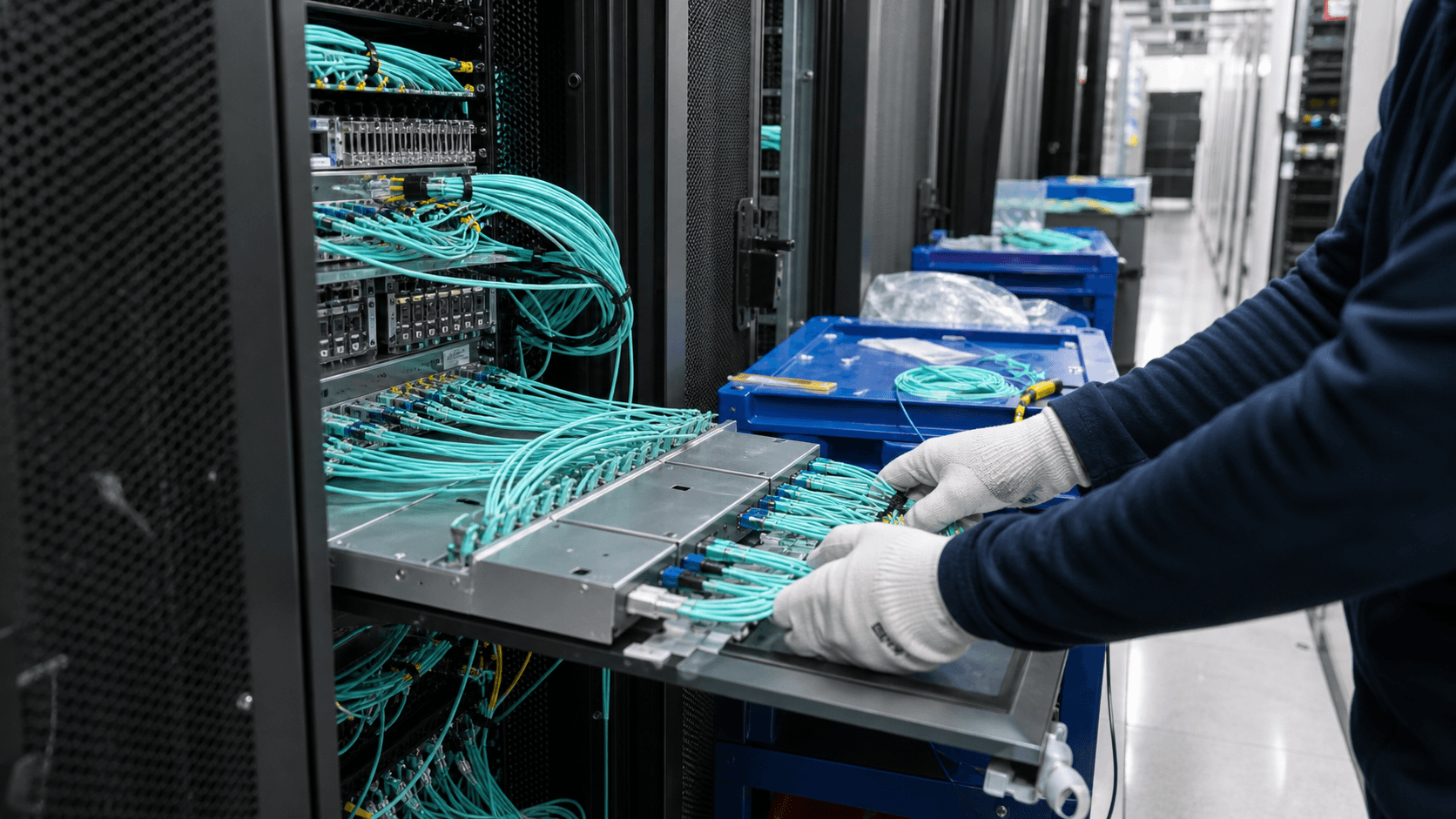
Picture the workbench, not the keynote stage: fiber trays, optical modules, purchase orders, delivery windows, and a planner trying to match scarce parts against customer commitments.
That scene is where AI capex either becomes revenue or remains a backlog story. It is also where pricing power can appear quietly, because customers who need capacity urgently care less about perfect price shopping and more about delivery certainty.
##Where The Investor Blind Spot Sits
Investors tend to ask whether AI demand is real. Ciena's quarter suggests a sharper question: who gets paid when AI demand runs into physical supply limits?
The answer is not always the company with the loudest AI brand. It can be the supplier with the product slot, the installation capacity, the customer relationship, and the balance sheet discipline to convert orders without losing margin.
That creates three second-order effects:
- Customer concentration matters more, because Ciena said two customers represented 34% of revenue in the quarter.
- Inventory and lead times become market signals, not back-office trivia.
- Guidance quality becomes a credibility test, because a supply-constrained boom can flatter bookings before it proves delivery.
This is the part of the AI buildout that feels less like software and more like industrial execution.
##Who Pays If The Buildout Stumbles
Ciena raised fiscal-2026 revenue guidance to $6.3 billion plus or minus $100 million, implying about 32% year-over-year growth at the midpoint. It also guided fiscal third-quarter revenue to $1.625 billion plus or minus $50 million.
Those numbers are strong enough that the main risk is no longer "is there demand?" The risk is whether demand turns into a narrow set of urgent customers, hard delivery promises, and a supply chain that has less room for error.
If optical equipment is late, the pain does not stay inside Ciena. It can show up in cloud capacity timing, carrier network upgrades, enterprise service commitments, and the payback period on expensive AI data-center projects.
##Why This Is A Better AI Market Signal Than Another Chip Chart
Chip charts tell investors where the spending starts. Optical-network results show whether the spending is spreading through the infrastructure stack.
Ciena's free cash flow was $219 million in the quarter, and the company repurchased $83.1 million of stock under its buyback program. That combination matters because it says the AI networking cycle is not only consuming capital. At least for now, it is producing cash.
The twist is that this makes Ciena a cleaner test of AI infrastructure discipline than many flashier names. If demand stays hot but delivery gets messy, the first warning may not be a collapse in AI ambition. It may be a slower optical shipment, a stretched customer timetable, or a margin line that stops expanding.
AI does not just need more chips. It needs less friction between the chip and the paying customer.
#FAQ
Why does Ciena matter to the AI infrastructure market?
Ciena sells optical networking and connectivity systems that help move data across wide-area networks and in and around data centers. AI workloads need fast connectivity, so Ciena's results offer a practical signal about whether AI spending is reaching the network layer.
What was the key number in Ciena's June 4 report?
The headline number was $1.57 billion of fiscal second-quarter revenue, up about 40% year over year. The more useful business number was 19.5% adjusted operating margin, because it showed revenue growth turning into operating leverage.
What is the main risk for investors?
The main risk is that strong AI demand can still become a delivery and concentration problem. If a few large customers, scarce optical components, or long lead times dominate the story, the market may need to value execution quality as much as demand growth.