Qualcomm's ByteDance Win Shows AI Chips Are Becoming an Integration Business

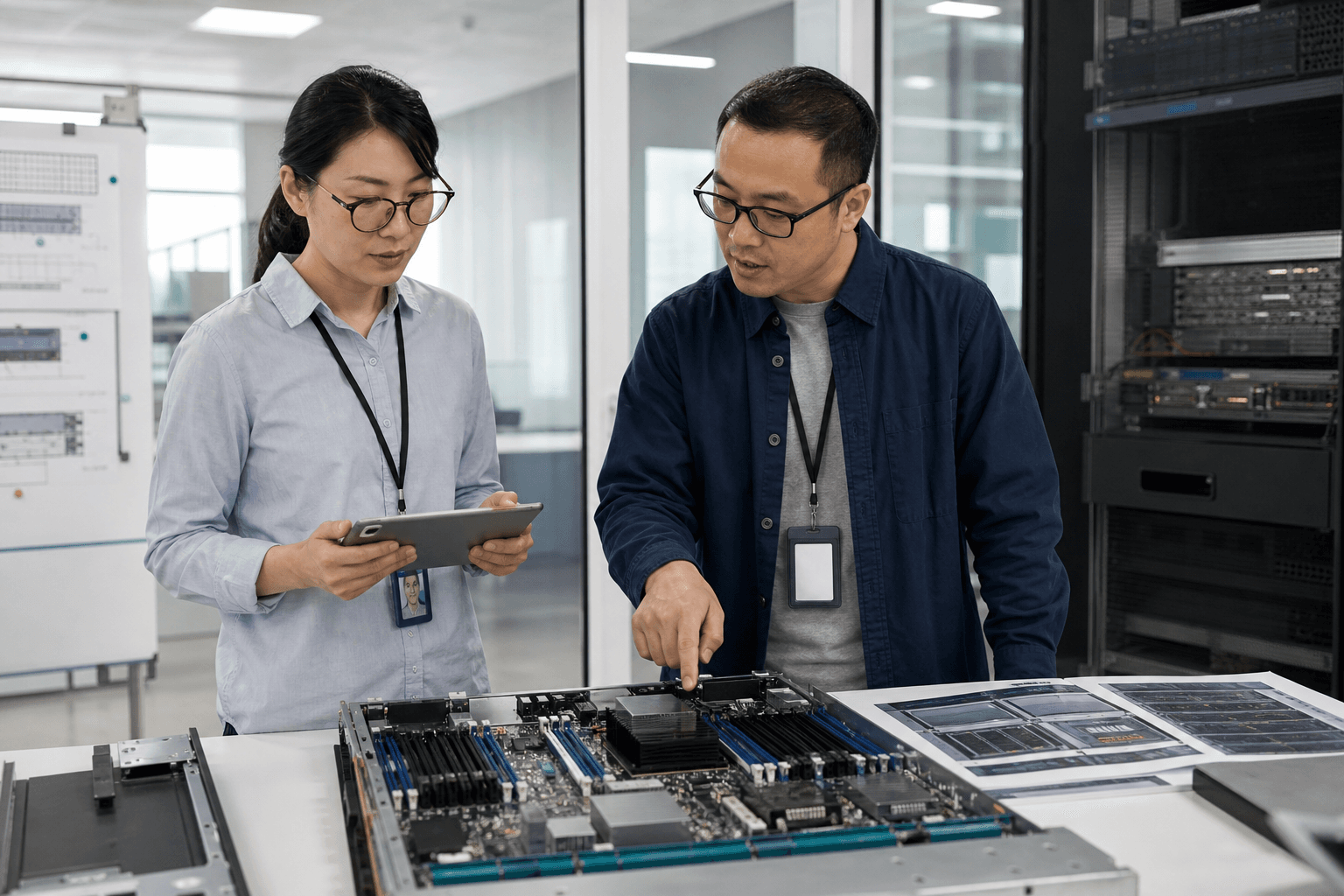
Qualcomm shares jumped on May 26 because the market suddenly saw the company in a different costume. Not as a smartphone chip vendor trying a side quest, but as a potential contractor for the next phase of AI infrastructure.
That distinction matters more than the pop.
The Reuters report about Qualcomm supplying AI data-center chips to ByteDance looks, at first glance, like another “AI demand is broadening” headline. The more interesting read is that AI chips are becoming a service business disguised as a semiconductor business. The scarce thing is no longer only the chip. It is the ability to translate a customer’s model ambitions, power limits, software stack, export constraints, and production schedule into silicon that can actually ship.
That is a different market from the one Nvidia built.
Nvidia turned the first leg of the AI boom into a merchant product story. Buy the accelerators. Build the cluster. Pay the electric bill later. But inference is a less romantic business than training, and a much more operational one. Once companies start caring about cost per token, memory footprint, rack density, and where the chip can legally be deployed, the winner does not have to be the company with the most famous GPU. It can be the company that helps a customer industrialize its own design.
Qualcomm’s own language gives away where it thinks the market is going. Its data-center pitch is not built around developer mystique. It is built around performance per watt, high memory capacity, and lower total cost of ownership for AI inference. That is not the vocabulary of a hype cycle. It is the vocabulary of a procurement meeting.
Then add the fresh ByteDance report on top. Reuters says ByteDance is set to buy Qualcomm ASICs for AI data centers to support its AI agent software. If that holds, Qualcomm is not just selling compute. It is selling a bridge between customer intent and manufacturable infrastructure.
That bridge is where a lot of the money is likely to move next.
Broadcom has already shown the outline. In March, it said first-quarter AI revenue hit $8.4 billion, up 106% year over year, driven by custom AI accelerators and AI networking. A month later, Reuters reported Broadcom had signed a long-term agreement with Google to develop and supply future generations of custom AI chips through 2031. That is not spot demand. That is infrastructure tenancy.
The big change in AI hardware is that customers increasingly do not want to buy only a chip. They want to buy control.
They want:
- workloads tuned to their own models
- lower operating cost than a one-size-fits-all accelerator
- tighter control over software and memory architecture
- less dependence on a single merchant supplier
- supply relationships that can survive export rules and capacity bottlenecks
That changes who gets paid and for how long.
In the old semiconductor script, a chipmaker won by shipping a better part into a broad market. In the custom AI script, the winner gets embedded much earlier. It helps shape the rack, the interconnect, the power budget, the memory choice, and often the production path. By the time the system is live, switching costs are much higher than in a normal chip cycle. The supplier starts to look less like a component vendor and more like a quiet co-architect of the customer’s cost structure.
This is why Qualcomm’s April earnings comment mattered even before the ByteDance headline. Cristiano Amon said a leading hyperscaler custom-silicon engagement is on track for initial shipments later this calendar year. That was the tell. May 26 just gave the market a concrete scene to attach to the thesis.
The second-order implication is bigger than Qualcomm.
If AI infrastructure keeps moving toward custom inference systems, then the profit pool will spread beyond the obvious GPU names, but it will not spread evenly. It will favor the companies that can sit in the middle of design, software compatibility, manufacturing, and economics. That is a narrower club than the phrase “AI beneficiaries” suggests.
It also means investors may need to stop treating every AI chip headline as a volume story. Some of the most durable wins may come from companies that help customers avoid buying generic volume in the first place.
That is not a smaller business. It may be a better one.
The first AI boom sold speed. The next one may sell fit.