Brown-Forman's Quarter Was Built In The Distributor Office


TL;DR: Brown-Forman's fiscal 2026 results tell a less cheerful story than a casual glance at the cash flow line suggests. The real business lesson is that the company is leaning on route-to-market changes, distributor ordering patterns, and product mix to cushion a developed-market drinking slowdown that still has not gone away.
That matters because investors keep looking for the moment when premium spirits demand simply normalizes. Brown-Forman just showed a more realistic version of the next year: protect margins where you can, push innovation where it still works, and use distribution plumbing to buy time while the customer stays selective.
#The Comfortable Number Is Cash Flow
The headline many people will grab is the cash-flow jump. Brown-Forman said fiscal 2026 operating cash flow rose by $402 million to $1.0 billion, while free cash flow rose by $462 million to $893 million, even as full-year net sales fell 1% to $3.9 billion and operating income dropped 10% to $1.0 billion in its June 4 filing.
That looks like resilience. It is resilience, but not the kind investors should confuse with a demand rebound.
The company's own outlook for fiscal 2027 is blunt: organic net sales are expected to be roughly flat, and organic operating income is expected to decline 3% to 5% even after the restructuring effort and distributor changes. If management thought the consumer had cleanly come back, that is not the guide it would give.
#Where The Quarter Was Really Held Together
Picture the less glamorous scene behind a spirits quarter: not a bar tab, but a distributor office.
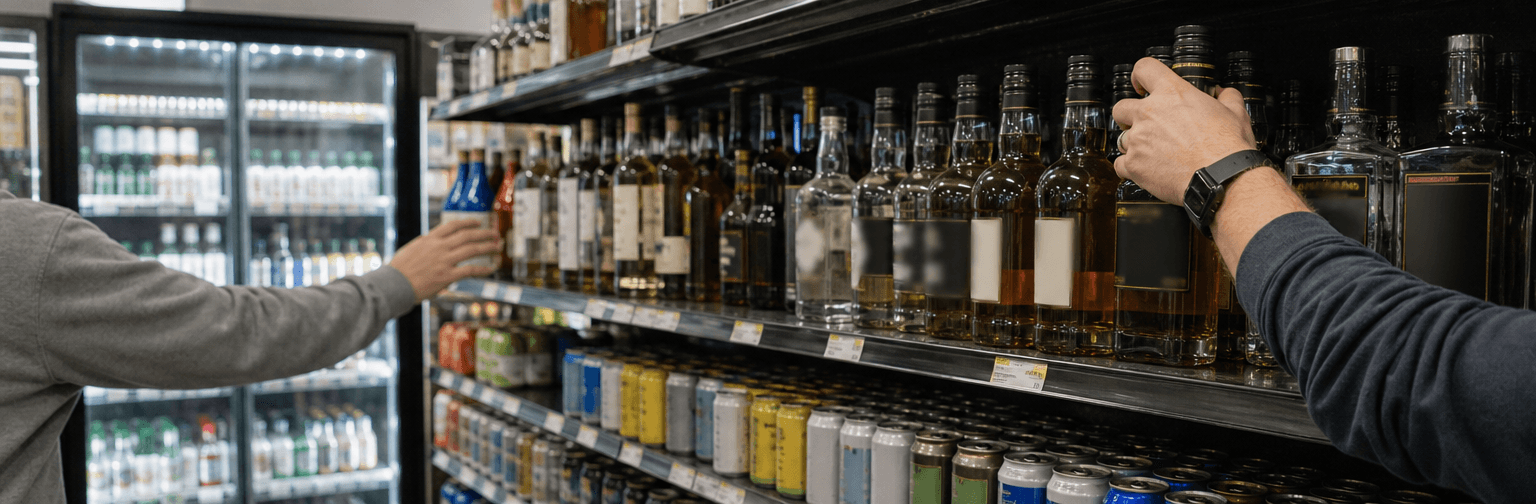
A regional manager is deciding what to reorder, what to let run lean, and which product gets a little more shelf confidence because the supplier changed terms, reset incentives, or improved the sales pitch. That desk matters more right now than the brand commercial.
Brown-Forman more or less said so. In the United States, net sales fell 7% on a reported basis but were flat organically, with results helped by higher net pricing tied to changes in distributor relationship terms and by favorable timing of distributor ordering patterns according to the filing.
That is the key point of this quarter. Brown-Forman did not disprove the slump in developed-market alcohol demand. It managed around it.
#The U.S. consumer is still there, but narrower
The best-performing pieces of the portfolio were not broad evidence of a stronger drinking cycle. Whiskey sales rose 3% on a reported basis, helped by the launch of Jack Daniel's Tennessee Blackberry and by Woodford Reserve growth in the United States, while tequila sales fell 4% and the Jack Daniel's ready-to-drink portfolio declined 3% for the fiscal year.
That is not a rising-tide quarter. It is a mix-management quarter.
One new flavor extension works. A premium label still travels. A weaker category gets defended. A distributor takes product at the right moment. Those are useful operating wins, but they are different from saying the average developed-market consumer has reopened the wallet for premium spirits in a durable way.
#The Hidden Shift Is From Brand Story To Channel Control
This is why Brown-Forman's U.S. route-to-market transformation deserves more attention than the usual earnings-call chatter about innovation.
When a consumer company says demand is choppy but execution is strong, investors often picture marketing, pricing, and cost discipline. Those matter. But Brown-Forman's filing reads like a reminder that, in a slow category, channel control becomes strategy.
The company said fiscal 2027 should benefit from previously announced restructuring and U.S. distributor changes, alongside continued innovation such as the expansion of Tennessee Blackberry in its outlook section. That means the near-term earnings bridge is not "drinkers came back." It is "the supplier got better at moving product through a careful channel."
There is a second implication here. If growth is increasingly supported by distributor terms, order timing, and selective product launches, then the earnings stream becomes more operationally engineered and a little less naturally demand-led.
That does not make it fake. It makes it more fragile.
#Why this matters for consumer investors
A lot of consumer-stock debates still use a simple framework: good brand plus temporary macro pain equals eventual snapback.
Brown-Forman's quarter argues for a more mechanical framework:
- Category demand can stay soft longer than investors expect.
- Distribution design can soften that pain for several quarters.
- Innovation can help, but mostly at the margin.
- Cash flow can improve even while the volume backdrop stays unconvincing.
That is a workable model for operating through a downcycle. It is not the same as solving the downcycle.
#The International Detail Makes The Story Harder, Not Easier
Brown-Forman also gave a useful reminder that geographic diversification is not a clean escape hatch.
Emerging markets net sales rose 14% reported and 12% organically, while travel retail grew 6% reported and 5% organically for fiscal 2026. That is real support. But developed international markets were flat on a reported basis and down 3% organically, hurt in part by the absence of American-made beverage alcohol from retail shelves across most Canadian provinces.
So the portfolio is not moving from one synchronized global demand engine to another. It is being held up by pockets of strength while major developed markets remain difficult.
That is exactly why the channel story matters so much. Brown-Forman is navigating an uneven world where one market rewards a flavor launch, another market loses shelf access, and the core investor question is no longer whether the brands still matter. They do.
The real question is whether distribution and mix can keep carrying the income statement before demand does.
#FAQ
Did Brown-Forman actually have a good quarter?
It had a better operating quarter than a weak category backdrop would suggest, but the results were not evidence of a broad recovery. Full-year sales and operating income still declined, and fiscal 2027 guidance still points to flat organic sales and lower organic operating income.
What is the main Gainbrief takeaway from these results?
The underappreciated point is that Brown-Forman is buying time through distributor mechanics, pricing, and mix rather than riding a clean consumer rebound. That is useful, but it also means the business is still working against a soft developed-market demand environment.
Why should U.S. readers care if they do not own the stock?
Because this is a wider consumer-business pattern. When household demand gets selective, brand companies rely more heavily on channel terms, order timing, and product mix to protect earnings. That changes how investors should read "resilient" quarters across staples, beverages, and discretionary categories.