The Next AI Bottleneck Is a Utility Contract

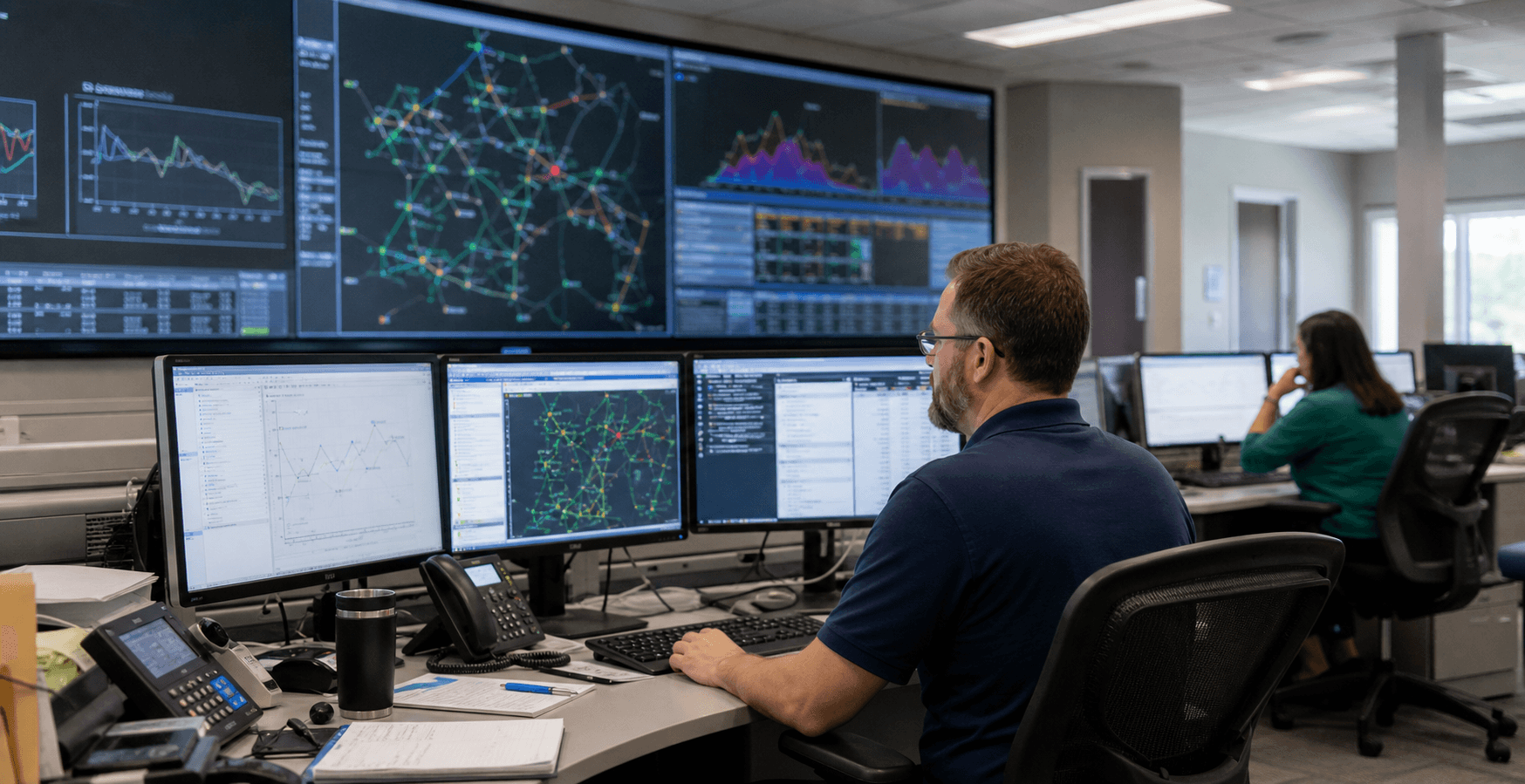
The next AI bottleneck is not a chip. It is a utility contract.
That sounds less exciting than GPUs, but it is where the money is moving. Google said in March that it has signed 1 gigawatt of data-center demand response with U.S. utilities, which is a fancy way of saying some of its compute load can be shifted when the grid is tight. This month, PJM and governors in its footprint made the other side of the story explicit: large new loads cannot just show up, lean on the grid, and hand the bill to everyone else.
The market is quietly separating electricity into two products.
One product is energy. The other is reliability under stress. AI builders that can buy both, or manufacture both through flexible operations, will expand faster than rivals that still treat power like a flat commodity input.
That is why the Google announcement matters more than it first appears. A data center agreeing to curtail or shift workloads is not just being a good corporate citizen. It is turning flexibility into a permitting tool.
For years, the standard AI-infrastructure story has been simple: more models require more chips, more chips require more data centers, and more data centers require more power. True, but incomplete. What the grid is now teaching the market is that not every megawatt is equal.
A rigid megawatt that must run at the hottest hour of the year is expensive. A flexible megawatt that can move some machine-learning jobs out of the peak window is a very different creature. It can help a utility defer transmission upgrades, soften rate pressure, and connect load sooner.
That logic is now showing up in policy language, not just pilot projects. PJM has been sketching frameworks where large new loads either bring their own generation, accept earlier curtailment, or pay for the reliability they consume. Governor Wes Moore put it more bluntly in May: data centers should pay their own way rather than shifting grid costs onto households and small businesses.
This is the real business-model shift. Utilities are no longer just selling electrons to hyperscalers. They are beginning to sell queue position, curtailment rights, and reliability tiers.
That has a few consequences investors should pay attention to.
- First, the winning data-center operator will not just be the one with land and transformers. It will be the one that can prove certain workloads are movable, interruptible, or matched with dedicated supply.
- Second, software starts to matter inside the power stack. Scheduling, workload orchestration, and power-aware job management become economic tools, not just engineering conveniences.
- Third, states and regional grid operators are gaining leverage over the shape of AI expansion. When household bills are rising, politicians will not let “innovation” remain an excuse for socialized infrastructure costs.
The EIA is already projecting unusually strong U.S. electricity-demand growth, with the commercial sector, including data centers, set to nearly catch residential consumption and then pass it. That is a huge psychological shift. Residential demand used to be the center of gravity. Now the incremental pressure is increasingly coming from commercial loads that are concentrated, negotiated, and politically visible.
Once that happens, the power market starts to look less like a utility backwater and more like a capacity-pricing business.
The companies best positioned for that world are not necessarily the ones making the loudest AI announcements. They are the ones building operational flexibility into the physical system:
- utilities that can contract for data-center demand response instead of blindly overbuilding for peaks,
- hyperscalers that can shift non-urgent training and batch jobs,
- developers that pair load growth with storage, generation, or curtailment commitments,
- and software vendors that make power-aware workload management credible enough for regulators and utilities to underwrite.
The losers will be the players that pitch every new data center as if the grid should behave like infinite cloud capacity. It will not. Grids are local, political, and built around ugly peak hours rather than annual averages.
That is why I think the next great AI scarcity premium may show up in a boring place: the contract that defines who gets interrupted, who gets connected first, and who pays when the system is short.
In the chip boom, the prized asset was compute.
In the power boom, the prized asset may be permission.
And permission, unlike compute, is negotiated in public.