Cheap Gas Is Becoming Retail's Best Loyalty Program

TL;DR: Cheap gas is becoming one of the most important retail products in America, even for companies that do not report fuel revenue as the main story. Reuters reported on June 3 that membership clubs such as Costco and Walmart's Sam's Club are drawing more shoppers to their fuel pumps and stores, while Dollar General said higher fuel costs still hit first-quarter results even as customer traffic rose 1.4% and same-store sales increased 2.0%. The retail takeaway is that the next consumer fight is not just about basket price. It is about who can lower the full cost of a shopping trip.
##Cheap Gas Is Starting To Function Like Merchandise
The old retail script was easy to understand.
You won on price, assortment, convenience, or brand. Maybe two of the four if you were good.
That is still true. But the June version of the U.S. consumer story has picked up a harder edge. If gas stays expensive, the trip itself becomes part of the price comparison.
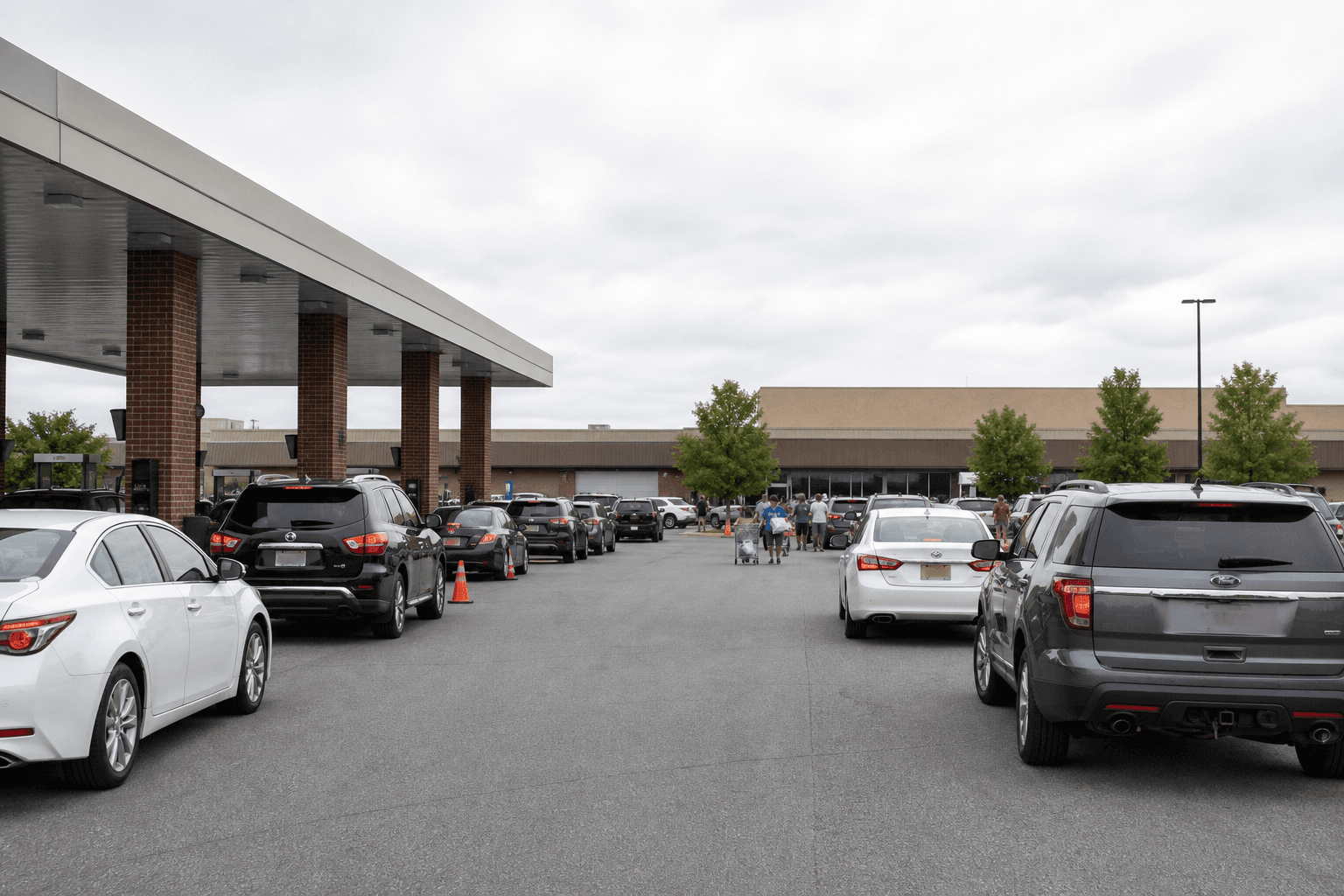
That is why Reuters' line about Costco and Sam's Club pulling shoppers through fuel pumps matters more than it looks. A cheap gallon is not just a service. It is a customer-acquisition tool that pushes a household into the parking lot before the retailer has sold a single case of water or rotisserie chicken.
##Why The Pressure Is Uneven
The broad consumer data still looks decent on the surface. The Census Bureau said April 2026 retail and food-services sales rose 0.5% from March and 4.9% from a year earlier.
But Reuters also noted that the earnings-growth outlook for the S&P 500 consumer-discretionary sector has cooled sharply, and that higher-income shoppers are still spending while lower-income households are pulling back under inflation pressure.
That is the part many market takes flatten into one sentence about a "resilient consumer." The consumer is still spending. The consumer is also ranking spending much more aggressively.
If a household can save on gasoline, buy bulk staples, and finish the weekly trip in one stop, that retailer has solved a budget problem and a time problem at once.
#The trip cost now matters almost as much as the shelf price
Discount chains have always benefited when shoppers trade down.
But when fuel costs rise, not every value retailer benefits equally. The winner is the one that can absorb more of the household budget in a single stop, or at least make the stop feel financially efficient.
That tilts the field toward warehouse clubs, supercenters, and any format that can bundle cheaper fuel with groceries and essentials.
##What Dollar General And Dollar Tree Quietly Showed
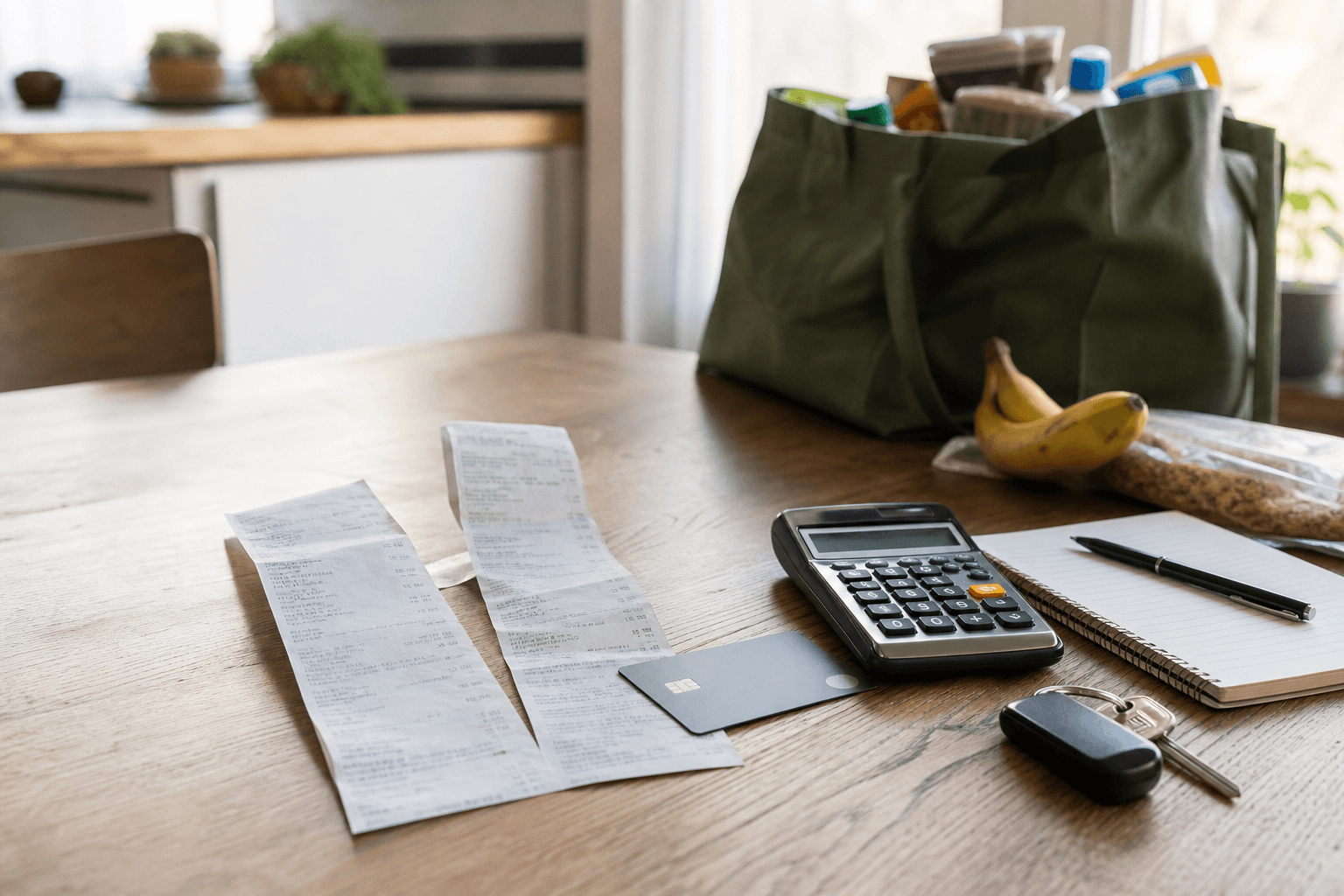
Dollar General's first-quarter release on June 2 looked solid at first glance: net sales rose 3.4% to $10.8 billion, same-store sales increased 2.0%, and diluted EPS rose 12.4% to $2.00. Management also lifted its full-year EPS guidance to roughly $7.20 to $7.45.
That is not a collapse story.
But it is also not a clean victory lap. CEO Todd Vasos said strong margin expansion more than offset the effects of severe winter weather and higher fuel costs. That matters because it tells you where the pressure still lives even in a "good" quarter.
Dollar Tree's May 28 release told a slightly different version of the same consumer map. The company said first-quarter net sales rose 7.2%, comparable-store sales rose 3.5%, and adjusted diluted EPS from continuing operations increased to $1.74. After the Family Dollar sale, Dollar Tree looks cleaner, more focused, and less operationally distracted.
The interesting point is not that one chain did better than the other.
It is that the value end of retail is no longer one lane. Some companies are selling a cheaper basket. Some are selling a cheaper household routine.
#Fuel is turning into loyalty without calling itself loyalty
Retail analysts usually talk about loyalty through apps, points, subscriptions, and promotions.
Fuel works differently. It feels tangible immediately. The customer sees the number on the street, not in a quarterly deck.
That makes it a stronger hook in a stressed environment than another email coupon or limited-time beauty bundle.
##What Investors Should Actually Watch
The next few quarters probably will not be decided by whether U.S. consumers stop spending altogether.
They will be shaped by where spending gets consolidated.
That changes the screen investors should use:
- Retailers with fuel, grocery, pharmacy, or true one-stop convenience may capture a larger share of pressured household budgets.
- Value chains without that trip-efficiency advantage may still post traffic growth, but they will have to work harder to protect margin and basket size.
- Higher-income retail can keep holding up longer than many expect because the same fuel shock that hurts budget shoppers does not hit every cohort evenly.
- The cleanest retail winners may be the companies that reduce friction around the entire outing, not just the register total.
This is why "consumer resilience" is becoming a less useful phrase. It hides the operating question.
Which retailer is becoming the place where the household solves two or three cost problems at once?
##The Twist In The Retail Story
The market still likes to talk about American retail as a taste contest, a pricing contest, or an e-commerce contest.
Right now it is also a logistics contest at the household level.
If gas prices stay high, the most effective promotion in retail may not be hanging on the shelf at all. It may be sitting outside under a fuel canopy.
That is a strange place for loyalty to migrate. It is also a very real one.
#FAQ
Why does fuel matter so much for retailers right now?
Fuel changes the all-in cost of shopping. When gas is expensive, retailers that can combine cheaper fuel with groceries or essentials become more attractive even before customers compare shelf prices.
Does this mean discount stores are in trouble?
Not necessarily. Dollar General and Dollar Tree both showed real operating strength. The point is that value retail is splitting into different business models, and not all of them benefit equally when trip costs rise.
What is the main investor takeaway?
Look beyond comparable-sales headlines. The more important question is which retailers are winning a larger share of the household routine by lowering the full cost and friction of the trip.