AI's Data Center Boom Is Looking For A Different Balance Sheet


TL;DR: The AI buildout is no longer just a Big Tech spending story. It is becoming an infrastructure-finance story, which means the next thing investors need to watch is not only chip demand, but who is underwriting the buildings, power, and long-dated contracts underneath that demand.
#The Story Is Moving One Layer Down
For the last year, the AI trade has been easy to narrate. Watch Microsoft, Meta, Amazon, and Alphabet spend aggressively, then ask whether enough revenue shows up to justify it.
That framing is getting incomplete.
On June 3, Reuters reported that Goldman Sachs now expects private infrastructure and real-estate capital to play a larger role in financing the AI data-center boom, and raised its combined capital-expenditure forecast for the four largest hyperscalers to $5.3 trillion for fiscal 2025 through 2030. That is the tell. When the projected spend gets big enough, the marginal dollar stops looking like ordinary tech capex and starts looking like project finance.
Microsoft's own numbers already show why. In its April 29 fiscal third-quarter materials, the company said gross margin percentage fell because of continued investments in AI infrastructure and growing AI product usage, even as Azure kept growing fast. Demand is there. So is the bill.
By the third paragraph, the real point is clear: AI is migrating from a software narrative into an asset-allocation problem.
#Follow The Capital Stack, Not Just The Chip Stack
Once that happens, a different cast of characters starts to matter.
It is no longer only the cloud platforms, chip vendors, and model labs. It is also the REIT structuring the site, the infrastructure fund taking first-loss risk, the insurer or pension supplying equity, the lender underwriting a power-heavy facility, and the customer signing a contract long enough to justify all of it.
That changes what "AI demand" actually means in markets.
It means at least four things:
- A booked GPU or TPU order matters less by itself than a financed, powered, and contracted facility.
- Private capital can keep the buildout going even when public-equity investors get nervous about near-term monetization.
- Returns will depend more on occupancy, pricing discipline, and duration of customer commitments than on headline excitement about model progress.
- More of the AI boom will start resembling toll-road math: long-lived assets, utilization assumptions, financing costs, and downside cases tied to capacity absorption.
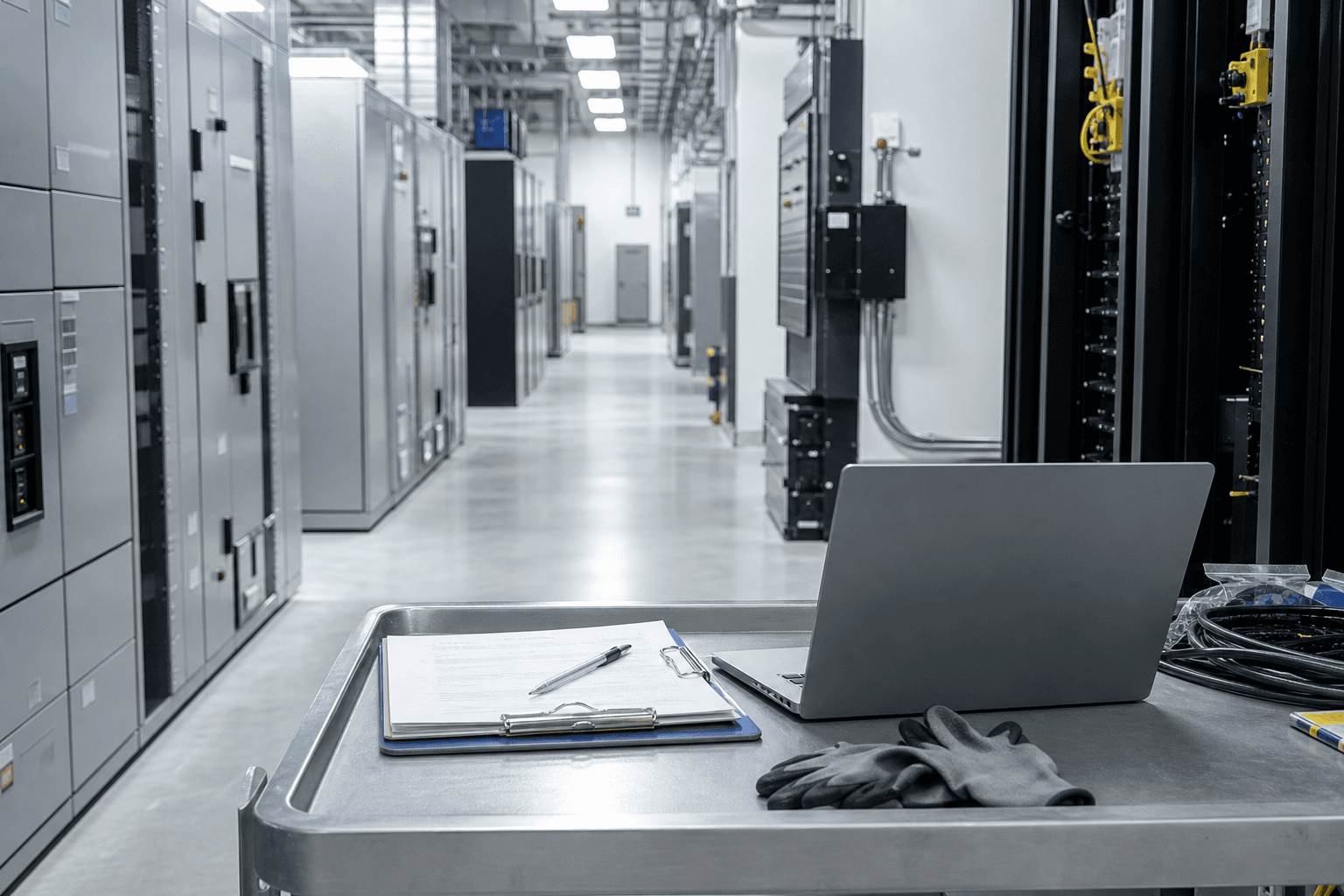
This is why the cleanest way to read the next wave of announcements is not "who bought more chips?" It is "who found a balance sheet willing to own the physical layer?"
#The Useful Clues Are Already In Public Filings
Look at what the non-hyperscaler capital providers are saying.
On March 30, Digital Realty announced the final close of a $3.25 billion U.S. hyperscale data-center fund, backed by pensions, sovereign wealth funds, insurers, asset managers, and other institutional investors. The company did not present that as a side project. It described private capital as increasingly important to scaling its platform and serving hyperscale customer demand.
That is one scene.
The second scene came on May 18, when Blackstone said it would form a joint venture with Google to create a new TPU cloud, with an initial $5 billion equity commitment and a plan to bring 500 megawatts of capacity online in 2027. Read that slowly. One of the biggest alternative-asset managers in the world is not just financing the AI wave from a distance. It is helping package compute capacity itself as an infrastructure asset.
#What those scenes actually mean
The market keeps talking as if AI infrastructure is one giant technology budget.
It is starting to look more like a chain of specialized financing decisions:
- land gets assembled
- power gets secured
- shells get built
- equipment gets installed
- customers pre-commit
- private and public capital get layered against that risk stack
That is a much more finance-heavy machine than the casual AI narrative suggests.
#Why this matters for public-market investors
If more of the buildout moves through private infrastructure and real-estate channels, public investors should expect the value migration to widen.
Some upside will still accrue to chips and cloud software. But some of the economics will move into data-center operators, infrastructure funds, utilities, equipment-leasing structures, and credit vehicles that can finance the boring but essential middle layer.
#The Next Bottleneck Is Contract Quality
The bullish version of this story is obvious. Private capital can absorb more of the build cost, keep supply moving, and relieve some pressure on hyperscaler balance sheets.
The harder question is what happens if everyone funds capacity faster than customers can monetize it.
That is where contract quality becomes the real filter.
A data center backed by a long-duration customer commitment, credible power access, and disciplined economics is one asset. A data center built on loose assumptions about AI demand growth is another. In other words, the next phase of the AI trade may look less like a pure innovation race and more like old-fashioned credit work wearing a new costume.
That is also why Microsoft's margin pressure matters. It is a reminder that strong demand does not eliminate financing gravity. It just pushes the system to find more creative owners for the physical burden.
So the better question for the next six months is not whether AI spending remains huge. It probably will.
The better question is who ends up holding the keys to the buildings once the story leaves the earnings call.
#FAQ
Is this a bearish call on AI infrastructure?
No. It is a call to read the AI buildout more like infrastructure and less like a pure software boom. Demand can stay strong while the economics migrate toward financing structures, lease terms, and utilization discipline.
Why does private capital matter so much here?
Because the facilities underneath AI are expensive, long-lived, and power-intensive. When that physical layer gets large enough, private infrastructure, real estate, and credit investors become natural owners or co-owners of the asset base.
What should investors watch next?
Watch for more fund launches, joint ventures, capacity pre-commitments, utility and power disclosures, and any sign that customer contracts are getting shorter or more speculative. That will tell you whether the AI buildout is becoming sturdier or just more levered.