Costco's Quarter Says the Membership Fee Is a Buying Office

TL;DR: Costco's May 28 quarter looked like another clean retail beat. The more useful read is that Costco is not mainly selling giant carts of stuff. It is selling a paid buying office to households and small businesses that want someone else to keep everyday inflation honest. That is why the membership line matters more than the snack pallet.
##What Costco Actually Reported
Costco said third-quarter net sales rose 11.6% to $69.15 billion, with adjusted comparable sales up 6.6% and digitally enabled sales up 20.8%.
Net income rose to $2.19 billion, or $4.93 a share. Membership fee revenue climbed to $1.37 billion from $1.24 billion a year earlier.
Those are strong numbers. They are not the whole story.
The deeper clue is on the balance sheet. Costco ended the quarter with cash and equivalents of $18.95 billion, deferred membership fees of $3.16 billion, and accounts payable of $22.36 billion.
That is what a procurement machine looks like when customers are willing to prepay for access and vendors are willing to wait for scale.
##The Membership Fee Is Not the Side Dish
The lazy way to read Costco is to call it a low-margin retailer with unusually loyal shoppers.
The better way is to see it as a subscription business attached to a physical supply chain.
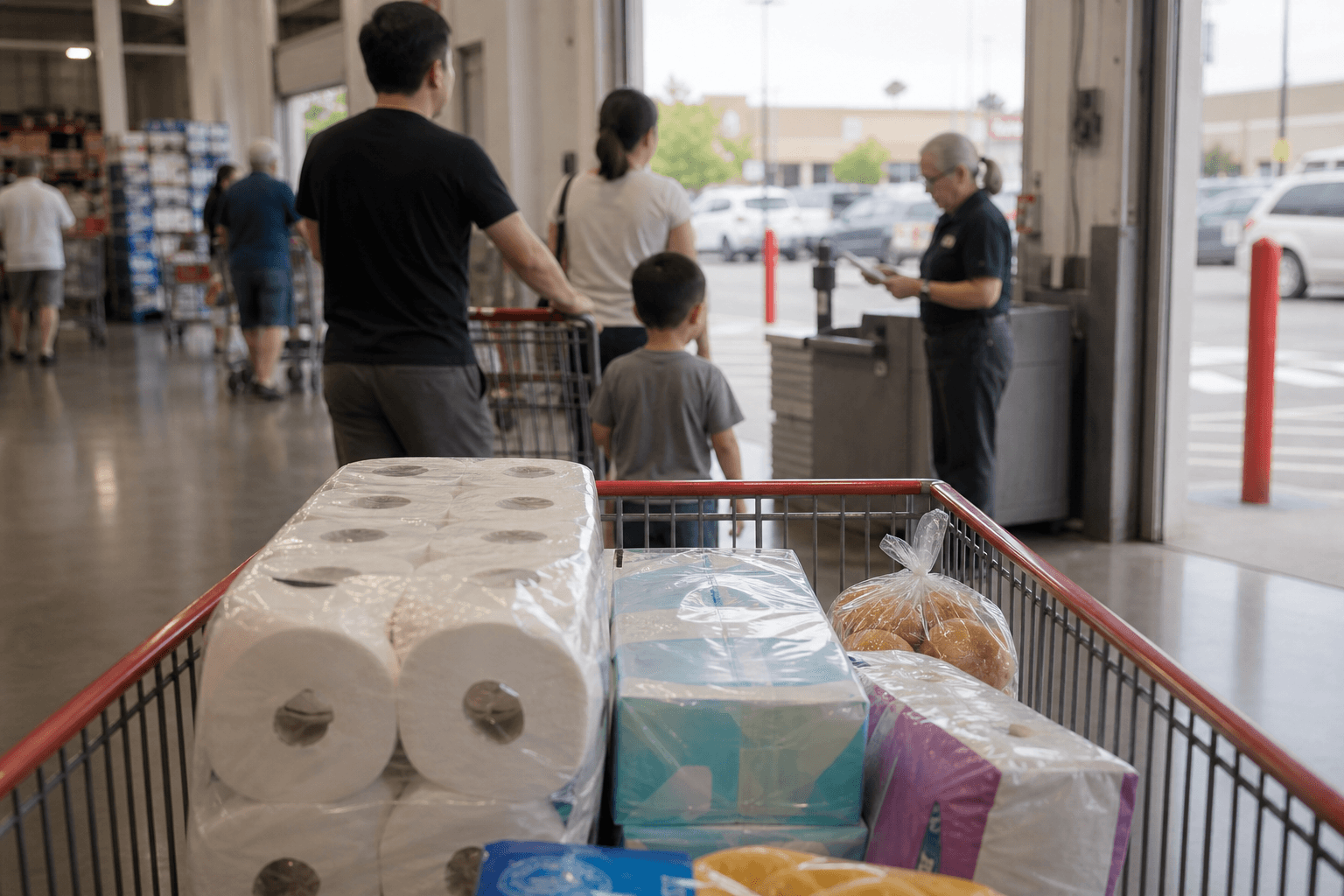
Picture a family pushing a cart past the receipt checker with paper towels, ground beef, baby wipes, coffee pods, and a box of printer paper they did not plan to buy until next week. They are not just bargain hunting. They are outsourcing part of the monthly budget argument.
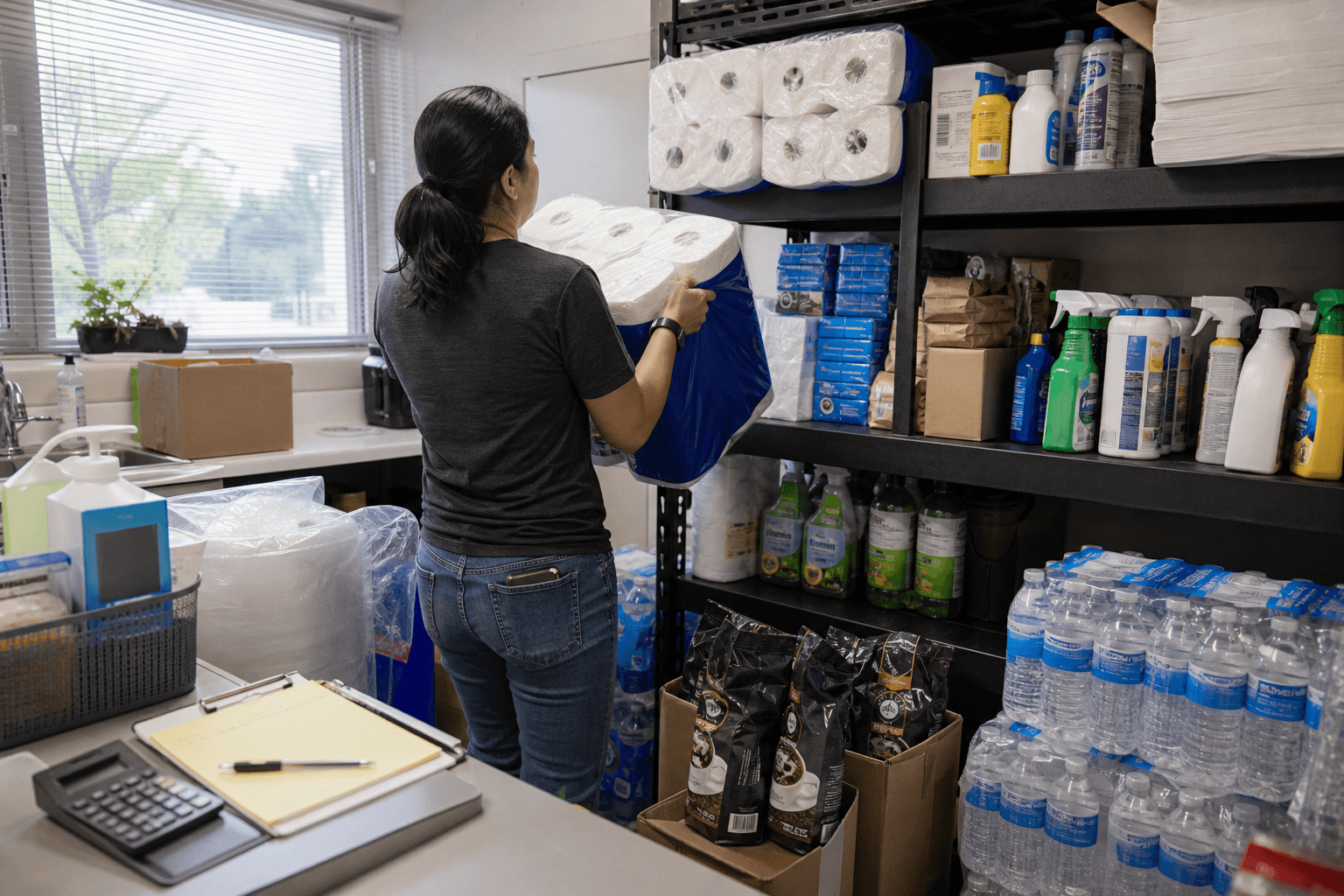
The same thing is happening with small businesses. A restaurant manager, dental office administrator, or church bookkeeper does not go to Costco because the shopping trip is glamorous. They go because somebody has to keep the pantry, break room, and cleaning closet stocked without renegotiating every line item.
That is why the membership fee is the economic center of the model. It turns the warehouse trip from a transaction into a routine.
##Why This Matters in a Mixed Consumer Economy
Costco's April sales update already hinted at the pattern. Net sales for the four weeks ended May 3 rose 13.0%, adjusted comparable sales rose 7.8%, and digitally enabled sales rose 18.4%.
That does not read like a desperate trade-down story.
It reads like a customer who still spends, but wants the spending routed through a place that reduces decision fatigue and price anxiety.
This is an important distinction. A weak consumer can chase coupons. A pressured but functioning consumer pays for a system.
Costco increasingly looks like that system.
##Costco Is Quietly Selling Budget Discipline
The product on the shelf still matters. Fresh food matters. Gas prices matter. Treasure-hunt discretionary items matter because they keep the trip interesting.
But the real asset is behavioral.
Once a household or small business has paid the fee, the next trip does not have to win the customer from scratch. Costco starts with a different question than most retailers:
"What can we get this member to consolidate here?"
That is a much better business than asking, "How do we bribe this shopper to visit once?"
You can see the operating leverage in the combination of membership revenue, deferred membership fees, and payables. Customers fund access up front. Vendors fund inventory through timing. Costco sits in the middle with scale, traffic, and enough trust to keep the loop running.
That does not make it immune to consumer stress. It makes it unusually well positioned when consumers want fewer pricing mistakes.
##What Investors Tend To Miss
Investors often frame Costco as a defensive retail stock with a premium multiple and a cult following. All true. Still incomplete.
The commercial edge is that Costco behaves more like infrastructure than a normal store.
Its warehouses are not just distribution points for merchandise. They are physical nodes in a recurring purchasing network. The membership fee is the access charge. The e-commerce growth makes the network more flexible. The cash pile and working-capital structure make it harder for weaker competitors to imitate the model without wrecking their margins.
This is why Costco keeps looking more resilient than a simple "consumer staples plus discretionary" blend should look.
The customer is not only buying cheaper goods. The customer is buying a lower-error way to run the household or office.
##Where The Risk Actually Sits
The risk is not that Costco suddenly forgets how to sell bulk toothpaste.
The risk is that the membership starts to feel less essential.
That could happen if too much value migrates online, if price gaps narrow, if a rival warehouse club gets more aggressive on convenience, or if household cash flow gets squeezed hard enough that even useful subscriptions get reviewed.
For now, the evidence still points the other way. Costco operated 931 warehouses at quarter-end, including 639 in the U.S. and Puerto Rico, and digital sales kept growing above 20%.
The model is not just surviving e-commerce. It is using e-commerce to make the membership more habit-forming.
##Why This Belongs On A Gainbrief Consumer Beat
Costco's quarter matters because it says something larger than "retail is okay."
It suggests American consumers and small operators still pay up for institutions that help them simplify spending, compress search costs, and avoid getting picked off on everyday purchases.
That is not a soft sentiment metric. That is a business model.
The retail winner here is not simply the cheapest shelf. It is the company that becomes the member's default buying office.
That leaves one clean question for the rest of retail: if consumers are willing to pay for disciplined purchasing, who else is actually offering it?
#FAQ
Why did Costco's Q3 FY2026 results matter beyond a normal earnings beat?
Because the quarter showed more than sales momentum. Membership fees rose to $1.37 billion, cash climbed to $18.95 billion, and deferred membership fees reached $3.16 billion, reinforcing that Costco is monetizing recurring purchasing behavior, not just one-off basket size.
Is this mainly a recession or trade-down story?
Not really. Costco's adjusted comparable sales and digitally enabled sales still grew strongly, which suggests shoppers are not only trading down. They are routing more spending through a trusted purchasing system.
What should investors watch next?
Watch whether membership economics, digital growth, and traffic remain strong enough to keep Costco functioning like a paid buying office. If that relationship weakens, the premium story gets harder to defend.