HP's AI PC Quarter Is Really a Procurement Cycle

An IT manager does not care whether a laptop is philosophically “AI-native.” She cares whether 4,000 employees can keep using supported machines without creating a security exception spreadsheet that nobody wants to own.
That is why HP's quarter matters. The easy read is that AI PCs are finally working. The better read is that the market is in a forced procurement cycle, and the winners are the vendors that can turn an unavoidable Windows 11 refresh into a richer hardware mix before the customer starts pushing back on price.
HP reported fiscal second-quarter revenue of $14.4 billion on May 27, up 9% from a year earlier, while non-GAAP EPS rose to $0.86. Reuters tied the beat to demand for AI-optimized PCs and the Windows 11 refresh. HP's own release added a more revealing detail: Personal Systems revenue rose 13%, but total Personal Systems units fell 7%.
That is not a pure demand boom. That is a pricing-and-mix story.
In plain English, companies are not buying more machines because workers suddenly discovered a killer AI button. They are buying more expensive machines because the replacement window arrived, Microsoft ended Windows 10 support on October 14, 2025, and the available machines are carrying more compute, more memory, and more margin.
That distinction matters for investors because it changes what kind of upside this cycle can support.
If this were a real volume explosion, you would expect units to rip higher. Instead, HP is showing something more practical and more corporate: budgets are being redirected toward better-spec laptops, premium commercial configurations, and devices that let IT departments skip another painful migration debate for a few more years.
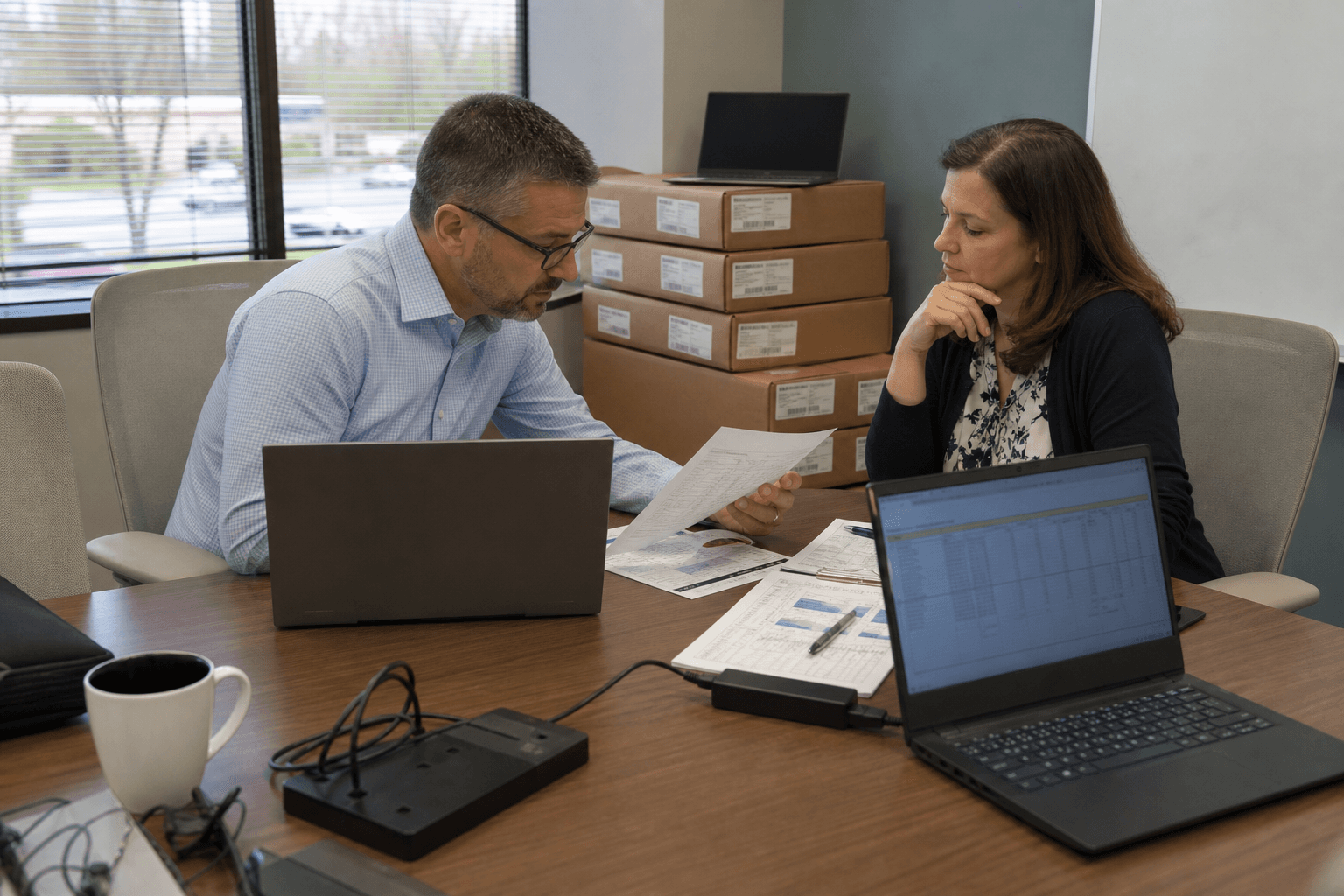
Walk into the conference room where those decisions get made and the conversation is not cinematic. It is a spreadsheet fight over fleet age, security policy, approved vendors, and whether a finance team wants to absorb a bigger ticket now or a support headache later.
That is where “AI PC demand” becomes real money.
Reuters also pointed to a memory-chip shortage as data-center buildouts absorb capacity and push up costs for PCs and smartphones. HP itself said it was navigating rising commodity costs, and its inventory ended the quarter at $9.2 billion, up five days quarter over quarter.
So the PC cycle is being shaped by two pressures at once:
- software support deadlines are forcing refresh decisions
- AI-era component costs are nudging customers toward premium configurations
- vendors with supply discipline can protect revenue even if unit growth stays soft
That is a very different business from the old consumer-PC hope trade.
For years, the PC market kept getting framed as a comeback story waiting for inspiration: better design, remote work, gaming, then AI. But corporate hardware spending rarely works that way. It moves when an installed base gets old, an operating-system clock runs out, and the replacement math becomes less painful than the exception-management math.
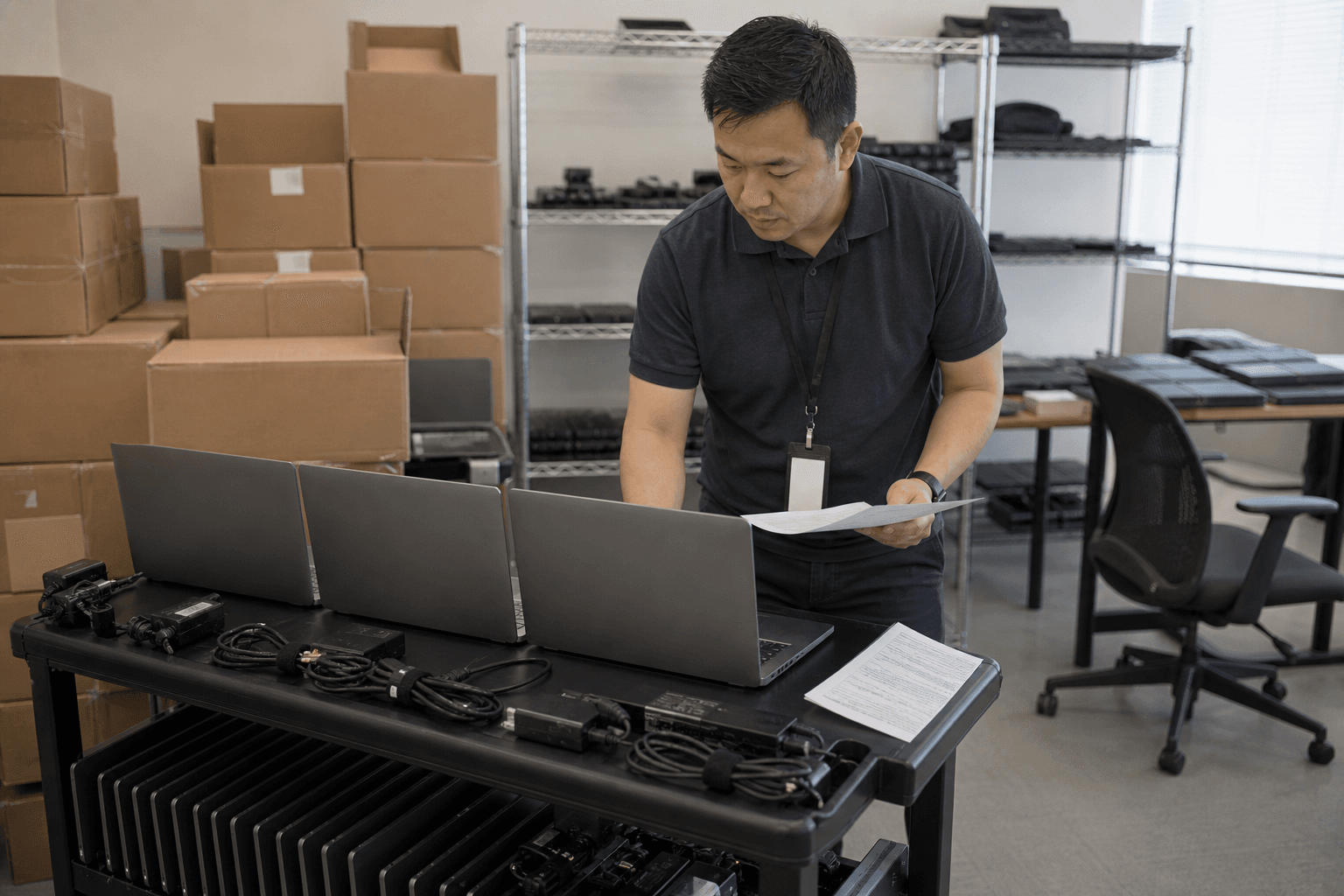
Now picture the second scene: a deployment cart in a back office, rows of unopened notebooks, barcode labels on the boxes, and an operations lead checking who gets upgraded first. The workflow is mundane. That is exactly why it is durable.
Once a refresh cycle starts, it tends to reward the vendor that is easiest to standardize around. Not the vendor with the flashiest demo. The one that gives procurement, IT, and finance a path to say yes quickly.
That is why HP's numbers are more interesting than the marketing language around them.
Commercial Personal Systems revenue rose 14% even though Commercial units fell 7%. That tells you customers are accepting a more expensive box. Some of that is better silicon. Some of it is memory pressure. Some of it is the simple fact that an enterprise buyer facing a mandatory refresh is less price-sensitive than a consumer browsing for a deal.
The risk is obvious too. A mix-led cycle is powerful, but it is not infinite.
If AI features remain fuzzy to end users, and if component inflation keeps pushing system prices higher, eventually customers stop treating the purchase as a strategic upgrade and start treating it as a tax. When that happens, refreshes stretch, secondary fleets live longer, and the vendor loses the pricing grace period.
So the sharp takeaway is this: the AI PC trade is not really about AI proving itself on the desktop yet. It is about vendors monetizing a forced replacement cycle while they still have narrative cover to sell a better-spec machine.
That can be a very good business for a while. It is also a narrower story than the headline suggests.
The winners here may not be the companies that make people love AI on a laptop. They may be the ones that turn an unavoidable IT chore into a premium hardware invoice before the chore starts feeling optional again.