Petco's Turnaround Is Happening In The Grooming Room, Not The Dog-Food Aisle

TL;DR: Petco's first-quarter 2026 results suggest the turnaround is not being won in the dog-food aisle. It is being won in the service layer around the aisle. Net sales rose only 0.2% to $1.50 billion, but services and other revenue climbed to $268.6 million from $251.5 million while product revenue slipped. The business implication is that Petco looks less like a pure specialty retailer and more like a pet-care workflow business trying to use grooming, veterinary touchpoints, inventory control, and debt reduction to finance a slow retail repair.
##Where Petco's Quarter Actually Happened
Walk into a pet store and the obvious action is in the aisle: food bags, treats, toys, impulse baskets.
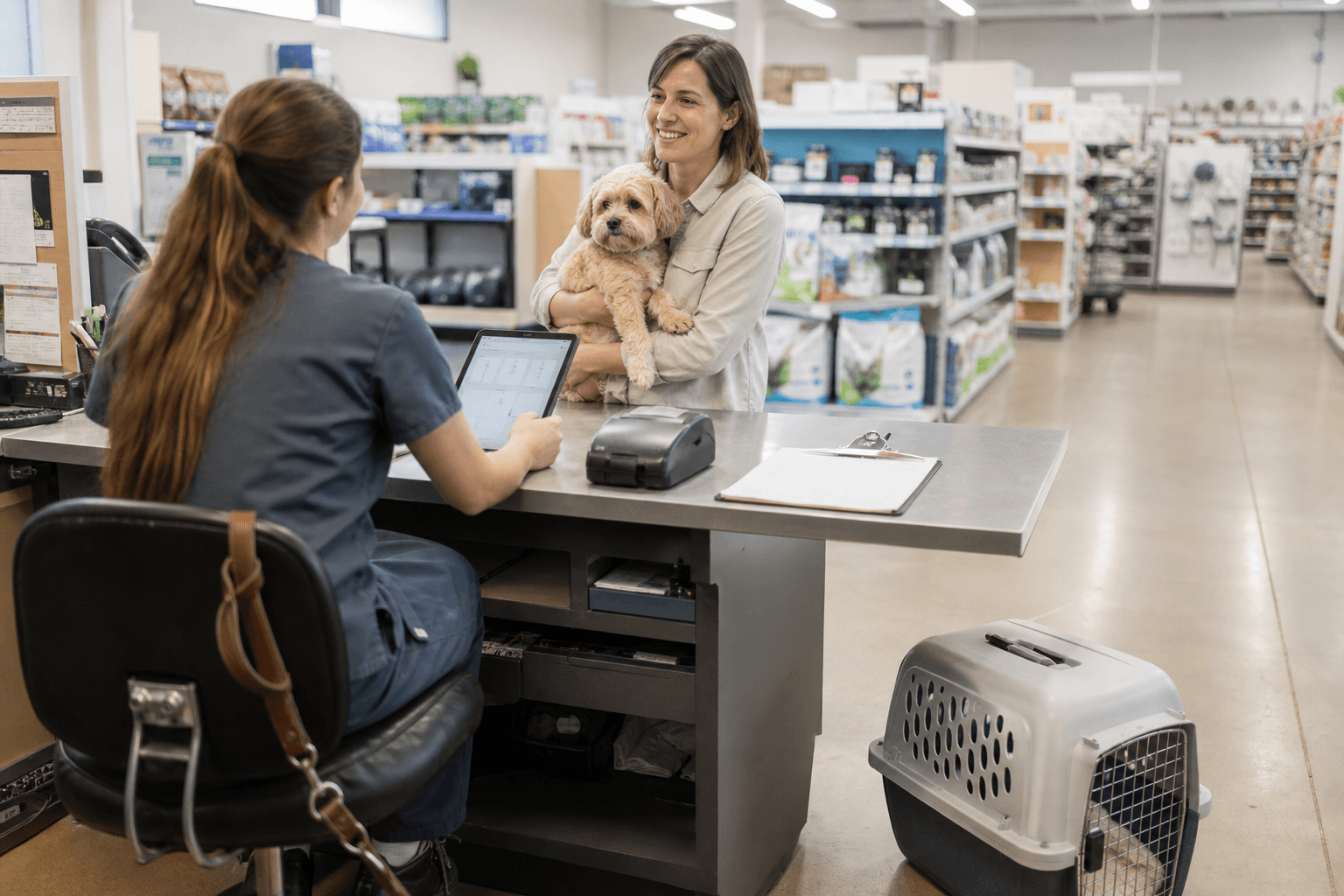
Petco's quarter says the real action may be a few steps away, at the grooming desk and the services counter.
The company said comparable sales returned to growth, up 0.7% in the quarter, while operating income rose 50.5% to $24.6 million. That sounds like a retail stabilization story.
It is, but only partly.
In the detailed revenue split, products fell to $1.228 billion from $1.242 billion, while services and other rose to $268.6 million from $251.5 million. That is the more useful clue.
Petco is not waiting for a broad discretionary-spending miracle. It is trying to build a retail model where recurring care, appointments, and service touchpoints help stabilize the basket.
##Why The Mix Shift Matters More Than The Headline
A normal retailer turnaround is supposed to look cleaner than this. You want traffic up, basket up, and product productivity up.
Petco's version looks messier.
CEO Joel Anderson said the company saw improvement in consumables while its "differentiated services business continues to outperform" in the earnings release. Read that carefully. The growth engine is not being described as a hotter merchandising cycle. It is being described as a service layer wrapped around the merchandise.
That matters because services do three jobs at once:
- They bring customers back on a schedule instead of hoping for a spontaneous shopping trip.
- They create more chances to attach food, pharmacy, or accessory purchases to a care visit.
- They make a specialty retailer less vulnerable to a pure price fight on commodity pet products.
A grooming visit or veterinary touchpoint is not just a revenue line. It is a traffic contract.
#The quiet win is that products no longer have to do all the work
When products are flat to down, a retailer usually has two bad options: discount harder or accept lower volume.
Petco is trying a third option. It is asking services to carry more of the customer relationship while retail basics improve underneath.
That does not eliminate risk. It does change the economics of the comeback.
##What The Balance Sheet Says About Management's Real Priorities
The quarter also looked less like a flashy growth relaunch and more like a CFO repair job.
Petco said ending cash rose to $166.8 million from $133.3 million a year earlier, inventory fell 1.9% year over year even as sales edged up, and total debt declined to $1.482 billion from $1.593 billion.
That is a useful operating picture.
Picture the back room, not the earnings deck: a store manager checking feed inventory, a scanner logging replenishment, and a finance team trying to keep markdowns, stockouts, and interest expense from eating the recovery.
This is why the Petco quarter should not be read as a simple "pet spending is back" headline. It is a working-capital story.
#Inventory discipline is doing strategic work here
If inventory is down while comps turn positive, the retailer is not just selling more. It is selling with less clutter.
That helps margin. It helps cash. It also gives management more room to decide where the next dollar should go: a promotion, a debt reduction step, a store refresh, or another service capability.
Retailers with leverage do not get many sloppy quarters. Petco knows that.
##Why Q2 Shows The Turnaround Is Still Fragile
The company reaffirmed its full-year 2026 outlook for net sales from flat to up 1.5% and adjusted EBITDA of $415 million to $430 million. For Q2, it guided net sales up about 0.3% year over year and adjusted EBITDA of $110 million to $112 million.
Those are not boom numbers. They are control numbers.
Petco also said a partial tariff refund received in May is expected to be roughly offset in Q2 by incremental tariffs and higher fuel costs, while a prior-year SG&A benefit will not repeat, according to the same release.
That is management telling you the margin story is real, but not self-propelling.
In other words, this turnaround still depends on execution more than enthusiasm.
##What Investors May Still Be Missing
The lazy read is that Petco posted a small comp gain and bought itself another quarter of patience.
The better read is that specialty retail is being reorganized around workflows that are harder to price-check.
Pet food can be compared in seconds. A scheduled grooming slot, a vet interaction, a refill habit, or a trusted in-store handoff cannot.
That does not mean Petco suddenly becomes a great business. It means the company may have identified the only part of its model with enough stickiness to fund the rest of the repair.
If that works, the upside is not just a nicer same-store-sales chart. It is a retailer that slowly stops behaving like a pure retailer.
That would be a more durable change than one good quarter. It would explain why the real turnaround is happening in the grooming room, not the aisle.
#FAQ
Why is Petco's services revenue more important than the total sales growth?
Because the revenue mix changed in a revealing way. Total sales were nearly flat, but services and other revenue rose while product revenue fell, which suggests the stronger part of the business is the care-and-visit layer rather than basic merchandise demand.
What balance-sheet signals mattered most in the quarter?
The useful signals were higher cash, lower inventory relative to sales, and lower debt year over year. Those are signs of tighter retail discipline, not just a temporary revenue bounce.
What is the main risk to this turnaround thesis?
The main risk is that services improve customer stickiness without creating enough profit to overcome tariffs, fuel costs, leverage, and still-soft product demand. If the service layer stops carrying the relationship, the retail turnaround becomes much harder.