Amazon's Corning Fiber Deal Moves AI Capex Into The Cable Plant

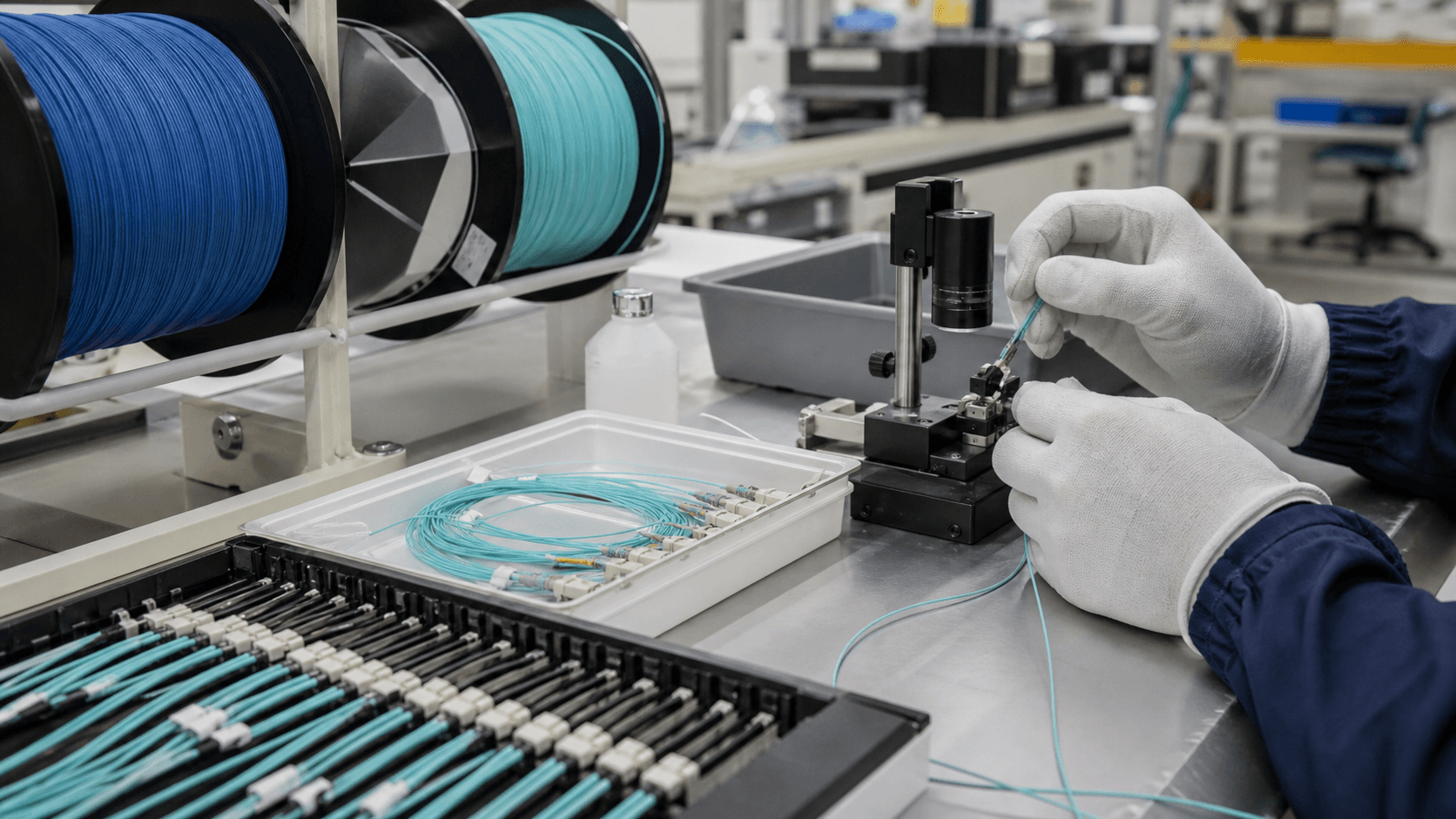
TL;DR: Amazon's June 8 multibillion-dollar agreement with Corning is a reminder that AI infrastructure is not just a GPU auction. The deal commits Corning to supply optical fiber, cable, and connectivity products for Amazon's U.S. data-center buildout while adding 1,000 North Carolina manufacturing jobs. The business implication is blunt: hyperscalers are starting to lock up the boring physical inputs that decide whether AI capex can actually turn into usable capacity.
##What Amazon And Corning Actually Announced
Amazon said it signed a multiyear, multibillion-dollar agreement with Corning to supply optical fiber, cable, and connectivity products for its expanding U.S. data-center infrastructure.
The headline number is jobs: 1,000 advanced manufacturing roles at Corning facilities in North Carolina, plus hundreds of construction jobs. The more important number is hidden in the type of commitment. Amazon is not buying a batch of cable like office supplies. It is reserving industrial capacity in a supply chain that now sits inside the AI capex cycle.
That is the part investors should not wave away.
AI demand keeps getting discussed as if the bottleneck is one giant semiconductor purchase order. But a data center is a stack of constraints. Power, land, cooling, transformers, networking gear, skilled labor, and fiber all have to arrive in the right sequence.
Miss one handoff, and the GPU rack becomes expensive furniture.
##Why Fiber Has Become A Capital-Allocation Issue
Corning's optical communications business was already moving before this Amazon announcement. In April, Corning reported that first-quarter Optical Communications sales grew 36% year over year, helped by demand tied to generative AI and hyperscale customers.
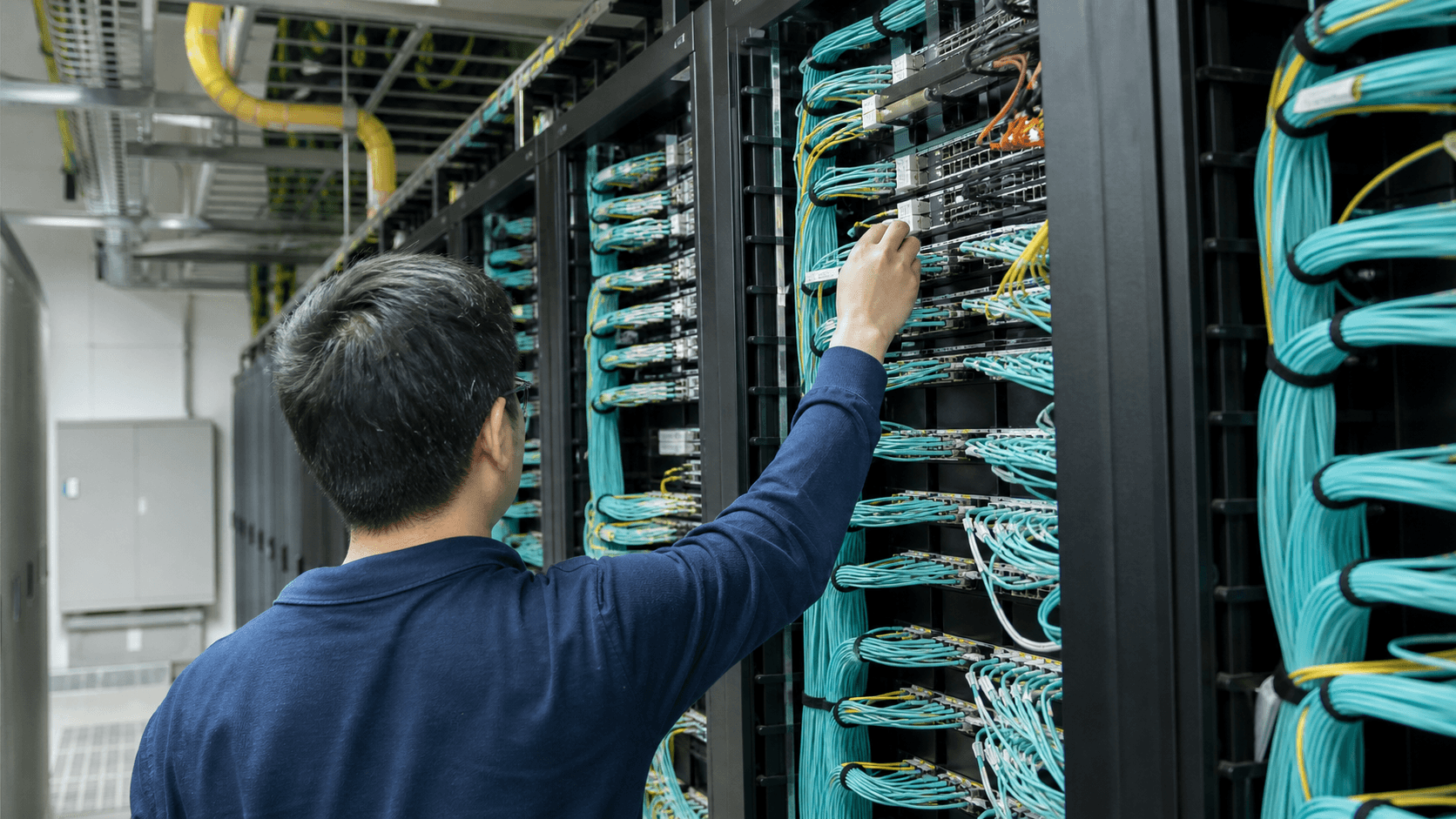
That matters because optical fiber is not a glamorous line item, but it is close to the nervous system of the AI factory. The compute cluster needs high-bandwidth, low-latency connectivity inside and between facilities. More servers mean more connections. More connections mean more cable, more connectors, more testing, and more installation labor.
#The procurement problem is sequence, not just price
Picture a network room where racks are ready, trays are open, and a technician is waiting on a specific fiber run before a cluster can be lit up. The cost of the cable may look small next to GPUs and power equipment. The cost of waiting is not small.
That is why this kind of supply agreement is so revealing. Amazon is paying for reliability in the build schedule. Corning is getting demand visibility that can justify factory expansion, training programs, inventory planning, and customer-specific manufacturing commitments.
The trade is simple:
- Amazon gets a more controlled path from cloud capex budget to live data-center capacity.
- Corning gets a stronger case for expanding U.S. production without guessing at demand.
- Smaller cloud and enterprise buyers may face a market where the best suppliers are already tied to the largest customers.
That last point is the one people miss. The AI infrastructure race is becoming less open-market and more reservation-based.
##Where Corning Fits In The AI Supply Chain
Corning is turning into a useful test case for the second layer of AI infrastructure winners. It is not selling the model. It is not selling the GPU. It is selling the physical connectivity that lets the expensive stuff work.
This is not a one-off with Amazon. In May, NVIDIA and Corning announced a long-term partnership under which Corning said it would increase U.S.-based optical connectivity manufacturing capacity tenfold and expand U.S. fiber production capacity by more than 50%.
Now Amazon is showing up with another large commitment. Earlier in 2026, Corning also had a major Meta-related data-center fiber agreement in the background. The pattern is clear enough: hyperscalers and AI hardware leaders are not waiting for the spot market to solve the cable plant.
#The supplier with boring parts can gain pricing discipline
Corning still has execution risk. New capacity can run late. Customer concentration can cut both ways. If AI demand pauses, the supplier that expanded fastest can end up carrying too much fixed cost.
But the negotiating position has changed. A supplier that owns a hard-to-scale bottleneck can ask customers for longer commitments, better visibility, and more disciplined production planning. That is different from simply hoping volume growth offsets margin pressure.
For Corning, the financial question is whether these agreements convert into durable operating leverage instead of just capex-heavy growth.
##Who Pays For The Bottleneck
Amazon pays first, through larger and longer infrastructure commitments. That can look expensive from the outside, but it is cheaper than building AI capacity on a supply chain full of open-ended delays.
Corning pays through factory expansion, workforce training, and the working-capital demands that come with serving hyperscale customers. The company gets a stronger growth lane, but it also has to prove that it can ramp production without letting quality issues, labor constraints, or customer concentration eat the upside.
Investors pay if they keep treating AI infrastructure as a simple chip demand story.
The real margin pool is spreading outward. Some of it moves to utilities. Some of it moves to landowners. Some of it moves to electrical-equipment suppliers. And some of it now moves to fiber and optical-connectivity manufacturers that can make the build schedule more predictable.
##What The Market Is Missing
The lazy read is that Amazon is creating manufacturing jobs in North Carolina. That is true, but it is not the sharp part.
The sharper read is that Amazon is converting AI urgency into supplier lock-in. It is making the physical data-center buildout less dependent on a crowded market for critical inputs. That is not a public-relations detail. It is an operating strategy.
If every hyperscaler wants more capacity at the same time, the winning suppliers are not only the ones with the best product. They are the ones with already-funded factories, trained technicians, tested processes, and customers willing to underwrite expansion.
That makes AI capex look less like a shopping list and more like an industrial planning exercise.
The next bottleneck may not announce itself with a chip shortage. It may show up as a quiet delay on a cable tray.
#FAQ
Why does Amazon's Corning deal matter for investors?
It shows that AI infrastructure spending is moving into long-duration supplier commitments. Investors should watch whether companies such as Corning can turn hyperscale demand into margin expansion, not just revenue growth.
Is this only a Corning story?
No. Corning is the clean example, but the broader story is about physical bottlenecks in AI data centers: fiber, power equipment, cooling, skilled labor, and construction sequencing.
What is the main risk?
The main risk is overbuilding or mis-timing capacity. If AI data-center growth slows, suppliers that expanded for hyperscale demand could be left with higher fixed costs and less pricing power than the current deal flow suggests.