Hikma's Supreme Court Win Puts Drug-Patent Risk At The Pharmacy Counter

TL;DR: The U.S. Supreme Court's June 4 ruling for Hikma in the Amarin Vascepa patent fight matters because it protects a legal path that lets some generics launch with "skinny labels" that carve out patented uses. The business implication is not just cheaper pills. It is a shift in drug-pricing power from courtroom threats toward pharmacy substitution, payer formularies, and the messy operating layer where prescriptions actually become spending.
##What The Supreme Court Changed In Hikma v. Amarin
Hikma won a unanimous Supreme Court decision in a case that looked narrow on paper and much larger at the pharmacy counter.
The Court held that Amarin had not plausibly alleged that Hikma actively induced infringement when Hikma marketed a generic version of Vascepa with an FDA-approved skinny label. The June 4 opinion reversed the Federal Circuit and sent a clear message: calling a product a generic version, by itself, is not enough to turn a carved-out label into an infringement case.
That sounds like patent procedure. It is really a pricing mechanism.
Skinny labels let a generic drug omit a still-patented use while selling for an approved, non-patented use. If that path becomes too legally risky, generic manufacturers hesitate. If it is protected, the lower-cost product can get into the channel sooner.
##Why This Is A Healthcare-Cost Story, Not Just A Patent Story
The usual drug-pricing fight is told as brand company versus generic company. That misses the handoff.
The real economy of a generic launch runs through:
- the FDA label that defines what the manufacturer can say;
- the wholesaler and pharmacy system that stocks the product;
- the payer formulary that decides patient incentives;
- the prescriber and pharmacist workflow that determines what gets dispensed.
Hikma's win does not make every patent defense disappear. It does make it harder for a brand company to use a broad inducement theory when the generic label has carved out the patented use.
That is why the decision belongs on a business page. A smaller litigation threat can change launch timing, inventory confidence, rebate negotiations, and payer willingness to prefer the generic.
#The hidden lever is substitution confidence
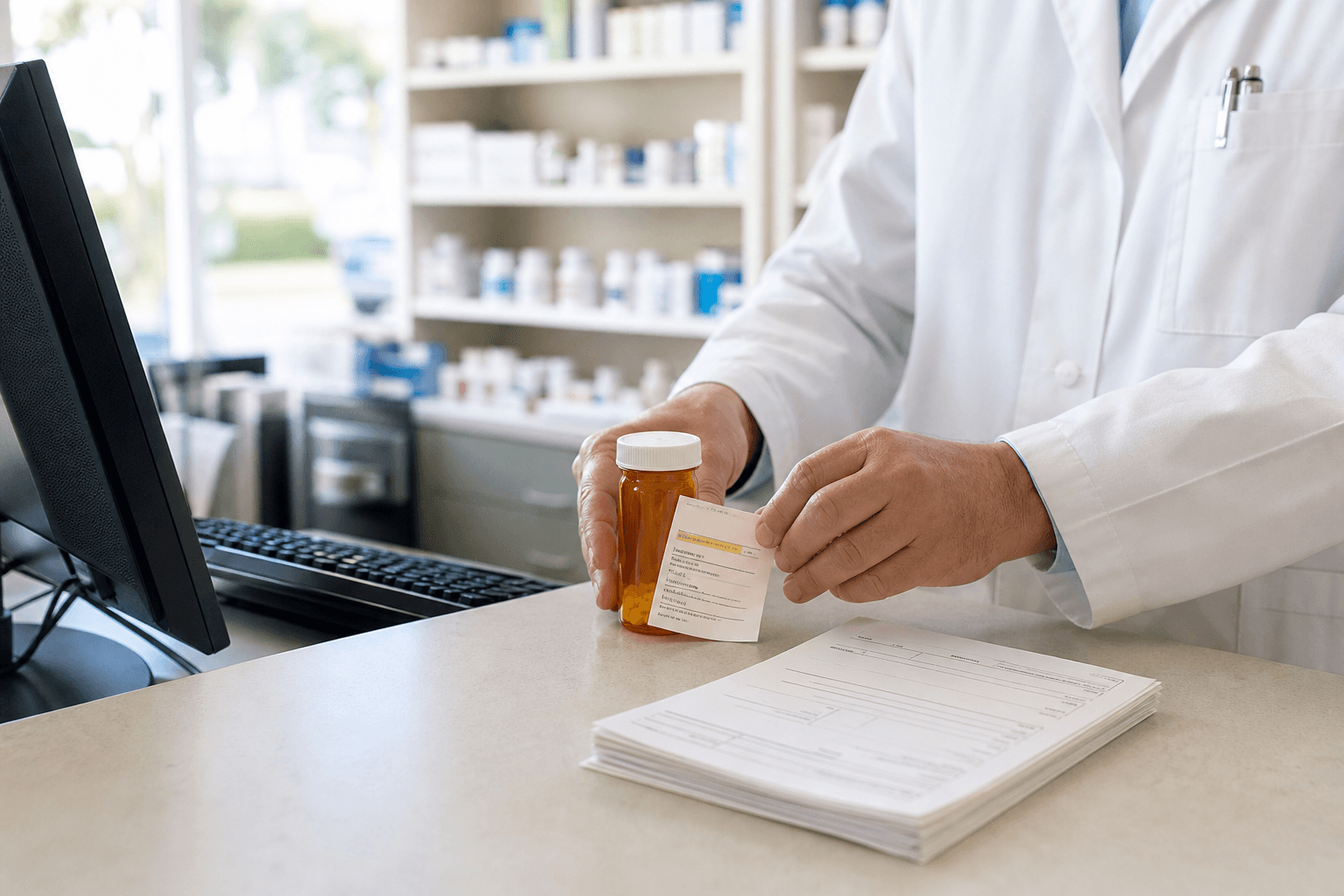
Picture the pharmacy counter. A patient is not asking for patent doctrine. A pharmacist is checking a prescription, a bottle, a payer rule, and a substitution screen.
If a generic supplier thinks every normal commercial statement can be repackaged as inducement, the product may never reach that counter at full speed. If the legal boundary is clearer, the generic has a better chance of becoming a normal inventory item instead of a litigation project.
That is the quiet cost lever.
##Where The Money Actually Moves
Generic drugs already carry enormous system value. The Association for Accessible Medicines said generics and biosimilars saved the U.S. healthcare system $467 billion in 2024 and represented most prescriptions while accounting for a much smaller share of drug spending.
Hikma v. Amarin does not create those savings alone. It protects one of the lanes that makes those savings possible.
The financial mechanism is plain:
Brand manufacturers want to preserve high-margin patented uses for as long as possible. Generic manufacturers want to enter any legally open use without being sued for what doctors, payers, or pharmacists may do downstream. Payers want lower net cost, but they also want a product they can place on formulary without triggering a legal mess.
The Court's ruling pushes more of the fight into that operational middle.
#Lower legal friction does not guarantee lower patient cost
There is a trap here for investors and policy people. A generic win at the Supreme Court is not the same thing as cheaper medicine at the register.
The price concession still has to pass through PBM contracts, pharmacy reimbursement, plan design, deductible math, and patient copays. A generic can reduce gross system cost while a patient sees only a small change at the counter.
That is why the pharmacy-benefit workflow matters as much as the courtroom headline.
##Who Gains And Who Loses Pricing Power
The immediate winner is the generic industry, because the decision lowers one kind of pleading risk around skinny labels. Reuters described the case as a closely watched fight over whether Hikma's generic Vascepa infringed Amarin patents tied to the cardiovascular medication's uses, with the Supreme Court siding with Hikma in the "skinny label" patent case.
The loser is not simply Amarin. The weaker position belongs to any brand company that relies on ambiguity around carved-out labels to slow a generic launch.
But the most interesting beneficiary may be the payer with enough formulary control to turn legal clarity into purchasing leverage. A health plan or PBM does not need to win a patent case. It needs credible generic supply and enough confidence to steer volume.
That is where pricing power migrates.
##What Investors Should Watch Next
This ruling should not be read as a blanket green light for sloppy generic marketing. If a manufacturer actually encourages a patented use, it can still create risk.
The cleaner investor read is more practical: watch drugs with multiple approved uses, split patent estates, and large payer exposure. Those are the places where skinny-label clarity can affect launch economics.
The next important signals are not just court filings. They are formulary changes, generic stocking patterns, gross-to-net pressure on branded drugs, and whether brand companies change how they defend method-of-use patents.
The Court settled a pleading question. The market still has to settle the invoice.
#FAQ
What is a skinny label in generic drugs?
A skinny label is an FDA-approved generic drug label that omits a patented use of the branded drug while allowing the generic to be sold for a non-patented approved use.
Why does Hikma v. Amarin matter for drug prices?
The ruling lowers one kind of legal risk for generic manufacturers using skinny labels, which can support earlier or more confident generic competition. The actual patient-cost impact depends on payer, PBM, pharmacy, and plan-design decisions.
Does this end brand-name drug patent protection?
No. Brand companies can still enforce valid patents and bring inducement claims when facts support them. The decision mainly says Amarin's allegations against Hikma did not plausibly show active inducement under the carved-out label.