HPE's Q2 Beat Moves AI Spending From GPUs To The Network Rack

TL;DR: HPE's fiscal Q2 2026 beat matters because AI infrastructure spending is no longer just a GPU-server story. HPE reported record $10.7 billion revenue, raised full-year guidance, and showed that networking, financing, and integration work are becoming the real budget gate for enterprise AI. The overlooked implication: the winners may be the vendors that make AI clusters buyable, serviceable, and financeable.
##What HPE's Q2 Beat Actually Changed
The easy version is that Hewlett Packard Enterprise had a blowout AI quarter.
That is true, but it is incomplete. HPE's fiscal second quarter ended April 30, 2026, produced $10.7 billion of revenue, up 40% from a year earlier, with $0.9 billion of free cash flow. Those numbers are not just a demand signal. They show that AI infrastructure is moving from experiment to procurement workflow.
The more interesting line is networking. HPE said Networking revenue reached $2.7 billion, up 148.2% year over year, while Data Center Networking revenue rose 233.3%.
That is where the AI story gets less glamorous and more investable.
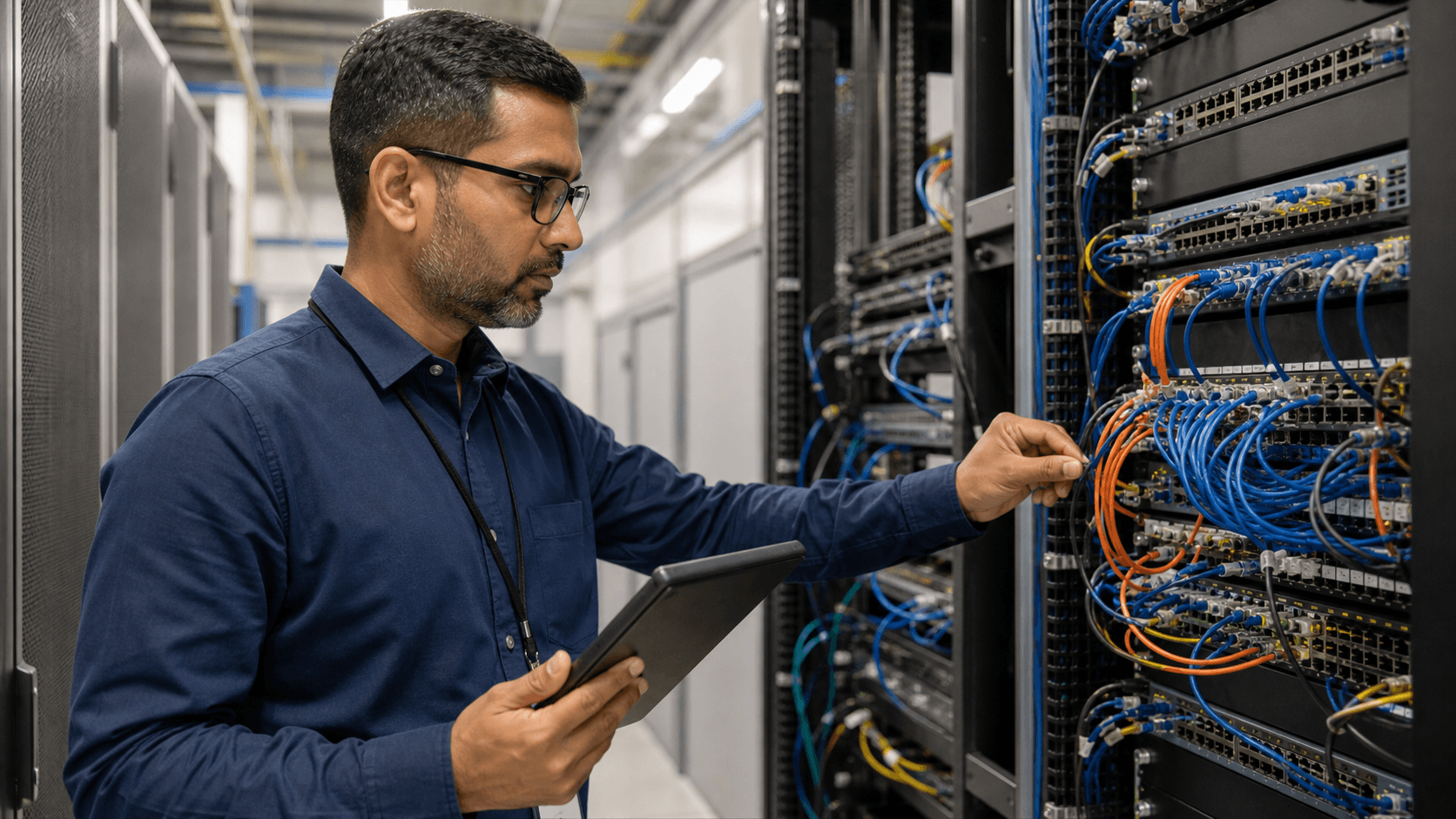
#Why the network rack is the new budget checkpoint
A buyer can talk about models, GPUs, and inference all day. The purchase order still has to pass through a data center plan: switches, routing, security, rack capacity, financing, installation timing, and support.
That is the scene investors often skip. Somewhere inside a large company, an infrastructure lead is not asking, "Can we buy AI?" The actual question is smaller and harder: "Can this cluster run inside our network, our power envelope, our depreciation schedule, and our service contract?"
That question is good for HPE.
##Why Juniper Now Looks Like More Than A Defensive Deal
HPE closed its Juniper Networks acquisition in July 2025 after a long regulatory path. At the time, it was easy to frame the deal as a way to bulk up against Cisco or protect HPE's enterprise footprint.
Q2 makes the deal look more pointed. AI infrastructure is forcing customers to buy the machine and the network around the machine at the same time.
That matters because the vendor with the broader bundle gets to sit earlier in the planning conversation. The AI cluster is not a one-line server purchase. It is a negotiated stack.
The stack includes:
- Compute and storage that can support training, tuning, or inference workloads.
- Data center networking that keeps expensive accelerators from waiting on traffic.
- Security and routing that make the cluster acceptable to the enterprise risk team.
- Financing and service terms that turn a capital-heavy project into a manageable budget item.
HPE's Cloud & AI segment was still the largest piece, with $7.7 billion of revenue and a 12.4% operating profit margin. But the margin story is no longer only in the server box. It is in how much of the surrounding project HPE can capture.
##Where The Investor Blind Spot Is
The market loves clean AI narratives. Chips are clean. Cloud capacity is clean. Power shortages are clean enough to explain in a headline.
Networking is messier. It sits between the GPU supplier, the cloud architect, the enterprise CIO, the security team, and the finance department. That makes it easier to ignore, but it also makes it harder to displace once a customer standardizes around a vendor.

The procurement desk is where the story becomes real. A CFO does not underwrite "AI enthusiasm." A CFO underwrites delivery schedules, utilization, support obligations, working capital, and payback periods.
HPE's quarter suggests the AI budget is widening into those practical categories. That is a healthier signal than another narrow server spike, because it means customers are building systems rather than just chasing scarce hardware.
#Why free cash flow matters in an AI hardware cycle
Hardware growth can look exciting and still be financially ugly if it eats cash through inventory, receivables, and low-margin fulfillment.
That is why HPE's free cash flow number deserves attention. The company reported its highest-ever second-quarter free cash flow and said it is raising FY26 revenue growth guidance to 29% to 33%, with Networking revenue growth expectations raised to 72% to 75%.
The test is whether that cash profile survives as AI deals get larger and more complex. If it does, HPE is not merely shipping into a boom. It is converting the boom into a repeatable enterprise infrastructure business.
##Who Pays For The New AI Infrastructure Stack
The payer is not always the same person who wants the AI capability.
The business unit may want faster customer support, code generation, fraud detection, or document automation. The CIO has to make the infrastructure work. The CFO has to decide whether the return justifies the capital and service commitments.
That split creates a sales advantage for companies that can translate AI ambition into a deployable package. It also creates a risk: if enterprise AI projects do not turn into measurable productivity, the same broad bundle that helps HPE win the order could become the first place customers slow spending.
This is the sharper question behind the quarter. HPE is benefiting because AI has moved from the demo room to the infrastructure plan. But once spending becomes planned, it also becomes measurable.
##What This Means For The AI Trade
HPE's Q2 does not mean every AI hardware vendor is suddenly a software-like compounder. It means the AI trade is becoming more operational.
The next leg is less about who can say "AI demand" the loudest and more about who can answer the boring buyer questions:
Can the cluster be installed? Can it be secured? Can it be financed? Can it be supported? Can it throw off enough cash to justify the next order?
That is not as exciting as a chip shortage. It may be more durable.
#FAQ
Why did HPE's fiscal Q2 2026 results matter for AI infrastructure investors?
HPE showed that AI demand is pulling through networking, services, and financing, not just servers. The company reported record revenue and raised guidance, while Networking growth made the broader infrastructure stack more visible.
Is this only a Juniper Networks acquisition story?
No. Juniper helps explain the networking surge, but the larger point is that enterprise AI purchases increasingly require a complete operating stack. HPE is trying to monetize the surrounding work that makes AI clusters usable.
What is the main risk for HPE after this quarter?
The risk is that AI infrastructure orders stay capital-heavy but do not produce enough customer productivity to sustain follow-on budgets. If customers tighten spending, network-and-server bundles will be judged by utilization, cash flow, and measurable returns.