KOSPI's Circuit Breaker Shows AI Has A Country-Risk Problem

TL;DR: South Korea's KOSPI triggered a circuit breaker on June 8 after a rates-driven tech selloff hit Samsung Electronics and SK Hynix. The market story is not just "Asian stocks fell." It is that the AI trade has become concentrated enough to turn a U.S. jobs print, Federal Reserve expectations, memory-chip positioning, and one export-heavy equity index into the same risk packet.
##What Happened In South Korea's KOSPI Selloff
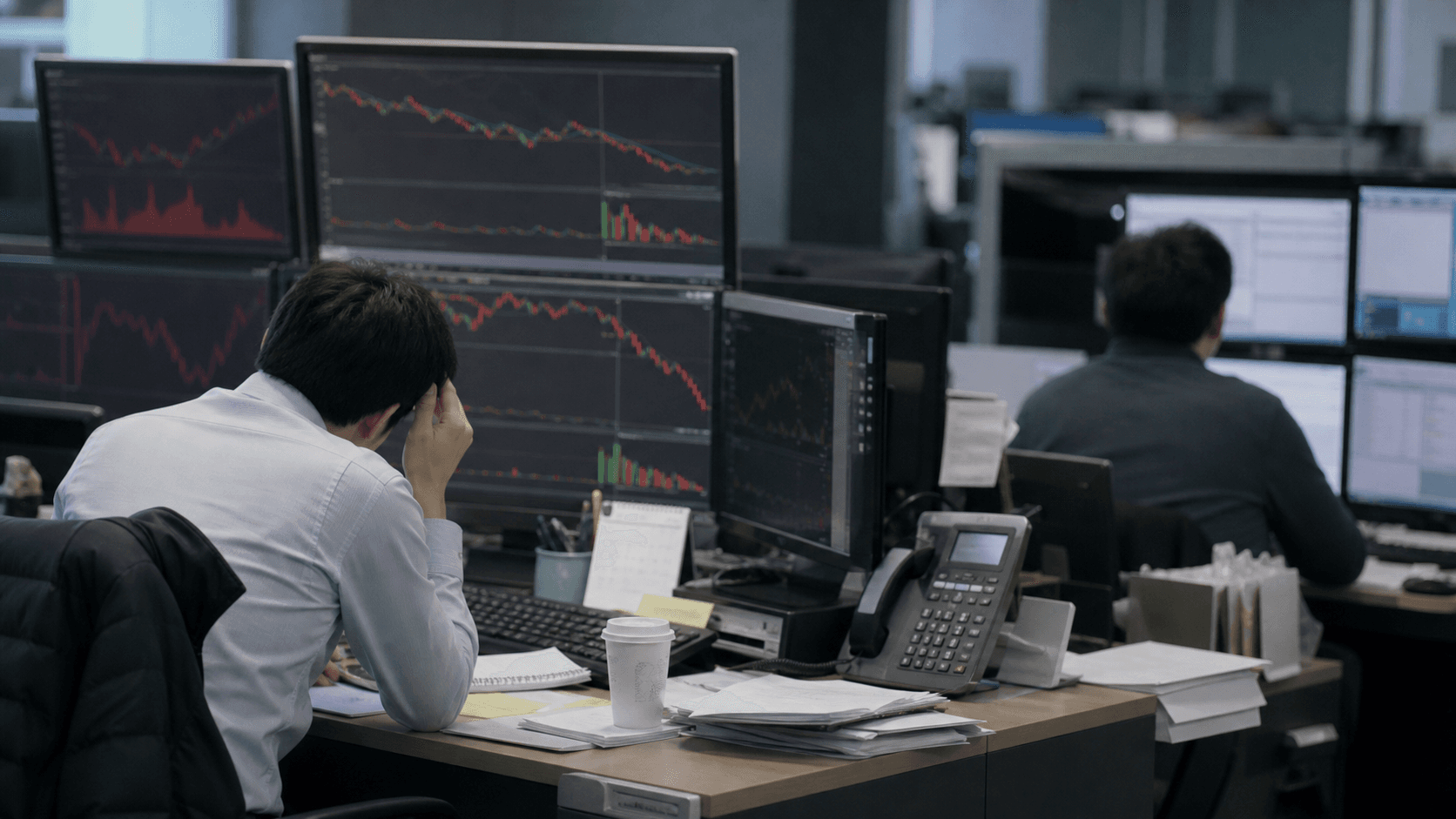
South Korea's benchmark index did not have a normal down day. The KOSPI closed down 8.29%, and the Korea Exchange activated a phase 1 circuit breaker that halted trading for 20 minutes, according to Chosun's June 8 market report.
Reuters reported that the index fell nearly 9% at one point as Samsung Electronics and SK Hynix dropped more than 10% each, after a stronger U.S. jobs report pushed investors toward the possibility of a more hawkish Federal Reserve. The same Reuters dispatch, carried by Investing.com, framed the move as a tech-heavy selloff tied to the AI rally's most crowded suppliers.
That matters for U.S. investors because Korea is not just another overseas market on a screen. It is one of the public market scoreboards for the memory supply chain behind AI servers.
##Why This Is An AI Concentration Story
The casual read is simple: hot U.S. labor data lifted rate fears, tech sold off, Korea caught the spillover.
The better read is sharper. AI has made parts of the global equity market less diversified than they look.
When Samsung Electronics and SK Hynix become the liquid way to express high-bandwidth memory demand, a country index starts behaving like a supplier basket. If the dollar-rate story changes, the market does not calmly separate "Korean domestic demand" from "AI memory cycle" from "global semiconductor valuation." It sells the package.
#How a U.S. jobs print reaches a Seoul trading desk
Picture a portfolio manager in New York holding a Korea ETF, a semiconductor basket, and a few AI infrastructure names. The May jobs report comes in stronger than expected. Treasury yields reprice. Nasdaq futures weaken. The manager does not need to call Seoul and debate Korean household income.
The first question is easier: where is the most liquid exposure to AI memory beta?
That answer runs straight through Samsung and SK Hynix. By the time Seoul opens, the local exchange is absorbing a decision made in a different time zone, in a different currency, off a different macro data point.
##Where The Circuit Breaker Changes The Signal
KRX's own trading guide says a Phase 1 market suspension is triggered when the KOSPI or KOSDAQ falls 8% or more versus the previous day and the decline lasts for one minute; the entire market is then suspended for 20 minutes.
That rule is important because it turns a price move into an operating event. A circuit breaker tells every fund, broker, market maker, and risk desk that the market is no longer just repricing; it is pausing the machinery.
For investors, the second-order message is not that circuit breakers are bad. They are there for a reason.
The message is that AI exposure can now push a national market into emergency plumbing faster than many asset allocators expect.
##Who Pays When AI Exposure Becomes Country Risk
The winners and losers are not limited to Korean chip shareholders.
The affected parties are broader:
- U.S. ETF holders who bought Korea as international diversification but got a semiconductor drawdown.
- AI infrastructure investors who thought they owned a supply-chain growth story but also own rate sensitivity.
- Korean companies outside chips that may face higher equity-risk premiums when the whole market trades as one crowded theme.
- Brokers and market makers that must manage liquidity when trading halts interrupt normal hedging.
This is why the KOSPI move belongs in a finance blog, not just a market-news recap. It shows how a popular investment theme can quietly rewrite the risk label on an entire market.
#The hidden cost is a higher discount rate on suppliers
AI bulls like to talk about server demand, model scale, and cloud capex. Those are real.
But public suppliers do not trade only on unit demand. They trade on the discount rate applied to that demand, the liquidity of the shareholder base, the currency channel, and the willingness of crowded funds to stay in the same exposure when rates move against them.
That is the hidden cost of concentration. The more one country becomes the clean public-market proxy for a hot global theme, the less local fundamentals get to set the daily price.
##What U.S. Investors Should Actually Watch
The useful question after the KOSPI halt is not whether Samsung or SK Hynix are "good companies." That is too easy and too slow.
The useful question is whether AI infrastructure exposure is being financed, indexed, and hedged as if it were diversified when it is actually clustered around a few suppliers, a few currencies, and a few macro triggers.
If the next AI selloff again starts with rates and lands hardest in the suppliers, the market is telling investors something plain: the AI boom is no longer just a capex story. It is a balance-sheet geography story.
#FAQ
Why did the KOSPI circuit breaker matter?
It showed that the June 8 selloff was severe enough to move from normal price discovery into exchange-level market suspension. Under KRX rules, an 8% index decline lasting one minute can trigger a 20-minute market halt.
Is this only a South Korea problem?
No. South Korea was the visible pressure point because Samsung Electronics and SK Hynix sit close to the AI memory supply chain. The broader issue is that global AI exposure is concentrated in a small number of suppliers and markets.
What should U.S. investors take away?
Owning the AI trade through indexes, ETFs, or supplier baskets can carry country, currency, liquidity, and rate risk. The label may say international diversification; the behavior may look like concentrated semiconductor beta.