FCPT's $26 Million Sun Auto Deal Turns Car Repairs Into Net-Lease Rent

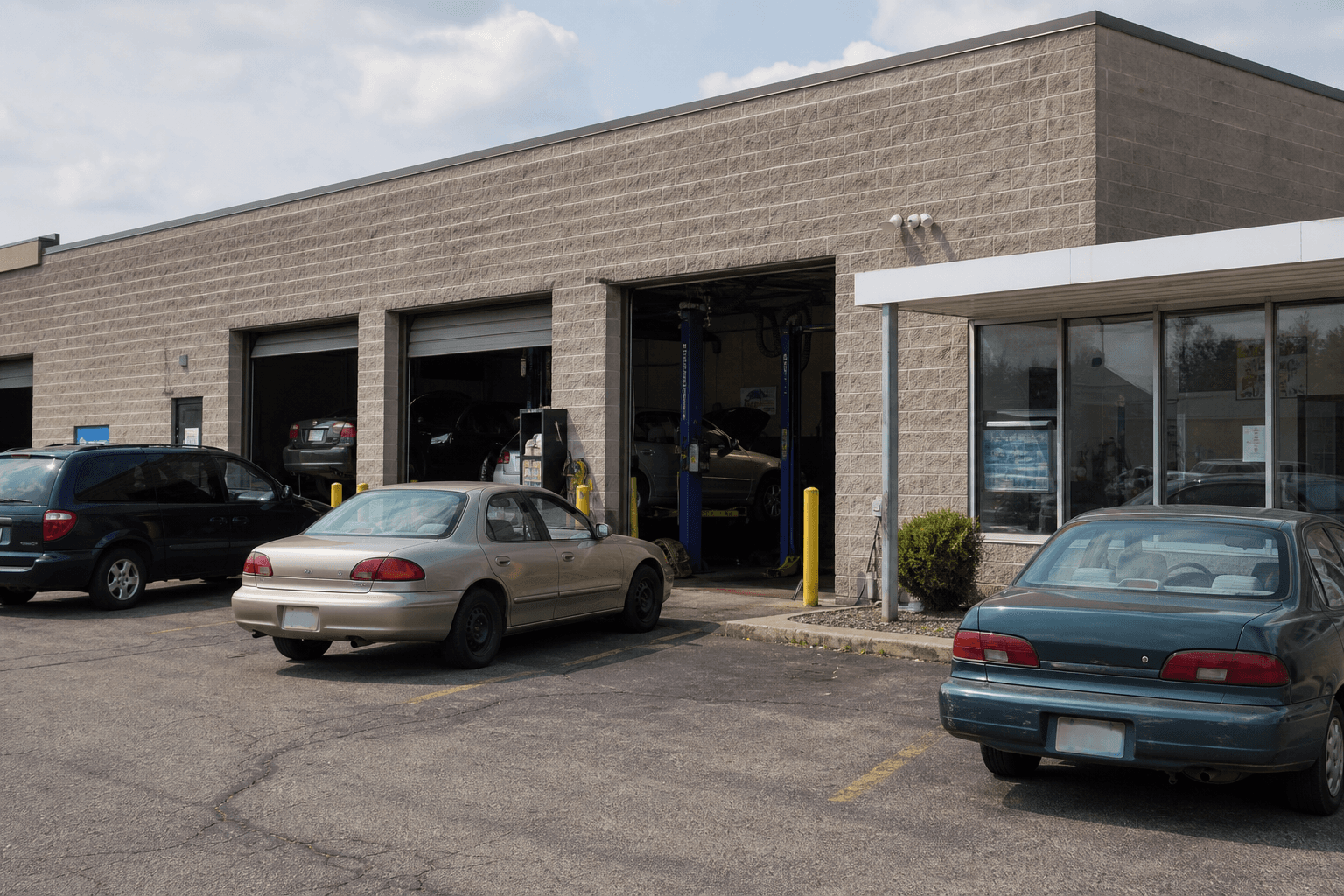
TL;DR: Four Corners Property Trust bought 14 Sun Auto Tire & Service properties for $26 million. The dollar amount is tiny, but the signal is not. Auto service bays are becoming a cleaner income stream than many flashier retail boxes because older cars, repair inflation, and local convenience give the landlord a tenant that customers still need even when discretionary spending gets pinched.
##What FCPT Actually Bought
FCPT is better known for restaurant real estate, but the company has been steadily buying service-oriented net-lease properties. This deal adds 14 Sun Auto Tire & Service locations and says something useful about where defensive retail income is migrating.
The obvious read is that FCPT bought another rent check.
The better read is that FCPT bought a small slice of household maintenance behavior.
#Why the tenant matters more than the storefront
An auto service shop does not need a customer to feel rich. It needs the customer to have a car that still has to start Monday morning.
That is the quiet advantage. A family can delay a new appliance, trade down at the grocery store, or skip a restaurant visit. A brake job, tire replacement, oil leak, or dead battery has a different urgency.
The landlord does not capture the repair margin directly. The landlord captures the durability of the repair workflow.
##Why Auto Service Real Estate Is Not Just Retail
Retail landlords usually talk about traffic. Auto service landlords should talk about necessity, local density, and bay utilization.
The U.S. vehicle fleet has become older, and S&P Global Mobility estimated the average age of cars and light trucks on American roads at 12.8 years in 2025. An older fleet does not automatically make every repair chain a winner, but it does create more recurring demand for parts, tires, diagnostics, and labor.
That changes the property math.
An empty soft-goods store can become many things. An auto service box is more specialized, but the specialization can be an asset when the tenant’s use is tied to repeated local need.
#The rent is backed by inconvenience
Picture the service counter on a normal weekday morning. Keys on the desk. A clipboard repair order. A customer trying to decide whether to approve the extra work because the car is already on the lift.
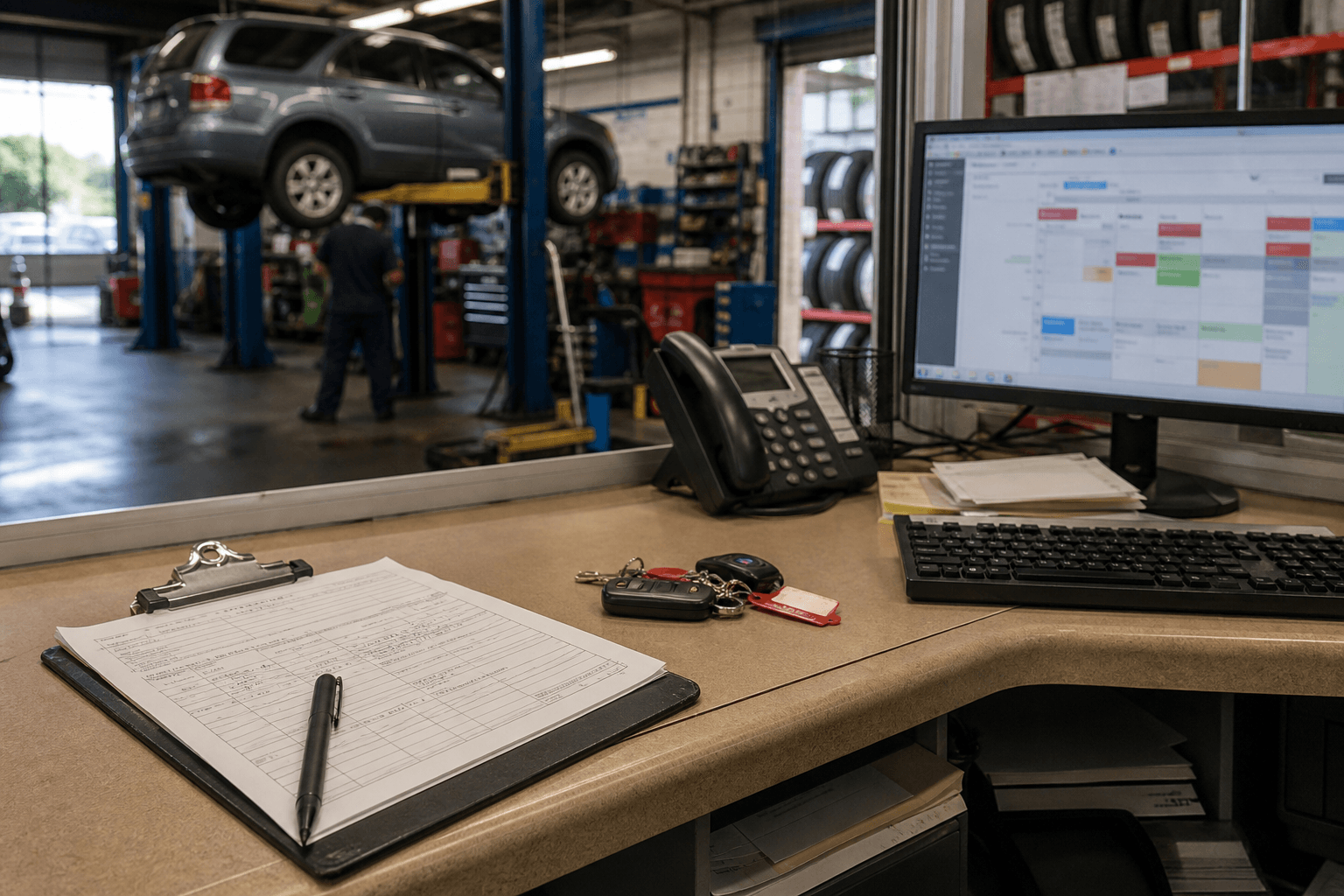
That is not glamorous consumer spending. It is household friction converted into a ticket.
For investors, the important point is that the customer is not walking in for entertainment. The customer is solving a transportation problem. That gives the operator a different kind of traffic than a discretionary retailer, and it gives the landlord a different kind of rent risk.
##Where The Inflation Mechanism Shows Up
Auto repair has also been a stubborn inflation pocket. The Bureau of Labor Statistics CPI data showed motor vehicle maintenance and repair prices up meaningfully from pre-pandemic levels, even as some goods categories cooled.
That matters for two reasons.
First, higher repair bills can pressure customers. A household with weak savings may postpone non-urgent work or use credit to keep the car running.
Second, price inflation can support operator revenue if volume holds. That is the part real estate investors care about. The tenant’s ability to absorb labor, parts, and rent costs depends less on mall traffic and more on whether the local car park keeps generating unavoidable jobs.
The simplest version:
- Older vehicles create more repair occasions.
- Repair occasions create local service visits.
- Local service visits support bay utilization.
- Bay utilization supports tenant rent coverage.
- Rent coverage supports the net-lease investor’s dividend story.
None of this makes auto service recession-proof. It makes the category easier to underwrite than a retailer whose traffic depends on mood, fashion, or cheap financing.
##Who Benefits From Boring Maintenance Demand
FCPT benefits if it can keep buying small pools of necessary-service real estate without overpaying for the safety story. The company’s first-quarter materials show a portfolio still anchored by restaurants, with acquisitions used to broaden the rent base beyond one consumer lane.
The tenant benefits if the shop network stays close to daily driving routes. Auto repair is local in a very literal sense. Customers do not want a cheaper tire rotation across town if the car is already making a noise near home.
The customer gets less of a win. Aging-car economics often mean the household is choosing between a payment on a newer vehicle and a rising repair bill on the old one. The shop may be convenient, but the invoice is still real.
That is the uncomfortable business model. The better the “keep the car longer” cycle gets for service demand, the more it says about the pressure on household balance sheets.
##What Investors Should Not Overread
This is a $26 million transaction. It will not change FCPT’s dividend profile by itself. It also does not prove that every tire store or repair bay deserves a premium multiple.
The risk is that investors discover the category late and bid it up as if necessity eliminates execution risk. It does not.
Auto service operators still face wage pressure, technician shortages, parts availability, insurance costs, and local competition. A landlord can own a good box and still have a tenant with margin stress.
The sharper lesson is narrower: in a consumer economy where many retailers need shoppers to feel confident, auto service needs them to keep old cars usable. That is a different demand curve, and it is exactly why small net-lease deals like this deserve more attention than their size suggests.
##The Small Deal With A Bigger Tell
The market usually rewards big announcements because they are easy to see. But sometimes the useful signal is tucked into a small property deal.
FCPT’s Sun Auto purchase is one of those signals. It says the investable consumer is not always the shopper buying more. Sometimes it is the driver trying not to buy a new car at all.
That is less exciting than a growth story. It may also be more honest about the U.S. consumer right now.
#FAQ
Why does FCPT's Sun Auto deal matter?
It shows how net-lease investors are moving toward service categories where demand is tied to necessity rather than discretionary shopping. Auto repair has more recurring local need than many retail formats.
Is auto service real estate recession-proof?
No. Repair customers can defer non-urgent work, and operators still face labor and parts cost pressure. The point is that basic vehicle maintenance has a more durable demand base than many optional purchases.
What is the main investor risk?
The risk is overpaying for “defensive” rent. A specialized auto service property can be attractive, but the lease is only as good as tenant coverage, local demand, and replacement value.