The S&P 500 Is Turning Into a Consumer-and-AI Trade


UBS lifting its S&P 500 target is not really a story about one number. It is a story about what investors are willing to believe right now.
The bank's wealth management arm reportedly moved its 2026 year-end S&P 500 target from 7,500 to 7,900. The stated logic is straightforward: U.S. consumers are still spending, corporate earnings have held up better than feared, and AI infrastructure demand keeps pulling capital into data centers, chips, cloud capacity, power equipment, and networking gear.
That combination matters because it gives the market two different engines. Consumer spending protects the floor. AI spending lifts the ceiling.

The consumer side is less glamorous, but it may be the more important half of the trade. For the last few years, investors have kept waiting for the American household to finally break. Credit card balances are higher. Rent is still uncomfortable. The cost of financing almost anything has gone up. None of that is imaginary.
But markets do not price discomfort. They price breaks. As long as employment, wages, and service spending do not fall apart, revenue estimates for large U.S. companies remain defendable. That gives investors permission to keep paying high multiples, even when valuations already look stretched.
The AI side is different. It is not about resilience. It is about appetite.
The current AI cycle is no longer just a software story or a model story. It has become an infrastructure story. Every serious AI plan needs compute. Compute needs chips. Chips need data centers. Data centers need power, cooling, land, fiber, transformers, and an enormous amount of capital.
That is why AI keeps showing up in market targets. It is not because every company has a perfect AI product. It is because the buildout itself is big enough to move earnings expectations across several industries.
The important question is whether Wall Street is still valuing AI as a dream or starting to value it as a cash-flow machine. Those are very different markets.
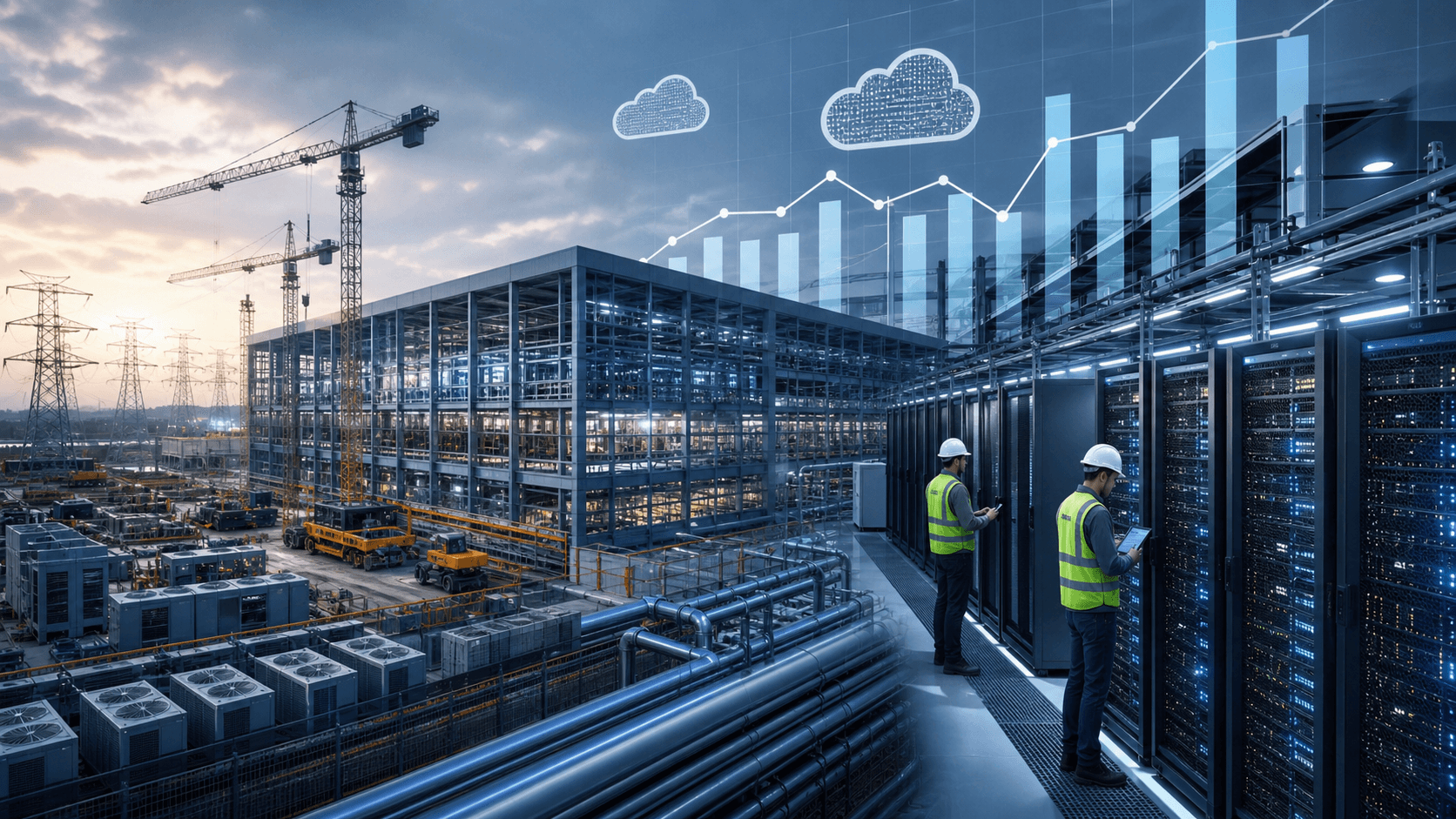
In the dream phase, investors reward spending because spending signals ambition. In the cash-flow phase, investors ask whether that spending produces revenue, margin expansion, and durable customer demand. The market can live with heavy capital expenditure. It has a harder time living with heavy capital expenditure and vague returns.
That is the tension inside this rally. The S&P 500 can keep moving higher if both sides cooperate: the consumer avoids a hard landing, and AI capex continues to look productive. If either side weakens, the index suddenly looks much more expensive.
I would not treat a 7,900 target as a forecast carved into stone. Price targets are more like a map of assumptions. This one assumes that consumer demand stays good enough, corporate margins stay good enough, and the AI buildout stays exciting enough to justify the premium.
That is a lot of good enough.
The next few quarters should be less about headline AI announcements and more about plumbing. Watch cloud revenue. Watch data center backlogs. Watch power constraints. Watch whether enterprise AI tools are moving from pilots into daily operations. Watch whether chip demand spreads beyond the biggest hyperscalers.
Also watch the consumer. Retail sales, travel spending, delinquencies, payrolls, and wage growth will matter more than another round of market slogans. If the household slows gradually, the market can probably handle it. If spending cracks quickly, earnings estimates will have to come down.
My read is simple: this is still a bull market, but it is a more demanding one than the index level suggests. Investors are no longer just buying rate-cut hopes. They are buying a very specific story: the American consumer stays alive, and AI infrastructure keeps turning capital into growth.
That story can work. It just cannot afford many broken pieces.