Luxury Retail Is Following AI Wealth, Not Consumer Confidence

TL;DR: European luxury brands are pushing harder into the United States because the best consumer story in 2026 is not broad U.S. confidence. It is the concentration of fresh wealth in a handful of American zip codes tied to tech and AI. That is why store openings, fashion shows, and flagship leases matter more here than another survey about luxury sentiment.
The easy read is that luxury groups are just following rich Americans. The more useful read is that they are following a new map of liquidity. When AI wealth is being created faster than middle-market spending is recovering, the luxury business stops behaving like a global brand story and starts behaving like capital allocation around very specific pockets of demand.
#The Real Bet Is On Geography, Not Glamour
Reuters reported that European luxury houses are increasing U.S. store openings and events to attract shoppers enriched by the AI and tech boom while confidence elsewhere stays softer. That sounds like a style story.
It is really a real-estate and customer-density story.
If a brand is willing to spend on Fifth Avenue, Aspen, Dallas, and California flagships while the rest of the consumer economy still looks uneven, it is saying something precise: the next dollar of profitable growth is expected to come from places where wealth is compounding faster than sentiment data can capture.
#Fifth Avenue Is Doing The Talking
Moncler said its new Fifth Avenue location in New York would be the largest store in its global network. That is not a defensive move.
It is an expensive statement about where management thinks demand will justify permanent capital.
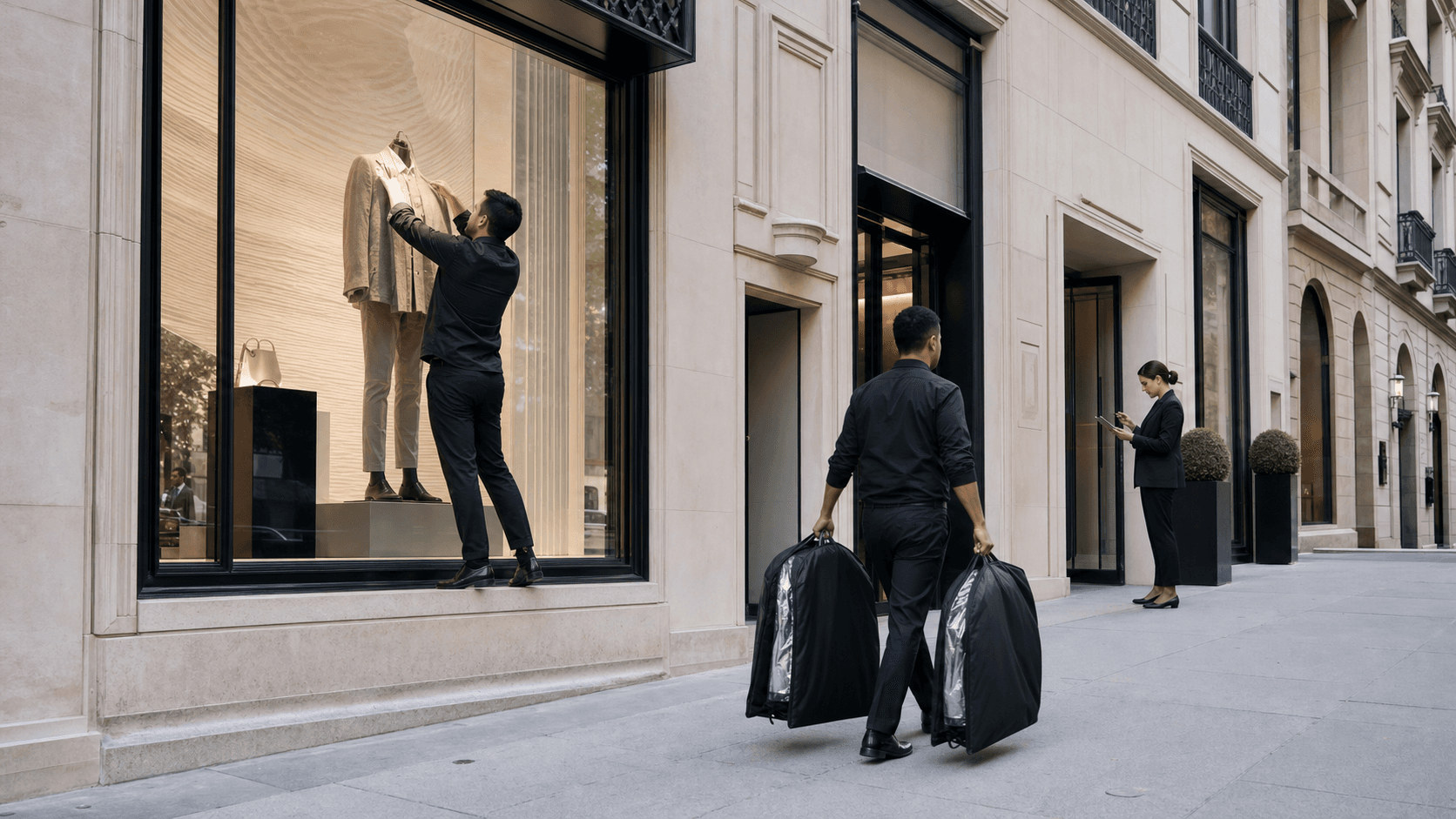
Moncler also used Aspen as part of its U.S. push, pairing a branded event with its first American Moncler Grenoble flagship. The scene worth picturing is not a runway shot. It is a store director looking at appointment books, hotel traffic, and repeat local clients in places where stock-market wealth still turns into discretionary spending.

#Why this matters more than another rich-people anecdote
Luxury has always depended on wealth concentration. What feels different now is how directly brands are organizing around American wealth nodes tied to technology, financial markets, and low-tax migration.
That matters because it makes the luxury recovery narrower, but also more investable.
#The Department Store Middle Is Getting Bypassed
There is a second-order implication here that casual readers miss.
When luxury brands lean harder into directly operated flagships, clienteling, and destination events, they are not just chasing sales. They are quietly routing around the old department-store model and keeping more control over price, data, and customer relationships.
That is happening at the same time much of mass and mid-market retail still looks fragile.
So the real split is not simply rich shoppers versus everyone else. It is direct luxury ecosystems versus the older wholesale-heavy distribution layer that used to intermediate high-end demand.
#That helps explain the U.S. winners list
Ralph Lauren's fiscal 2026 results showed North America operating income of $724 million and an operating margin of 21.8%, while Tapestry said North America revenue rose 20% in constant currency in its fiscal third quarter. Those are not identical businesses, but they point in the same direction.
The U.S. luxury customer is not just spending. The U.S. luxury customer is easier to build an operating model around right now than a softer, more fragmented global customer base.
#This Is A Consumer Bifurcation Story In Disguise
The headline might sound bullish for American consumption. I do not think that is the right takeaway.
It is bullish for a narrow slice of American consumption that sits close to equity wealth, tech compensation, and premium real estate corridors.
That distinction matters.
If luxury brands are moving capital toward the United States because AI-rich households can still absorb price, service, and exclusivity, then the signal is not that the consumer is healthy. The signal is that the top of the consumer stack remains liquid enough to fund physical expansion even while the broader economy still feels patchy.
This is why the Reuters story matters outside fashion.
It tells you where global brands think spend is most dependable. And right now, the answer is not "the American consumer" in the abstract. It is a smaller map: Manhattan corridors, resort enclaves, top-tier malls, and the neighborhoods where tech wealth has turned into shopping behavior fast enough to justify flagship rent.
#What Investors Should Actually Watch
The best way to read this trend is not by counting handbags. Watch where the leases go, where the event calendars move, and which companies can turn wealthy U.S. traffic into direct full-price sales.
That is the business model shift hiding inside the luxury headline.
If this push keeps working, luxury retail in 2026 will look less like a global rebound and more like a selective Americanization of profit pools:
- More capital aimed at U.S. flagships and fewer assumptions about broad-based global normalization.
- More direct selling and client ownership, with less dependence on wholesale middlemen.
- More value in place selection, CRM discipline, and traffic quality than in simple unit growth.
- More evidence that AI wealth is already reshaping physical retail, not just software valuations.
The odd twist is that luxury may be giving one of the cleanest real-world readings on where AI money is landing first. Not in a chatbot dashboard. In the rent someone is willing to pay on Fifth Avenue.
#FAQ
Why is this a finance or business story instead of a fashion story?
Because the key signal is where brands are putting capital, signing leases, and expecting durable high-margin demand. That is a portfolio-allocation question, not a style question.
Does this mean the U.S. consumer is broadly strong?
No. It suggests affluent U.S. demand tied to market and tech wealth is stronger than the broader consumer backdrop, which is exactly why luxury brands are getting more selective about geography.
Why does direct retail matter here?
Direct retail lets brands keep pricing control, gather customer data, and capture more margin. In a narrower recovery, that control becomes more valuable than broad but weaker wholesale distribution.