HPE's AI Backlog Is Starting To Look Like Procurement


TL;DR: Hewlett Packard Enterprise's June 1 quarter looked like another AI infrastructure winner, but the most useful detail sat inside the backlog. HPE said it now has more than $6.3 billion in AI backlog, with 61% of cumulative order mix booked in sovereign and enterprise customer segments. That shifts the story. The next phase of the AI buildout is starting to look less like hyperscaler bravado and more like procurement.
##What The Quarter Actually Said
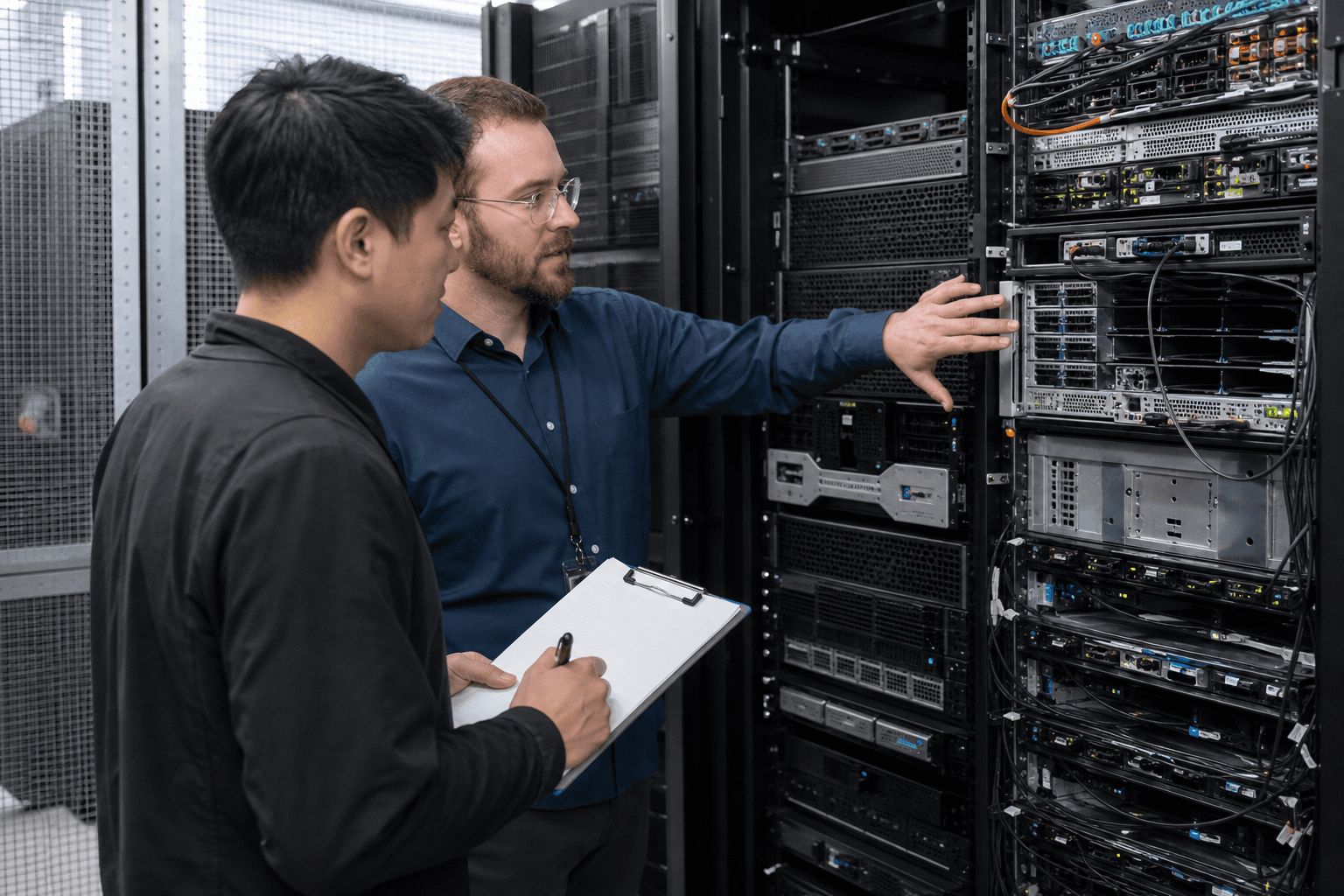
The easy scene is a rack of liquid-cooled servers in a data-center aisle.
The better scene is a buyer on the other side of that rack: a government lab, a national-research center, a large enterprise IT team, or a procurement committee trying to sign off on a system that will sit on the balance sheet for years.
That is why HPE's latest quarter matters. The company reported revenue of $10.678 billion, up 40% year over year, while its Cloud & AI segment grew 23% and networking revenue jumped 148%. Reuters also reported that HPE raised its fiscal 2026 revenue-growth outlook to 29% to 33% and that CFO Marie Myers said the quarter's strength was "really focused on enterprise customers" as agentic AI became a core workload inside those accounts.
That last point is the real story.
##Why The Backlog Mix Is More Interesting Than The Revenue Beat
Investors already know hyperscalers are spending absurd amounts on AI infrastructure. That has been the headline for months.
What they have been less sure about is who comes next.
HPE gave a cleaner answer than most companies do. In its earnings presentation, management said AI backlog topped $6.3 billion, with 61% of cumulative order mix coming from sovereign and enterprise customers. It also said the pipeline for Networks for AI and AI Systems remains multiples of backlog.
That matters because sovereign and enterprise buyers behave differently from the big cloud platforms.
- They move slower.
- They care more about compliance, data location, financing, and integration.
- They do not buy capacity only to win a model race. They buy to solve a workflow, secure a dataset, or satisfy a board-approved modernization plan.
In other words, this is not just speculative capex anymore. It is entering the purchasing bureaucracy.
##What Changes When AI Spending Starts Going Through Procurement
Procurement is not glamorous, but it is where real business models get tested.
An enterprise or sovereign customer can make the AI story sturdier in one sense and messier in another.
The sturdier part is obvious. A government lab, hospital network, or multinational company usually does not place a giant systems order because a CEO got excited for one quarter. These budgets often survive longer than equity-market moods do.
The messier part is that procurement money comes with friction. Delivery schedules matter more. Networking, cooling, security, and service layers matter more. Vendor financing matters more. So does the ability to prove the system will actually run inside an existing stack rather than in a demo environment.
That is good news for HPE specifically because it sells more than a box. The company can pair compute, storage, networking, private cloud, and service contracts into one enterprise sale. Reuters noted that HPE is benefiting from demand for both servers and networking products, and the company has been using the Juniper acquisition to widen that pitch.
#This is where "AI infrastructure" turns into workflow revenue
A hyperscaler order can be huge, but it can also be lumpy and headline-driven.
A broader base of sovereign and enterprise buyers creates a different economics. It spreads demand across more accounts, but it also forces vendors to behave like integrators, financiers, and long-cycle account managers.
That is a less cinematic business. It is also a more durable one if execution holds.
##Why This Matters For Investors Beyond HPE
The market has spent most of 2026 arguing about whether AI capex is too high.
That is still the wrong argument.
The better question is where the spending is migrating. If it stays concentrated in a few giant cloud buyers, the whole trade remains vulnerable to a handful of management teams changing tone. If it starts diffusing into sovereign and enterprise procurement desks, the revenue base gets wider, but the winners become the vendors that can survive longer sales cycles and deliver full systems, not just components.
That helps explain why HPE's quarter hit differently from a normal hardware beat. This was not only about more servers leaving the warehouse. It was about evidence that AI demand is leaking into ordinary institutional budgeting.
#The hidden risk is that backlog is not the same thing as smooth conversion
HPE itself notes that backlog can move around because of delivery schedules, rebookings, cancellations, and fulfillment timing.
So the bullish read should stay disciplined. Procurement-led AI demand is probably stickier than pure hype. It is not automatically faster, cleaner, or higher margin every quarter.
Still, the direction matters. When AI spending starts showing up in sovereign and enterprise purchase orders, the boom stops looking like a private moonshot and starts looking like an installed base.
##What Most Readers Are Missing
The AI buildout is getting boring.
That is bullish.
The market still talks about AI as if the important scene is a founder demo, a blockbuster model launch, or a hyperscaler capex slide. HPE's quarter suggests the more important scene may now be a procurement office deciding whether an AI cluster, networking upgrade, and service contract belong in next year's budget.
Once that happens, the story changes from excitement to plumbing.
Plumbing is where durable spending usually lives.
#FAQ
Why does HPE's backlog mix matter?
Because HPE said more than 61% of its cumulative AI order mix comes from sovereign and enterprise customers, which suggests AI infrastructure demand is spreading beyond the biggest cloud platforms into slower but potentially stickier institutional buyers.
Is this just another AI server boom story?
Not quite. The sharper angle is that AI spending is starting to flow through procurement-heavy buyers that care about integration, compliance, networking, financing, and services, not only raw compute demand.
What is the main risk in reading the quarter too positively?
Backlog is not booked revenue. Delivery timing, cancellations, rebookings, and fulfillment issues can still affect conversion, so investors should treat the mix shift as a useful signal, not a guaranteed straight-line growth path.