Newark's CBP Threat Turns Border Processing Into a Revenue Risk

TL;DR: A May 29 warning over removing U.S. Customs and Border Protection officers from Newark Liberty International Airport is not just an airport-politics story. It is a reminder that border processing is a revenue system. If Newark loses international passenger and cargo processing capacity, airlines, hotels, exporters, local employers, and World Cup demand all inherit a new operating risk: the gate can be open, but the business still cannot clear.
##What Happened at Newark Liberty
The U.S. Travel Association warned on May 29 that removing CBP officers from Newark Liberty International Airport could cost an estimated $8 billion in annual international visitor spending and put nearly 50,000 American jobs at risk.
That number is easy to treat as industry lobbying. It should not be dismissed so quickly.
Newark is not just a place where passengers wait too long after landing. It is a processing node for returning Americans, international visitors, airline schedules, hotel bookings, airport concessions, and air cargo. U.S. Travel said CBP officers at Newark alone process 5 million Americans returning home each year.
#Why a staffing threat becomes a commercial threat
Reuters reported that the Department of Homeland Security threat involved stopping international traveler and cargo processing at Newark because of a dispute over local cooperation with federal immigration enforcement. The political fight is loud. The business mechanism is quieter and more important.
International flights do not become valuable merely because a wide-body aircraft arrives at a gate. They become valuable when passengers and cargo clear into the country on a predictable clock.
##Why Border Processing Is a Revenue Line
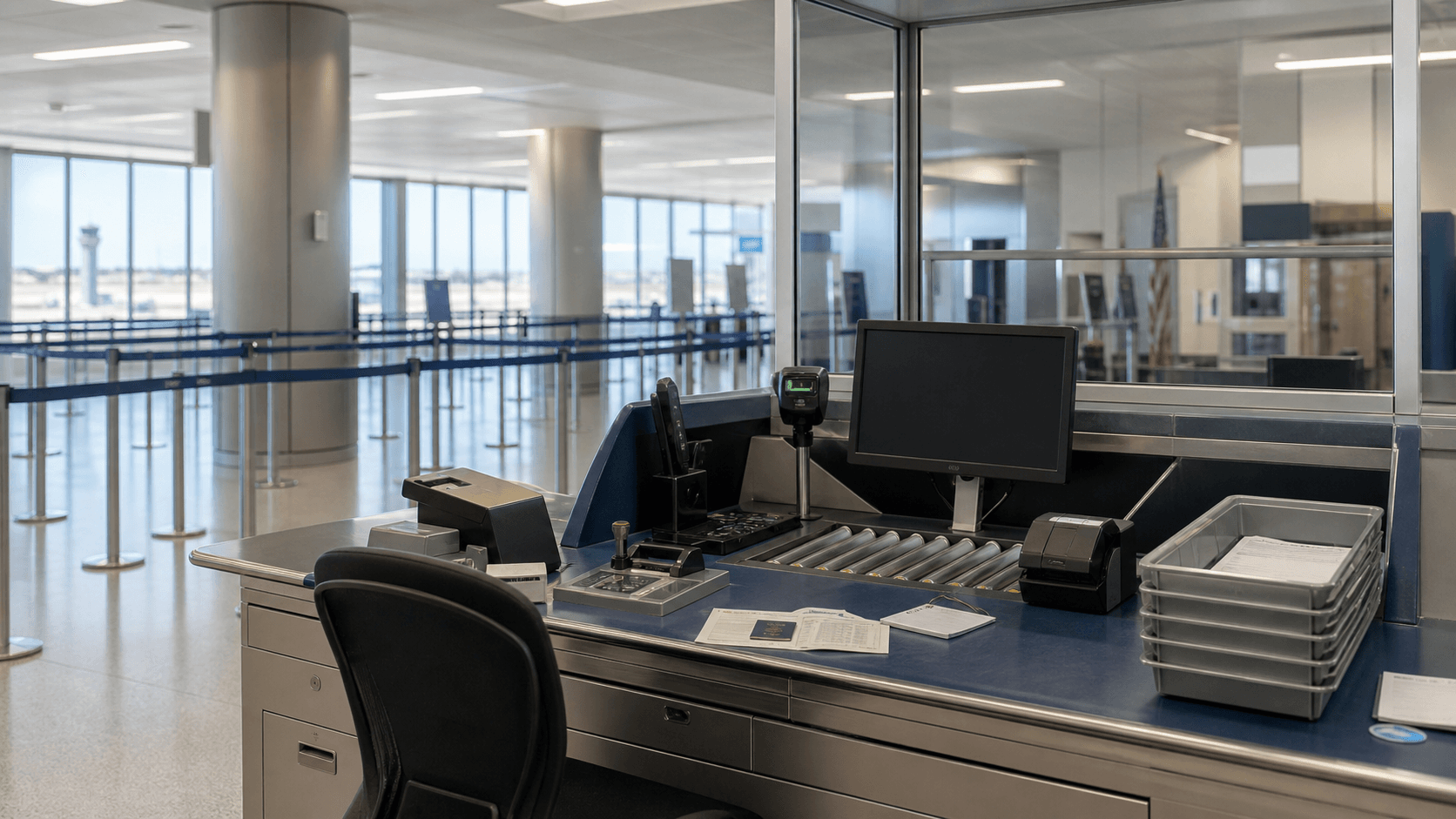
Think about the ordinary scene at an international arrivals desk.
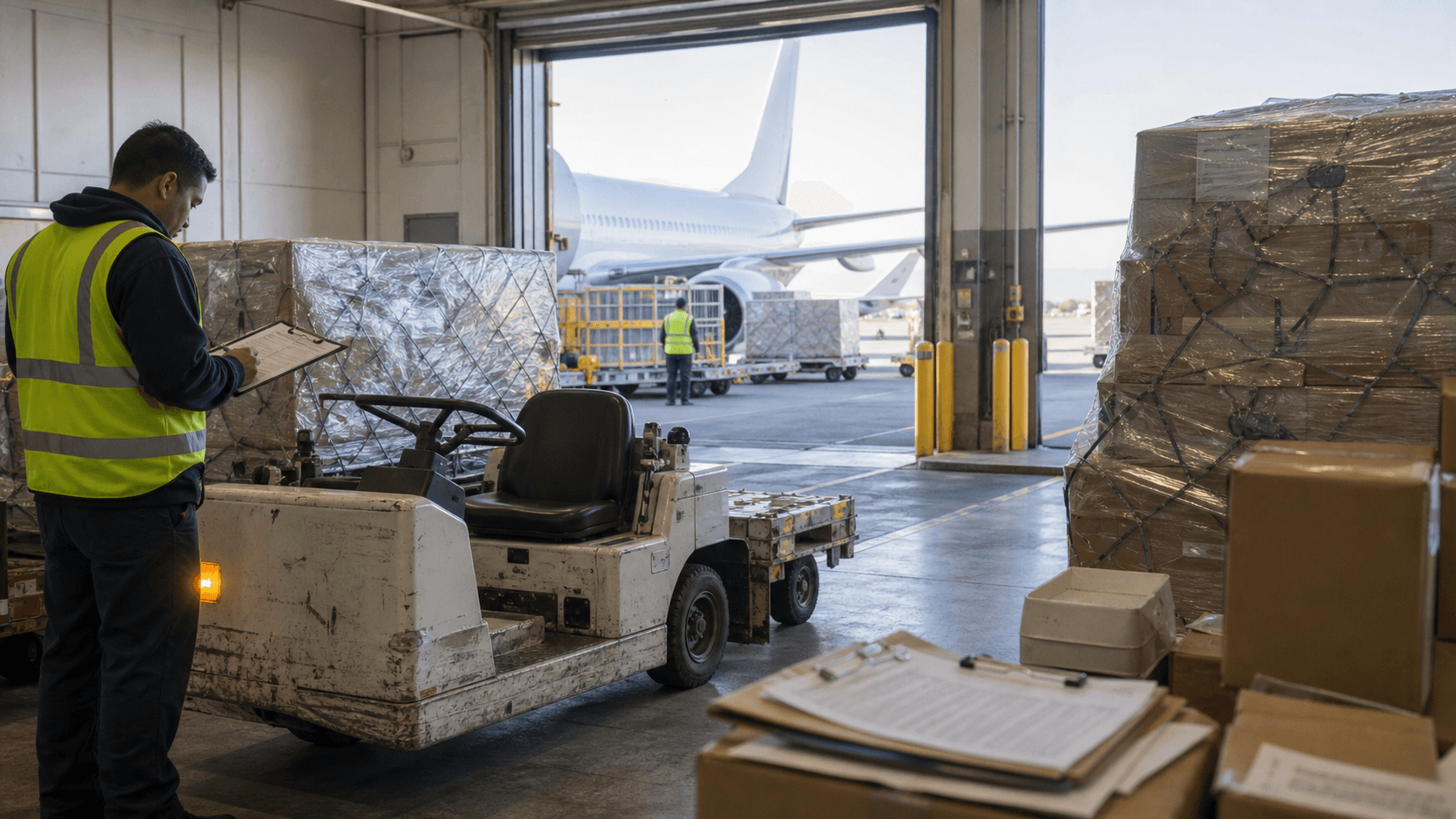
A traveler has a hotel reservation in Manhattan, a restaurant booking, a rental car, a connecting flight, and maybe a conference badge for the next morning. Behind the same airport, cargo pallets are waiting for release into regional distribution. The processing step looks like paperwork, but it is actually the handoff where planned spending becomes usable demand.
When that handoff breaks, the cost does not stay inside the terminal.
It moves through:
- Airlines, which may need to reroute aircraft, rebook passengers, and protect crew schedules.
- Hotels and event operators, which lose high-value international guests first.
- Cargo shippers, which can pay more for substitute routing or lose time-sensitive delivery windows.
- Local employers, which feel the hit through airport labor, transport, food service, and tourism demand.
This is why the Newark warning matters for investors. The relevant asset is not only the airport. It is the reliability of the clearance layer attached to the airport.
##Where the Timing Gets Expensive
Newark already sits inside a crowded New York-area travel system. The Port Authority said Newark Liberty had its third-busiest year in 2025, even after operational disruptions during the year.
Now add the calendar.
The 2026 FIFA World Cup final is scheduled for July 19 at New York New Jersey Stadium in East Rutherford, roughly the kind of mega-event that turns normal gateway friction into a pricing and capacity problem. Fans do not only buy match tickets. They buy hotel nights, transit, meals, merchandise, and side trips.
#The World Cup makes delay more valuable
Scarcity changes behavior before the official disruption arrives.
If overseas travelers believe Newark may become unreliable, some will reroute through JFK, Philadelphia, Boston, or Washington. Some will pay more for certainty. Some will skip the trip or shorten it. Businesses that sell to those travelers may not know which demand disappeared until after the booking window closes.
That is the underappreciated point: uncertainty itself can tax the travel economy before a single officer is reassigned.
##Who Pays if Newark Becomes Less Predictable
The immediate losers are not abstract.
United Airlines has a major Newark presence. Hotels in New Jersey and New York depend on international arrivals around peak events. Airport retailers and food-service operators need passenger flow, not just nominal flight capacity. Freight forwarders need customs processing that matches delivery promises.
But the wider lesson reaches beyond Newark.
In a service economy, the bottleneck is often a permission step. A card authorization. A prior authorization. A port inspection. A customs clearance. A settlement account. The physical asset can look healthy while the business model is constrained by a gatekeeper workflow.
Airport investors usually talk about terminals, slots, runways, concession revenue, and airline mix. Newark is a reminder to add one more line: clearance resilience.
##What Casual Readers Are Missing
The tempting reading is that this is a fight about immigration policy using an airport as leverage.
The sharper business reading is that inbound travel is a fragile services export. The United States does not simply sell flights and rooms to foreign visitors. It sells confidence that the trip will work.
If that confidence weakens, the revenue loss is not limited to one airport or one week of delays. It shows up as lower booking conversion, higher routing costs, more conservative event planning, and a discount on cities that look operationally unpredictable.
That is why the $8 billion figure is useful even if the exact estimate is debatable. It forces the right question: what is the market value of a border process that travelers never notice when it works?
#FAQ
Why is Newark Liberty important to the travel economy?
Newark Liberty is a major New York-area international gateway. U.S. Travel says CBP officers there process 5 million returning Americans annually, and the airport supports passenger, cargo, hotel, retail, and event-related spending across the region.
Is this only a political story?
No. The trigger is political, but the financial mechanism is operational. If international passengers or cargo cannot clear predictably, airlines, hotels, shippers, and local employers bear the cost.
What should investors watch next?
Watch whether this stays a threat or becomes an actual processing constraint. The key signal is not rhetoric; it is whether airlines, travel sellers, and cargo operators start changing schedules, routing, prices, or customer guidance around Newark.