SoftBank's France Bet Says AI Will Follow the Grid

TL;DR: SoftBank says it will invest up to €75 billion to build 5 gigawatts of AI data center capacity in France, with an initial €45 billion first phase in Hauts-de-France. The easy read is that Europe just got a big AI headline. The more important read is that AI infrastructure is starting to chase places that can sell electricity, permits, land, and industrial assembly as one package.
#The revealing scene is not in a lab
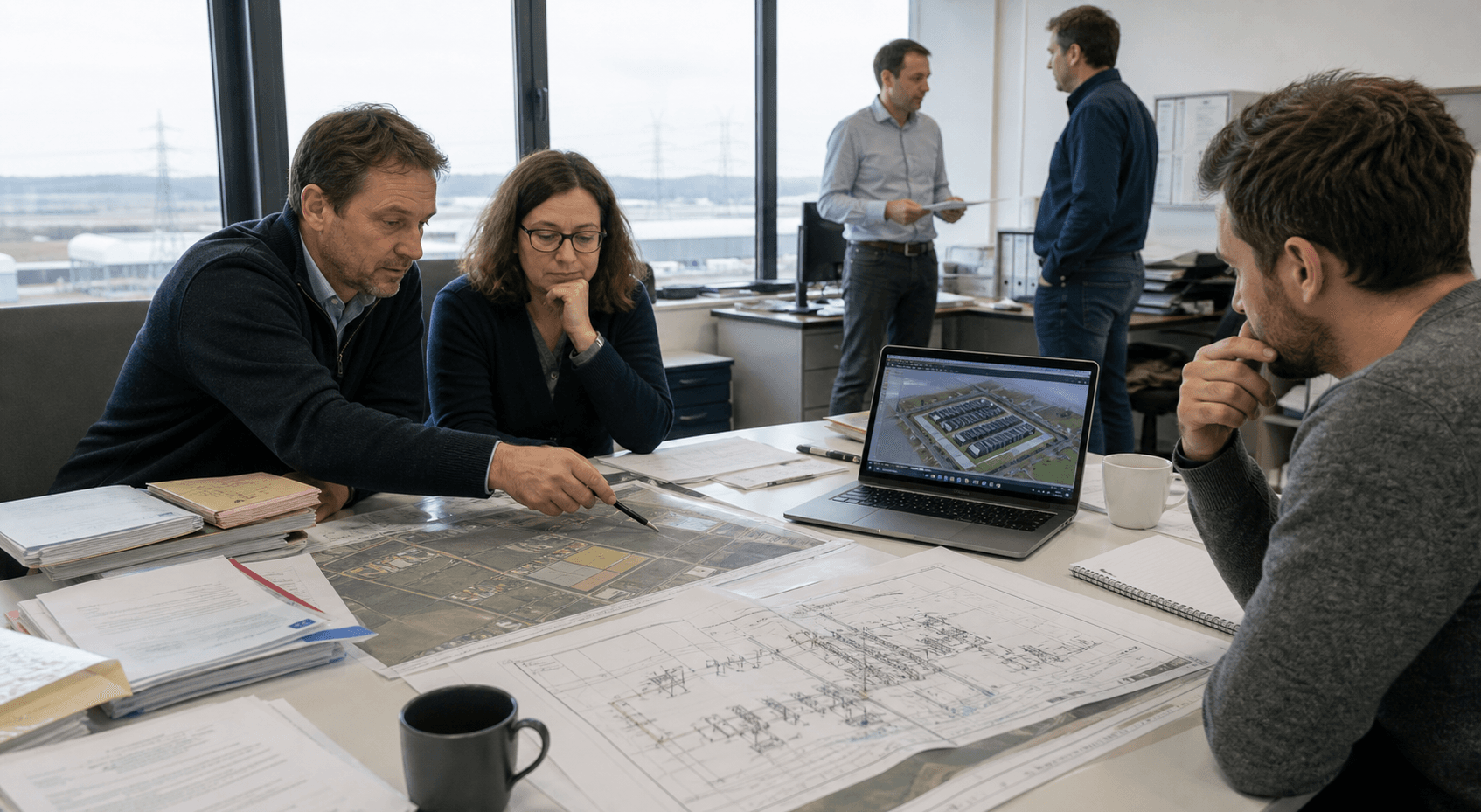
The most important AI sales meeting in this story probably does not happen between a model team and a cloud architect.
It happens in a room with utility maps, substation timelines, port logistics, and a spreadsheet showing when a site can actually go live.
That is what makes SoftBank's France move more interesting than another splashy capex number. In its own announcement, the company tied the buildout not just to compute demand, but to specific industrial assets: 3.1 gigawatts in the first phase across Dunkirk, Bosquel, and Bouchain, plus partnerships with EDF for the Bouchain site and Schneider Electric for power-module integration and enclosure manufacturing in Dunkirk.
This is not “build some data centers and hope demand shows up.” It is industrial site selection dressed as AI ambition.
#Why France won this pitch
Reuters' reporting put the commercial logic in plain English. Masayoshi Son said France's appeal was that the country is “a producer and exporter of energy”, and that fact was decisive for AI infrastructure investment.
That is the line people should sit with.
For years, tech investors treated AI capacity like a software scaling story. Raise capital, buy chips, rent more cloud, keep going.
But once multi-gigawatt projects become the unit of competition, the scarce resource is not imagination. It is deliverable power. It is whether the local grid can handle the load, whether the land is ready, whether factories can assemble the electrical guts fast enough, and whether government will move quickly instead of turning the site into a five-year permitting argument.
France is pitching exactly that bundle. The country's economy ministry described the win as proof of fast access to a reliable electrical grid, industrial land, and a state willing to accelerate strategic projects. In other words, France is not just selling tax incentives. It is selling deployment certainty.
#This changes what “AI capex” really means
If that reading is right, then AI spending is maturing out of a pure semiconductor story and into a location business.
The winners are no longer just whoever can finance the most GPUs.
They are whoever can turn power access into a contractable product:
- utilities that can promise credible load growth,
- industrial regions with pre-cleared land and transmission,
- equipment suppliers that can compress build timelines,
- governments that can package permits and infrastructure without chaos.
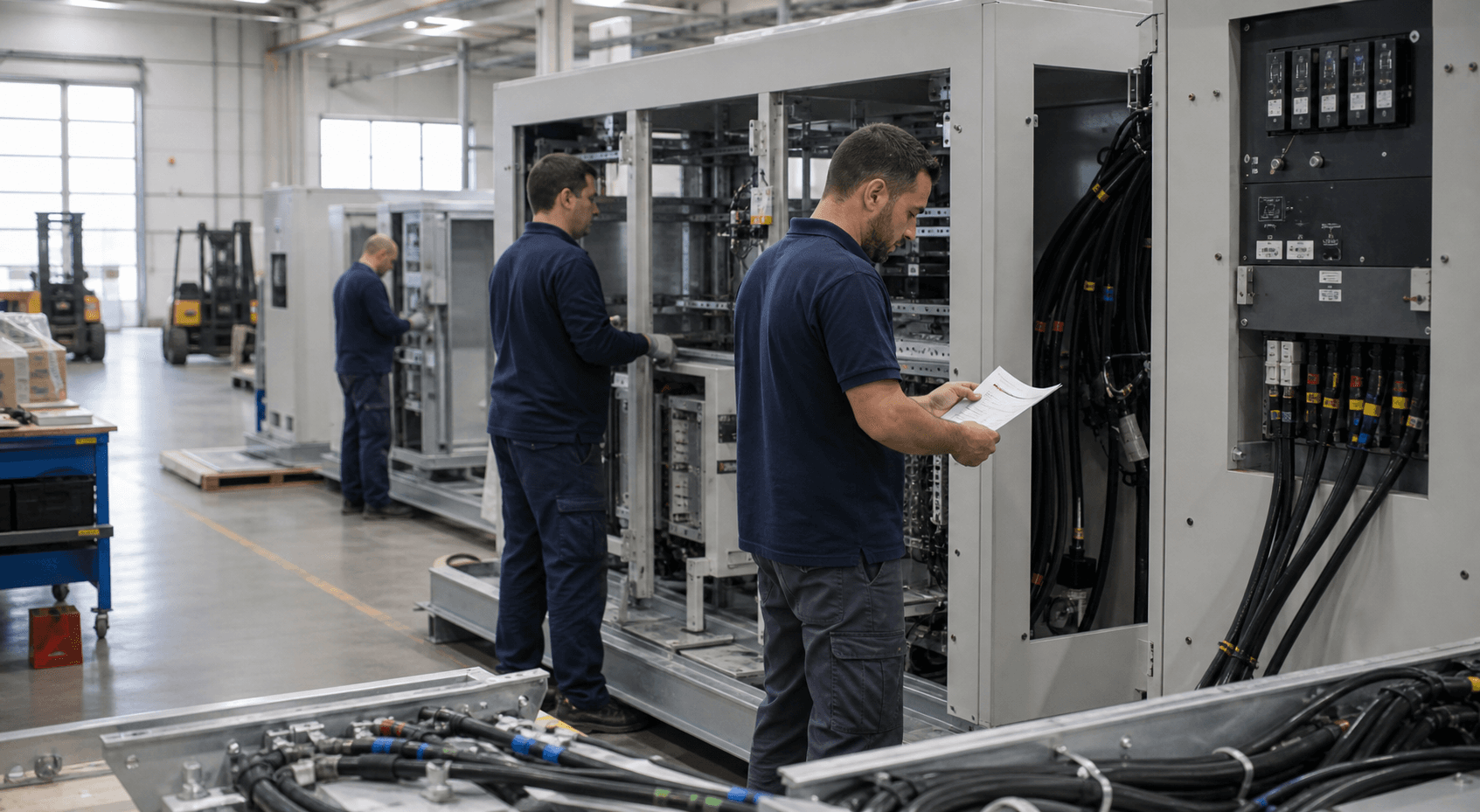
That is why SoftBank's announcement spent real space on Schneider Electric's prefabricated power modules and local manufacturing in Dunkirk. The bottleneck is shifting downstream from “who has chips?” to “who can turn chips into operating capacity on schedule?”
#The twist is that AI is becoming an export-market story
American readers should not treat this as a France-only curiosity.
This is what a real AI infrastructure competition looks like once the spending stops being theoretical. Countries and regions start marketing their grids the way they used to market ports, airports, or tax regimes. Energy abundance becomes a growth asset. Industrial policy becomes a site-readiness business.
That has consequences back in the U.S.
It means the next leg of AI investing may reward a stranger mix of players than the market is used to celebrating:
- regulated utilities with believable data-center pipelines,
- electrical-equipment and power-management vendors,
- industrial landlords near substations and fiber routes,
- states that can approve generation, transmission, and site work without losing two years to process.
It also means some AI spending will migrate toward the places that feel less glamorous but are easier to energize.
The market still talks as if compute will simply go where the best models are. The harder truth is that compute often goes where the grid says yes.
#What investors may be underpricing
The underpriced risk is that power access and build speed start to separate “announced” AI capacity from usable AI capacity.
A company can talk about billions in capex and still lose time on interconnection, module assembly, local approvals, or transmission upgrades. That gap is where margins get pinched, deployment schedules slip, and supposedly clean growth stories turn into infrastructure execution stories.
SoftBank's France bet is a reminder that the next AI premium may belong less to the loudest model narrative and more to the jurisdictions and suppliers that remove physical friction.
#The business takeaway
SoftBank is not just buying French AI exposure. It is buying a stack: power, land, industrial partners, manufacturing support, and political alignment.
That is why this story matters.
AI infrastructure is becoming less like software rollout and more like winning a race for energizable acreage. When that happens, electricity stops being an input and starts becoming the product.
#FAQ
Why is this relevant for U.S. investors if the project is in France?
Because it shows where AI returns may migrate next. U.S. investors should pay closer attention to utilities, power equipment, industrial sites, and permitting capacity, not just chipmakers and cloud platforms.
Is this mainly a political story?
No. The political support matters only because it reduces commercial friction. The core business point is that AI capacity now depends on physical deployment speed, and regions that can package power and readiness cleanly are becoming more valuable.