GlobalFoundries Wants The AI Margin Before The Wafer

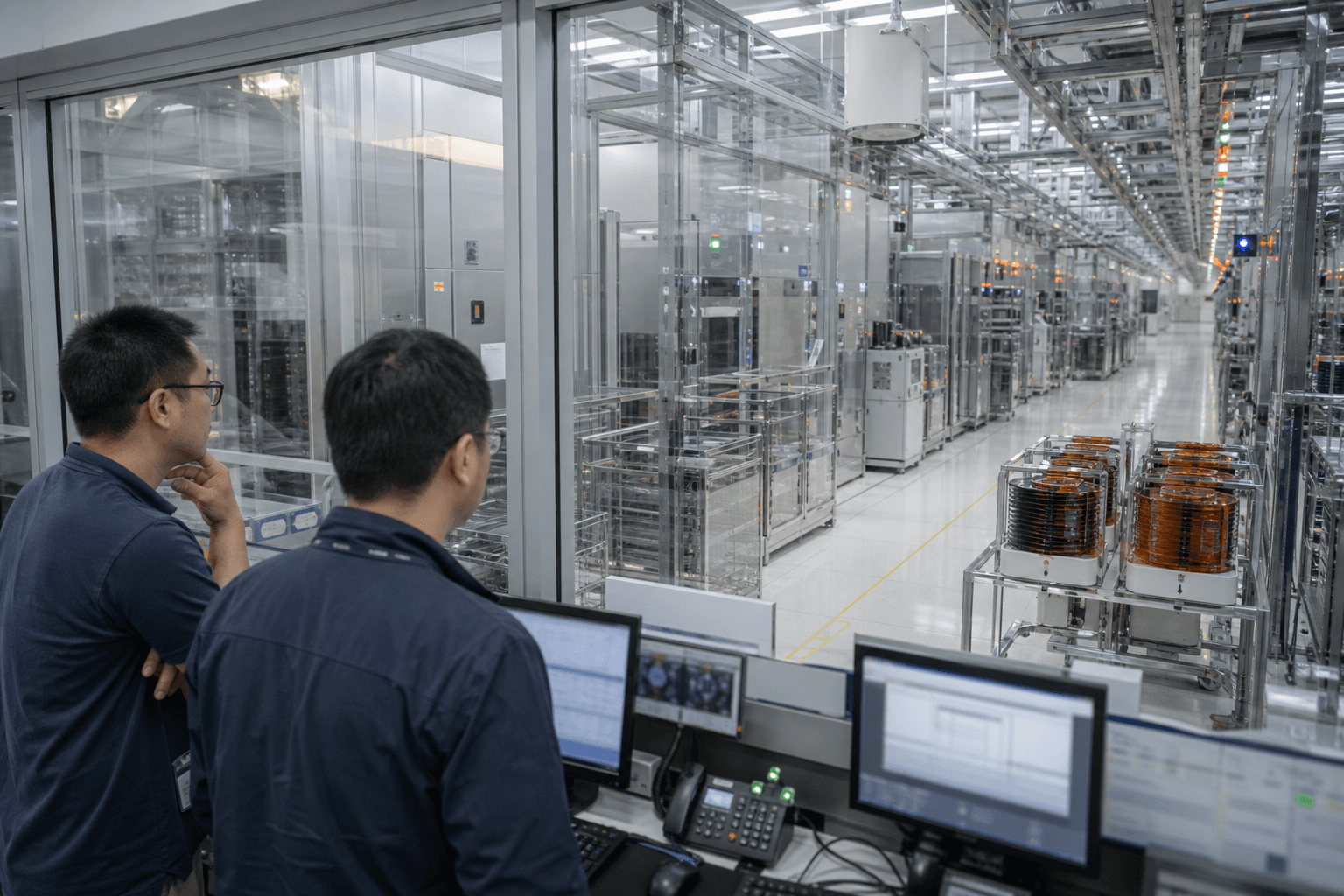
TL;DR: GlobalFoundries said on June 2, 2026 that it completed its acquisition of Synopsys' ARC Processor IP business. The important part is not that a foundry bought one more chip asset. It is that a manufacturer best known for making wafers is trying to get paid earlier in the design cycle, where software tools, processor IP, and custom silicon decisions shape who controls the customer relationship before the factory ever ramps.
Walk into a normal chip program review and the money still looks sequential. First comes architecture. Then IP blocks. Then design work. Then validation. Then manufacturing. Then, if everything goes well, volume. Foundries historically collect later in that chain.
GlobalFoundries is making a bet that physical AI changes that order. If the customer is building an industrial robot, an automotive controller, or an edge AI box, the expensive mistake is no longer just a bad wafer yield. It is choosing the wrong compute architecture, software tooling, and custom logic mix too late. That pushes value upstream.
#The Pitch Has Changed
Back in January, GF said the ARC transaction would add ARC-V, ARC-Classic, DSP and NPU product lines plus ASIP design tools. In the June 2 closing release, the company said the combined MIPS and ARC portfolio would give it a software-to-silicon offering for "Physical AI," backed by more than 150 patents and a customer ecosystem of more than 300 IP customers.
That is a different sales pitch from "send us your tape-out."
It says: start with us when you are still deciding what kind of processor, instruction set, toolchain, and workload-specific silicon you need. If GF can get into the room at that stage, it is not competing only on manufacturing price. It is competing on design convenience, time-to-market, and switching cost.
#This Is Margin Hunting, Not Just Strategy Theater
GF reported first-quarter 2026 revenue of $1.634 billion, non-IFRS operating margin of 16.6%, and $3.8 billion of cash, cash equivalents, and marketable securities. That is a healthy base, but it also explains the incentive.
Pure manufacturing is capital-heavy, cyclical, and always one customer hesitation away from underused capacity. Processor IP and software tools behave differently.
They can offer:
- earlier customer engagement, before a design is locked;
- licensing and software economics that are less tied to immediate fab utilization;
- a tighter handoff into custom silicon work, packaging, and eventual production.
That matters because the best semiconductor businesses are increasingly the ones that can stack multiple tollbooths on the same customer journey.
GF made the direction explicit at its May 7, 2026 investor day, where it said its broader roadmap was aimed at durable AI-centric growth and a "more comprehensive business model" that lets it partner more deeply with customers while returning up to 50% of trailing twelve-month adjusted free cash flow to shareholders after investments. That is not the language of a company content to stay at the back end of the value chain.

#Why Physical AI Is A Useful Excuse
"Physical AI" can sound like marketing foam. Sometimes it is.
But for GF, the phrase is commercially useful because it points to categories where customers care less about the absolute fastest cutting-edge node and more about the total package:
- automotive systems that need longevity and software compatibility;
- industrial and robotics devices that need custom instruction paths and power efficiency;
- embedded AI products that need a practical design flow more than a moonshot chip brag.
#The Real Sale Is Workflow Control
The overlooked move here is not just owning more IP. It is owning more of the workflow that turns an idea into a manufacturable chip.
If the processor core, the development tools, the application-specific instruction set tooling, the custom silicon help, and the fab relationship can all be bundled earlier, the foundry stops being the last contractor in line. It becomes a design partner with better odds of keeping the downstream manufacturing, packaging, and support work attached.
That is why this looks less like an incremental M&A tidying exercise and more like a margin-defense play against commoditization.
#What Investors Should Actually Watch
The easy read is that GF is simply leaning harder into the AI trade. The harder and more useful read is that it wants to make the foundry model stickier by moving upstream into architecture and tooling.
#The Test Is Whether The Funnel Starts Earlier
A few signs matter more than the headline:
- Does GF start talking more about IP customers converting into silicon customers?
- Does custom silicon attach faster to MIPS and ARC engagements?
- Do software and IP relationships help stabilize business mix when fab demand gets lumpy?
If the answers stay weak, this becomes another semiconductor story about buying assets with fashionable words attached. If the answers turn positive, GF may be showing where the next layer of foundry economics is headed: not just making chips for physical AI, but shaping the blueprint customers use before the chip exists.
#FAQ
What did GlobalFoundries actually buy from Synopsys?
GF said in January 2026 that it was acquiring Synopsys' ARC Processor IP Solutions business, including ARC-V, ARC-Classic, ARC VPX-DSP, ARC NPX NPU, and ASIP design tools. GF said on June 2, 2026 that the transaction had closed.
Why does this matter to U.S. investors if GF is not a leading-edge logic foundry?
Because the point is not to out-TSMC TSMC. It is to build a more layered margin model around custom silicon, processor IP, software tools, and long-lived physical-world AI systems where reliability, power, and design support can matter more than winning the most advanced node headline.