ERCOT's Data-Center Test Makes AI Power A Reliability Cost

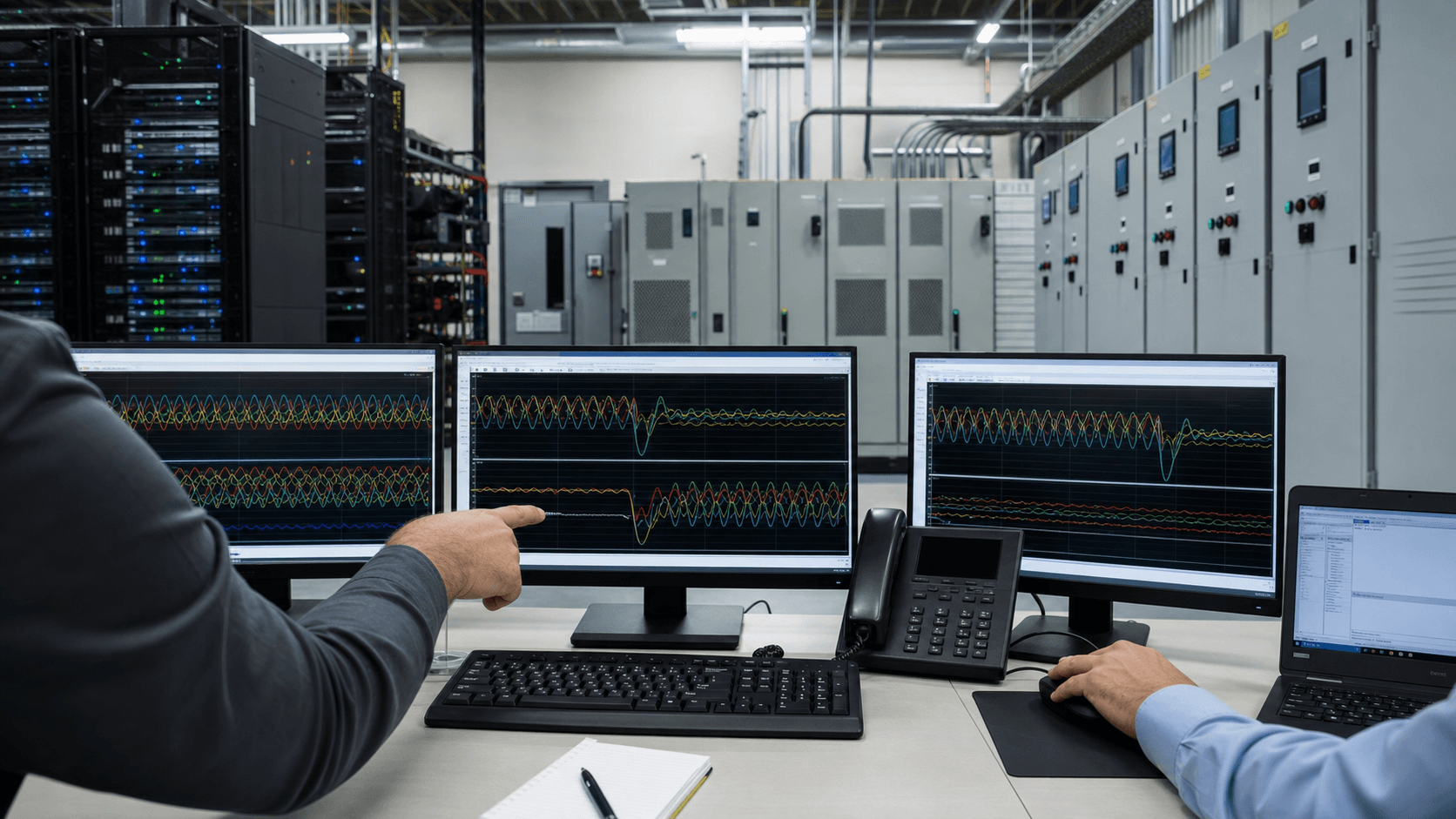
TL;DR: ERCOT's latest reliability scare is not that AI data centers want too much Texas electricity. It is that large compute and crypto loads can vanish from the grid too quickly during voltage disturbances. Reuters reported on June 5 that several large-load groups failed ride-through tests before summer demand, turning data-center interconnection from a real-estate and power-procurement problem into a balance-sheet question for developers, utilities, and AI infrastructure investors.
##What ERCOT Found In The Data-Center Test
The uncomfortable detail in the Reuters report is not just the size of the queue. ERCOT reviewed about 20 gigawatts of large customers seeking grid connections, including eight projects totaling roughly 3.9 gigawatts that wanted to energize before July 1.
The test found four groups of large power users that could each trigger more than 5,000 megawatts of demand tripping under certain fault conditions. In plain English: the grid hiccups, the facility protects itself, and a city's worth of demand can disappear almost instantly.
That is the opposite of how most investors still talk about AI power. The lazy version is simple: more models, more chips, more electricity, more utilities.
The real version is messier. Power demand is valuable only if the grid can trust the load.
##Why Ride-Through Changes The AI Infrastructure Trade
Data centers are built to protect servers, cooling systems, power supplies, and customer uptime. That makes sense inside the fence.
Outside the fence, it can be a problem. If a big facility trips offline during a voltage disturbance, the power system suddenly has too much supply relative to demand. Operators then have to rebalance generation, frequency, and voltage before the disturbance spreads.
#The hidden cost is not the megawatt
For developers, the headline input has been the power price. For utilities and grid operators, the harder question is performance.
Can the facility stay connected through a short disturbance? Can its models prove that behavior before energization? Can its backup systems protect the customer without throwing the grid into a worse condition?
Those questions turn grid access into something closer to underwriting. The interconnection application is no longer just a queue position. It is a technical credit file.
##Where The Business Cost Shows Up
Look at the ordinary desk behind the story. A utility planner has a load request, a model, a circuit map, and a summer deadline. A data-center developer has land, equipment orders, customer expectations, and financing assumptions that were probably built around a power-on date.

If ERCOT slows a project, demands better models, or requires mitigation before energization, the cost does not arrive as one neat line item. It leaks into the project in several places:
- delayed revenue from customers waiting for capacity;
- redesign costs for power equipment and controls;
- higher deposits, studies, and interconnection expenses;
- more conservative financing terms if energization dates look less certain;
- lower site value for projects that looked attractive only because they were near fast power.
That is why the ride-through issue belongs in a business column, not only an engineering memo.
#Compliance can become a moat
ERCOT has already been building a formal process around this risk. A January market notice described interim voltage ride-through assessments for eligible large loads, and an ERCOT protocol change, NPRR1308, was recommended for approval by the ERCOT board on June 2.
That matters because rules change competitive economics. The developer that can model, test, and certify ride-through behavior may get a cleaner path to power. The developer that treated electricity as a commodity input may discover that the grid has started pricing operational discipline.
The best sites may not be the cheapest sites. They may be the sites attached to the most credible electrical design.
##Who Pays If AI Loads Become Grid Actors
The first payer is the data-center developer. More engineering, more studies, more controls, and more schedule risk all raise the hurdle rate.
The second payer may be the customer buying compute capacity. If reliable grid integration becomes scarce, hyperscalers and AI labs will not just pay for chips and land. They will pay for grid behavior.
The third payer is the local power system. Transmission owners, generation owners, utilities, and ratepayers may all get dragged into upgrades if large loads arrive faster than the planning process can absorb them.
E&E News reported that ERCOT officials estimate data-center demand could grow from 7.4 gigawatts in 2026 to more than 228 gigawatts by 2032, while the ERCOT region's all-time peak demand was 85.5 gigawatts in 2023. Even if that forecast is too high, the direction is enough to change the negotiation.
AI infrastructure is becoming a grid actor, not just a grid customer.
##Why Investors Should Watch The Next Rule, Not Just The Next Chip
The stock-market version of AI infrastructure still rewards the visible chain: GPUs, servers, fiber, power plants, and data-center landlords.
The next constraint may be less visible. It may sit in dynamic models, voltage ride-through settings, switchgear, UPS architecture, and the operator's willingness to let a giant load energize before the hottest part of summer.
That does not kill the AI buildout. It changes who has pricing power inside it.
The winners are not only the companies that can buy megawatts. They are the companies that can make megawatts boring enough for the grid to accept.
#FAQ
What is voltage ride-through?
Voltage ride-through is a facility's ability to stay connected during a short voltage disturbance instead of immediately disconnecting from the grid. For very large data centers, that behavior matters because a sudden load drop can destabilize supply and demand.
Why does this matter for AI infrastructure investors?
It adds a new constraint to data-center growth. Power availability is not enough if a project cannot prove that its electrical design will behave safely during grid disturbances.
Is this only a Texas problem?
Texas is the clearest test case because ERCOT has a fast-growing large-load queue and a relatively isolated grid. But the same issue can matter anywhere data centers, crypto loads, and industrial electrification are growing faster than grid planning.