Rumble's Northern Data Deal Turns Video Reach Into A Compute Balance Sheet

TL;DR: Rumble's June 8 final exchange-offer results for Northern Data make the company less of a pure video-platform story and more of a test of vertical integration in AI infrastructure. The key business question is not whether Rumble can talk about AI compute. It is whether a media company with 56 million average monthly users can turn data-center capacity, GPU contracts, and cloud customers into a balance sheet that investors can actually underwrite.
##What Changed In The Rumble-Northern Data Deal
Rumble said on June 8 that it had secured support for about 85.2% of Northern Data's outstanding shares, after the additional acceptance period for its exchange offer expired on June 1. Closing is expected in mid-June 2026, with Northern Data expected to pursue delisting from the Munich exchange afterward.
That is the legal event. The business event is stranger and more interesting.
Rumble is trying to stitch together a video platform, cloud services, AI compute, and data-center real estate. Northern Data brings Taiga Cloud and Ardent Data Centers, including about 250 megawatts of power deployed or coming online across ten global data centers by 2027, according to the company release.
This is not just an "AI stock" label. It is an attempt to make distribution, compute supply, and infrastructure ownership reinforce each other.
##Why This Is A Balance-Sheet Story, Not Just A Platform Story
The clean version of the story is easy: video audiences create demand, cloud capacity creates supply, and the combined company sells both.
The harder version is what matters for investors. Video platforms are usually valued around attention, monetization, creator economics, and advertising yield. Data-center and GPU-cloud businesses are valued around utilization, power access, hardware cycles, customer commitments, and financing discipline.
Those are different muscles.
Rumble's own first-quarter filing showed Q1 2026 revenue of $25.5 million, while Northern Data reported EUR43 million of Q1 revenue and GPU utilization that rose to about 85% in March 2026. On a pro forma basis, Rumble said the combined company would have generated about $75 million of revenue in the quarter, before U.S. GAAP adjustments.
The point is not that $75 million suddenly makes this a scaled hyperscaler. It does not.
The point is that Rumble is no longer asking investors to price only traffic and culture. It is asking them to price servers, contracted demand, electricity, GPUs, cloud margins, and the discipline needed to avoid overbuilding.
##Where The Operating Risk Moves
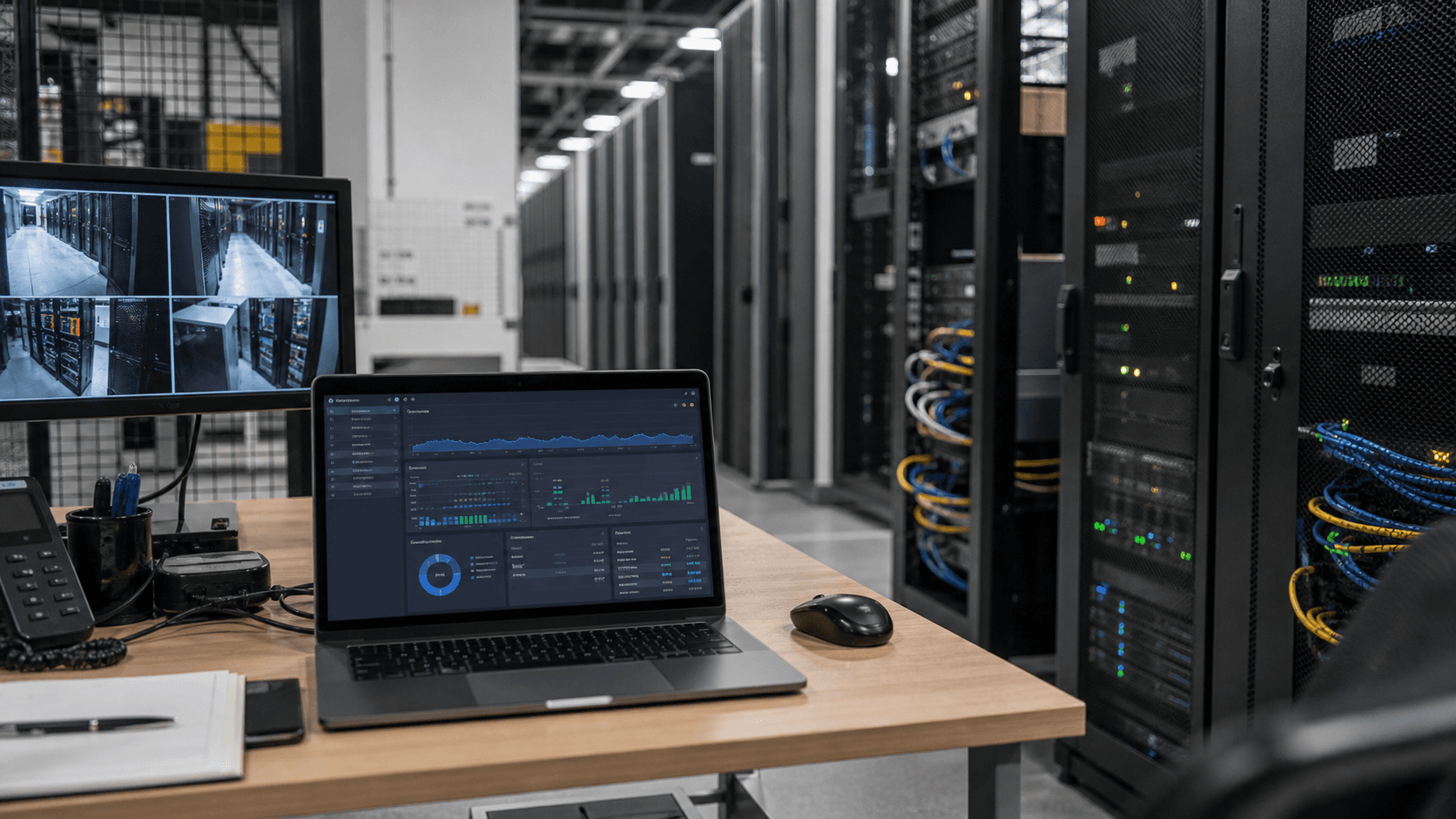
Picture a capacity-planning desk, not a creator dashboard.
There is a laptop with video engagement numbers on one side, a rack inventory screen on another, and a worksheet showing which customer gets dedicated GPU capacity next quarter. That is the new operating scene. A media company can tolerate messy attention cycles. A compute provider cannot casually strand expensive hardware.

Rumble disclosed last week that it entered into a multi-year $270 million agreement with a third-party cloud customer, its largest customer commitment to date. That matters because a cloud buildout without contracted demand is just capex optimism with fans spinning.
#What has to work mechanically?
Several handoffs now have to be real, not just strategic-slide real:
- Power and data-center capacity must arrive close enough to GPU demand to avoid idle infrastructure.
- Cloud customers must sign commitments long enough to support hardware purchases and financing.
- Rumble's video and creator products must keep growing without becoming a distraction from cloud execution.
- Management must explain margins in a way that separates media monetization from compute economics.
That last point is underrated. If a company mixes audience growth, GPU utilization, cloud contracts, and crypto-adjacent payments in one story, investors need cleaner segment math, not louder ambition.
##Who Benefits If The Integration Works
Rumble benefits if it can turn independence into a commercial product rather than just a brand identity. For some customers, cloud capacity outside the largest hyperscalers may be attractive if pricing, availability, or political neutrality matters.
Northern Data shareholders benefit if they would rather own liquid Nasdaq exposure to a broader AI-cloud-and-media platform than remain in a delisted European infrastructure story.
AI cloud customers benefit only if the combined company can offer real capacity at reliable service levels. In this market, the buyer does not care much about a platform narrative when training jobs fail, queues lengthen, or power availability slips.
#Why the delisting detail matters
The expected Northern Data delisting is not a footnote. It concentrates the story inside Rumble's public equity and forces investors to judge the combined model through one ticker, one management team, and one reporting package.
That can be useful if the integration works. It can be punishing if the company keeps describing synergies while the financial statements make the businesses hard to separate.
##What Investors Should Watch Next
The first test is not a new slogan. It is disclosure quality.
Investors should watch whether Rumble breaks out cloud revenue, utilization, gross margin, power commitments, capex needs, and customer concentration with enough precision to make the new model legible. The $270 million customer agreement helps. But one customer commitment is not the same thing as a repeatable cloud sales machine.
The second test is whether video distribution becomes a genuine demand source or just a reason the market gives Rumble a wider story. A video audience can help with brand, creator tools, payments, and perhaps edge services. It does not automatically fill GPU clusters.
The hidden risk is that the company becomes too interesting. Too many narratives can make a stock hard to own: media platform, free-speech brand, cloud provider, AI infrastructure play, crypto wallet, data-center operator.
The opportunity is also there. If Rumble can make those pieces financially coherent, it will have done something unusual: turn an attention business into an infrastructure balance sheet.
That is a much tougher job than winning an exchange offer.
#FAQ
What did Rumble announce on June 8, 2026?
Rumble announced final results for its Northern Data exchange offer, saying it had secured support for about 85.2% of Northern Data's outstanding shares and expects closing in mid-June 2026.
Why does Northern Data matter to Rumble?
Northern Data adds AI cloud and data-center infrastructure, including Taiga Cloud and Ardent Data Centers. That moves Rumble's investor story beyond video distribution into GPU capacity, power access, and cloud customer contracts.
What is the main financial risk?
The main risk is execution discipline. Rumble has to prove that contracted cloud demand, GPU utilization, and data-center capacity can produce understandable margins without hiding the economics inside a broad AI-platform narrative.