Walmart's 10-Gallon Signal Says The Basket Is No Longer The Business

TL;DR: Walmart said on its May 21, 2026 earnings call that the number of gallons customers buy per fuel stop fell below 10 for the first time since 2022, even as the company posted strong results. The overlooked point is that this is not just a consumer-stress anecdote. It is a business-model clue. Big retailers are learning to make the visit profitable even when the basket gets smaller, using advertising, memberships, and third-party marketplace fees to offset a customer who still shows up but buys less each trip.
##The Consumer Is Still There, But The Basket Is Thinner
The lazy debate is whether the U.S. consumer is “strong” or “weak.” The better answer is messier: the customer is still shopping, but increasingly in defensive mode.
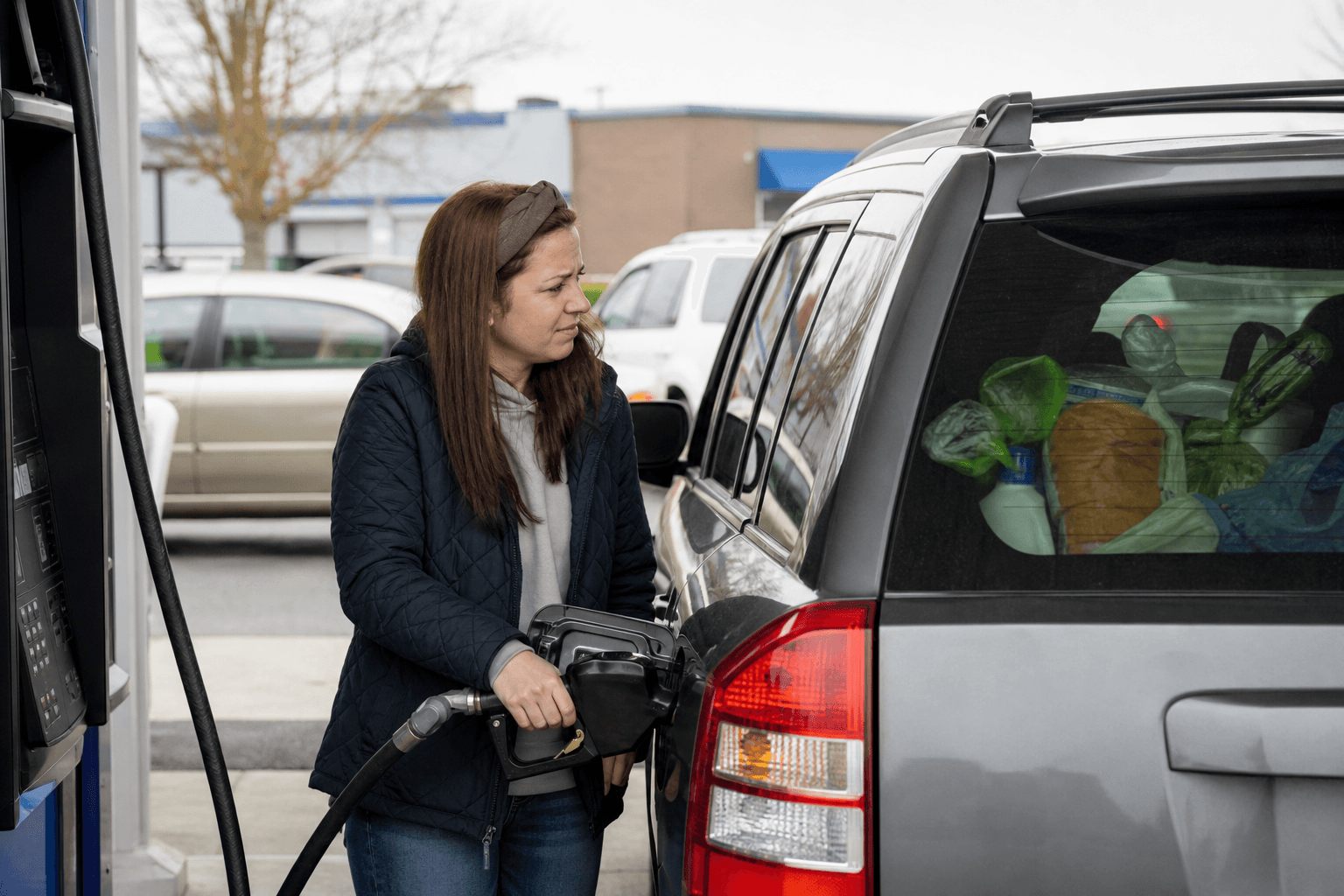
That is what makes Walmart's fuel comment so useful. CFO John David Rainey said lower-income customers are more budget conscious and that fill-ups at Walmart fuel stations fell below 10 gallons for the first time since 2022. That is a small scene, but it says a lot. Households are not disappearing. They are trimming the transaction in front of them.
Official data points in the same direction. The BEA said disposable personal income fell 0.1% in April, personal saving was $611.7 billion, and the saving rate slipped to 2.6%, while personal consumption still rose 0.5%. People are still spending. They just have less cushion while doing it.
##Why This Matters More Than Another Consumer-Confidence Headline
Picture the customer Walmart described.
She still drives to the store. She still needs groceries. She still pulls into the fuel station. But instead of filling the tank, she stops earlier. Instead of one broad restock, she buys what she needs now and leaves the rest for later.
That kind of behavior is harder on retailers than a clean recession headline. It creates traffic without guaranteeing basket leverage.
The old retail model wanted a bigger cart. The newer model wants a profitable visit.
##Walmart Is Quietly Telling Investors Where That Profit Will Come From
Walmart's own numbers show why the company can live with a pressured shopper better than smaller rivals can.
On the same call, management said advertising, membership, and marketplace had become meaningful enough that together they represented approximately one-third of operating income. Advertising grew more than 30% in each segment, membership fee revenue grew 17%, and U.S. marketplace sales rose almost 50%.
That is the hidden shift.
Walmart no longer needs every dollar of profit to come from selling one more case of soda, one more detergent refill, or one more patio set. It can monetize the customer relationship in parallel:
- sell the shopper a membership,
- charge the seller for marketplace access and fulfillment,
- charge brands for sponsored placement and ads,
- and still use price and convenience to keep store traffic high.
When the basket shrinks, those side streams matter more.
#The stressed consumer is becoming a media-and-fee customer too
That sounds cynical, but it is just how modern retail math works.
If a household buys less per trip, the retailer needs other revenue attached to the same trip. A membership fee is one answer. A marketplace commission is another. Advertising may be the best one of all, because it lets the retailer monetize demand even before the product margin shows up.
##Why Smaller Retailers And Consumer Brands Should Worry
This is not just a Walmart story. It is a warning about what scale now buys in consumer commerce.
A big retailer with ads, membership, data, logistics, and fuel can absorb a customer who becomes more cautious. A smaller chain that mainly lives on store margin has less room to do that. It still sees the traffic pressure, the promo pressure, and the labor cost pressure, but without the same offsetting fee pools.
The same logic hits consumer brands.
If retailers depend more on ads and marketplace economics, shelf space becomes less about brand tradition and more about who pays for visibility, who converts fastest, and who fits the retailer's algorithmic margin stack. Brands then face a double squeeze: a cautious consumer on one side and a more monetized retail gatekeeper on the other.
#Household strain is showing up in credit, not just at checkout
The New York Fed's first-quarter household debt report showed total household debt reached $18.8 trillion. Credit card balances were still $1.25 trillion, auto balances reached $1.69 trillion, and overall delinquency remained 4.8% of outstanding debt.
That does not read like a consumer collapse. It reads like a consumer who keeps moving, but with less slack in the system.
Retailers are adapting to exactly that kind of customer: one who still needs the transaction, but cannot be counted on to make it comfortably profitable through merchandise margin alone.
##The Real Retail Split Is Not Strong Consumer Versus Weak Consumer
The real split is between retailers that can monetize constrained demand and retailers that cannot.
Walmart can still win traffic with low prices while protecting profits through business mix. That is why the sub-10-gallon anecdote matters. It is not merely a recession tell. It is evidence that the biggest retailers are building a model for an economy where households keep shopping in smaller bites.
That should change how investors read consumer stories in the next few quarters.
Do not just ask whether the shopper showed up. Ask who still got paid when the basket came in light.
#FAQ
Why is Walmart's fuel-station comment important?
Because it captures a real household behavior change in one concrete metric. Customers are still making the trip, but they are limiting what they spend in the moment, which is different from simply stopping consumption altogether.
What is the main business implication for retailers?
Retailers with alternative profit streams such as advertising, memberships, third-party marketplace fees, and fulfillment services can handle thinner baskets better than stores that rely mostly on merchandise margin.
What should investors watch next?
Watch whether large retailers keep expanding high-margin fee businesses faster than store sales, and whether smaller chains start showing more promotional pressure or weaker margin resilience as cautious household behavior persists.