Broadcom's $10.8 Billion AI Quarter Puts Scarcity On The Customer List

TL;DR: Broadcom reported a June 3, 2026 AI chip quarter that is less about another semiconductor demand spike than about customer allocation. The company said Q2 fiscal 2026 revenue rose 48% to $22.2 billion, with AI semiconductor revenue of $10.8 billion and Q3 revenue guidance near $29.4 billion. The business implication is blunt: hyperscale AI spending is becoming a capacity queue, and Broadcom is selling its place in that queue.
##What Broadcom's AI Quarter Actually Changed
Broadcom did not just post a strong quarter. It moved the AI chip story from "who has demand?" to "who gets served first?"
In its fiscal second quarter ended May 3, 2026, Broadcom reported $15.0 billion of semiconductor solutions revenue, up 79% from the prior year period. The sharper number was inside that segment: AI semiconductor revenue reached $10.8 billion, up 143% year over year, driven by custom AI accelerators and AI networking.
That is not a normal product-cycle beat. It is a sign that the customer list has become part of the product.
#Why custom AI chips change the bargaining table
Commodity chip demand can be chased by whoever has enough money and delivery patience. Custom AI accelerators are different.
They require deep customer planning, packaging slots, networking road maps, software qualification, and enough confidence that the buyer's own model roadmap will still justify the design when the hardware arrives.
That makes Broadcom less like a parts vendor and more like a bottleneck manager.
##Why The Hidden Asset Is Allocation
The casual reading is simple: AI demand is hot, Broadcom sells chips, revenue rises. That is true, but it is not the interesting part.
The interesting part is that Broadcom's customers are not buying generic excitement. They are buying execution priority.
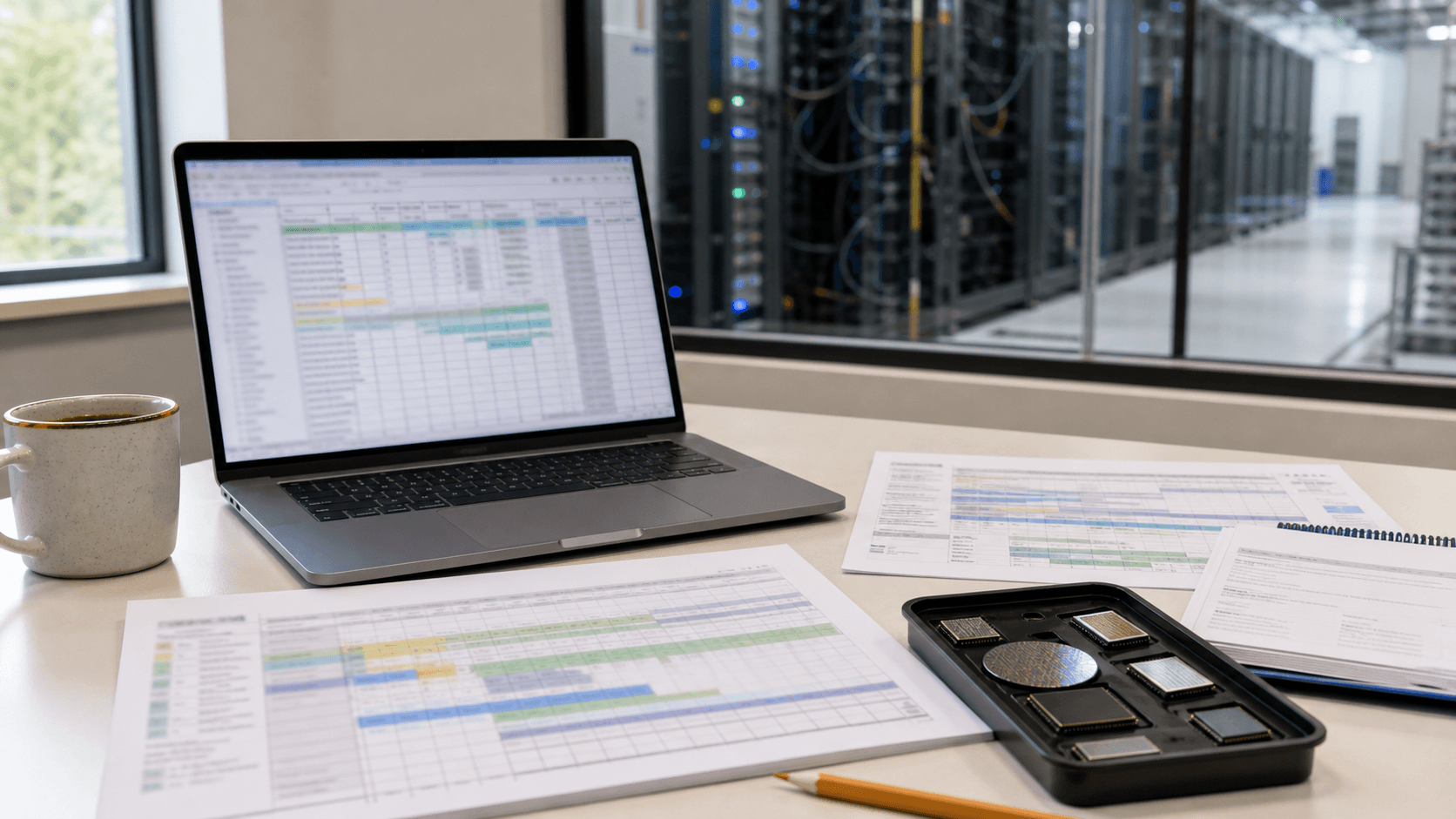
Picture a hyperscale infrastructure team staring at a capacity plan. One column is model training. Another is inference growth. Another is networking. Another is power. The spreadsheet does not ask whether AI is important. It asks which constrained item breaks the plan first.

Broadcom's latest numbers suggest the answer is not only GPUs. It is the whole custom accelerator and networking package around the AI cluster.
When a supplier sits in that position, pricing power does not come from a slogan. It comes from being difficult to replace in the customer's calendar.
##Where Software Cash Flow Fits
Broadcom's infrastructure software line matters because it gives the chip story financial ballast.
The company reported $7.2 billion of infrastructure software revenue in Q2, up 9% year over year. That is slower than the semiconductor segment, but the point is not to make VMware look like an AI growth stock.
The point is that software cash flow helps fund patience.
Broadcom reported $10.5 billion of cash from operations and $10.3 billion of free cash flow in the quarter. For a company being pulled into a huge AI hardware buildout, that matters. Capacity expansion, customer commitments, supply-chain handoffs, and integration work all become easier when the operating model is already throwing off cash.
#The VMware lesson is more boring than the AI headline
Broadcom's post-VMware software business is not the glamorous part of the story. It is the part that can make the glamorous part less fragile.
The customer who buys infrastructure software and the customer who builds AI clusters are not always the same budget owner. But they both care about uptime, procurement discipline, and systems that do not surprise the finance team.
That is why the quarter should not be read only as "AI chips are booming." It should be read as Broadcom trying to pair scarce silicon with a cash-generating software base.
##Who Gains And Who Gets Squeezed
The winners are obvious at first: Broadcom, large cloud buyers with early custom-chip commitments, and investors who wanted proof that AI infrastructure spending is still converting into revenue.
The squeezed parties are more interesting.
- Smaller AI infrastructure buyers face a harder path if the best custom silicon capacity is already spoken for by the largest platforms.
- Cloud customers may see less direct price relief if hyperscalers are still racing to secure differentiated capacity.
- Competing chip and networking vendors need to prove they can solve the whole cluster problem, not just one impressive component.
- CFOs at AI-heavy companies have to translate "strategic compute" into delivery schedules, depreciation, and real utilization.
This is where the market often gets too casual. AI capex is not one line item. It is a sequence of handoffs, and every handoff has a vendor with pricing leverage.
##Why Investors Should Watch The Queue, Not Just The Growth Rate
Broadcom guided fiscal Q3 revenue to approximately $29.4 billion, up 84% from the prior year period, and said it expects AI semiconductor revenue to grow more than 200% year over year to $16.0 billion.
That is a giant number. It is also a number that invites the wrong question.
The right question is not whether AI demand exists. The right question is how much of that demand has become committed, scheduled, and hard to cancel.
If Broadcom is mostly filling a visible queue of custom accelerator and networking work, the quality of revenue is better than a one-quarter product spike. If the queue is too concentrated among a few hyperscale customers, the business becomes more powerful and more exposed at the same time.
That is the trade.
##What The Market May Be Missing
Broadcom's quarter says AI infrastructure is entering a more industrial phase.
The easy version of the story was "everyone needs chips." The harder version is "the most important buyers need integrated capacity, and suppliers with trusted delivery calendars can make the economics very expensive for everyone else."
That is a better business than selling excitement. It is also a less democratic market.
The next AI infrastructure question may not be who believes in the future. It may be who already has a slot on the production calendar.
#FAQ
What did Broadcom report for fiscal Q2 2026?
Broadcom reported Q2 fiscal 2026 revenue of $22.2 billion, up 48% year over year, with adjusted EBITDA of $15.2 billion and free cash flow of $10.3 billion.
Why does Broadcom's AI semiconductor revenue matter?
Broadcom said AI semiconductor revenue reached $10.8 billion in Q2 and expects it to grow to $16.0 billion in Q3. That points to demand for custom AI accelerators and AI networking, not just generic chip demand.
What is the main investor risk?
The main risk is concentration and execution. If the AI queue is dominated by a handful of hyperscale customers, Broadcom gains leverage, but misses, delays, or spending shifts from those buyers would matter more.